
That drawer of mismatched lids under the counter, the one nobody has opened since the lids stopped matching the bowls, is worth a second look before any of it goes to a donation bin. Somewhere in there might be a nesting bowl set from the 1950s, a harvest gold canister with its original sunburst lid, or a popcorn bowl with a logo that hasn’t been relevant since Blockbuster closed its doors.
Tupperware has a real secondary market, and it has nothing to do with how well the lids still burp shut. Collectors are chasing specific lines, specific colors, and specific decades, and a complete set in good shape is worth far more than the sum of its loose parts. Plastic doesn’t crack the way glass does, so most of what survives is still usable, which is exactly why completeness and color are what separate a $3 bowl from a genuine collector’s piece.
Condition still rules everything here. Sun fades colors, dishwashers cloud clear plastic, and decades of tomato sauce leave stains that never fully lift. The pieces below are the ones worth checking for before the rest goes in a box for Goodwill.
1. Wonderlier pastel nesting bowl set
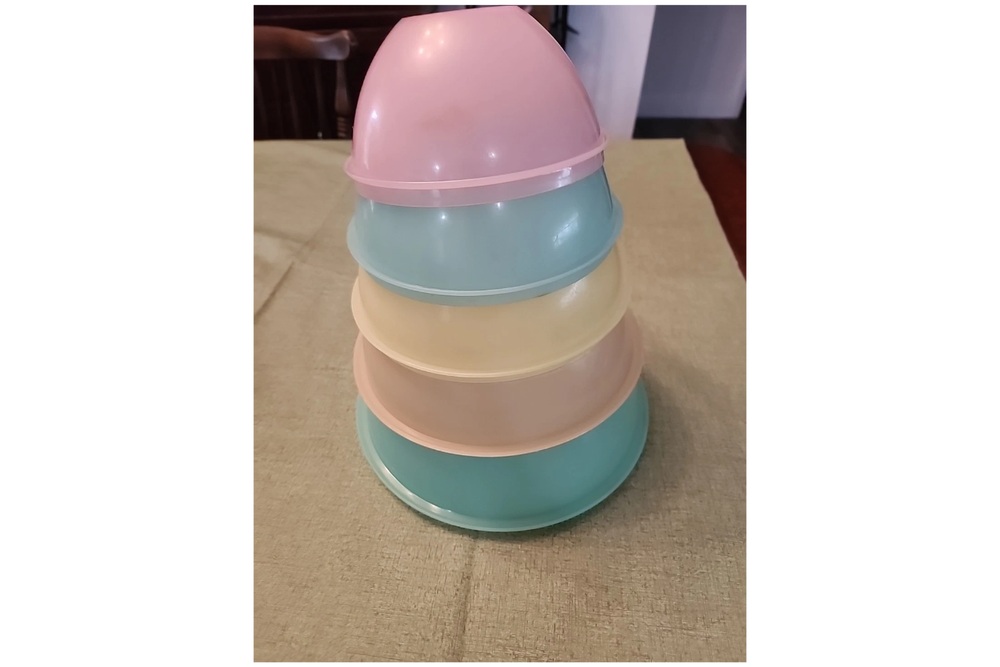
Earl Tupper’s original nesting bowl line launched in 1946, and it’s still the piece most people picture when they hear the word “vintage Tupperware.” The graduated bowls, usually four to a set and each marked with its own mold number on the base, were sold in pastel pink, yellow, green, and blue, with lids designed to snap on with Tupperware’s signature airtight seal.
A complete set in a strong original pastel color, with lids that actually match their bowls by size and tone, can bring up to $175 in excellent condition. Incomplete sets, mismatched lids, or bowls that have gone cloudy and yellow from sun exposure sell for a fraction of that, often in the $15 to $50 range for a partial set. Select Wonderlier and Servalier sets can net a seller a few hundred dollars when the color and completeness line up, though most will land well below that.
One thing to watch for: Tupperware’s own modern Heritage Collection reissues these bowls in near-identical pastel tones. They’re brand new, not vintage, and sell for a fraction of what an original set brings, so check for genuine wear, a mold number stamped into the plastic, and the slightly heavier weight of older Tupperware before assuming a set is decades old.
2. Servalier canister set in harvest gold
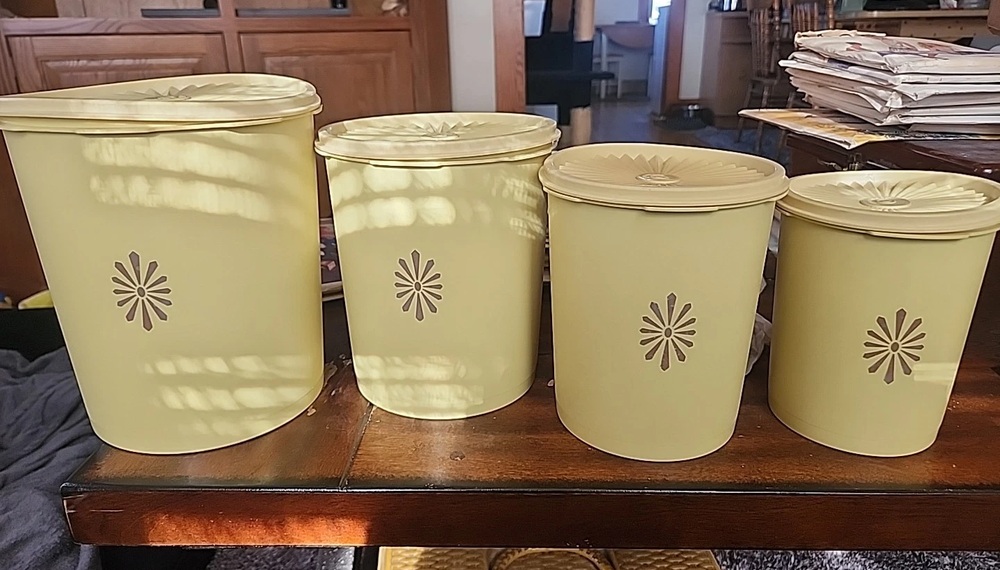
The Servalier line arrived in the 1970s with a sunburst pattern pressed into the lid and a nesting design that let three or four canisters stack inside each other for storage. Harvest gold and avocado green are the two colors collectors actively seek out, since both are instantly tied to that decade’s kitchens.
A matched set of three Servalier canisters in harvest gold, with the sunburst lids intact and sealing properly, typically brings around $75 in mint condition. Larger four and five piece sets with every canister present can push past that, while single canisters or sets with cracked lids sell closer to $10 to $20 apiece.
The Servalier line specifically is one collectors watch for at thrift stores, since it’s common enough to find but the complete, undamaged sets are thinning out. Check that every canister actually nests inside the next size and that the lids snap down with a firm seal rather than sitting loose, since a sunburst lid that no longer locks drops the value fast.
3. Sheer pastel tumbler set of six
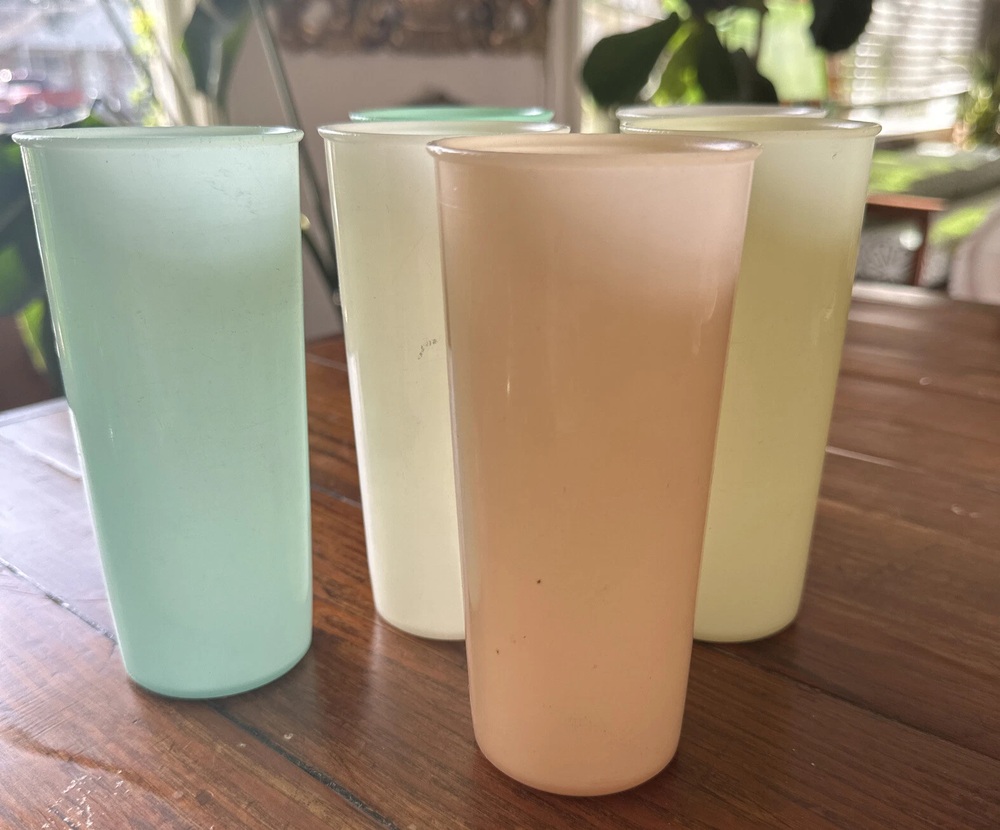
These clear plastic tumblers, sold through the 1960s in pink, green, blue, and yellow, sat in nearly every kitchen cupboard in America for a stretch of about twenty years. The “sheer” finish is the giveaway: unlike the solid harvest gold and avocado pieces of the following decade, these were meant to show off a clean, semi-transparent plastic in a soft color.
A matched set of six in excellent shape, with no cloudiness and a consistent color across all six cups, typically sells for around $40. A mixed lot pulled from different sets usually brings far less, often $10 to $20 for the same six cups.
The main enemy here is the dishwasher. Repeated runs through hot water cloud the sheer plastic and dull the pastel tint, which is the single biggest value killer on this piece. Hold a cup up to the light and look for a haze before assuming a set is in collector condition, and check that all six cups share the same production run rather than being pieced together from odd singles, since slight color variation between “matching” cups is common and does reduce what a set brings.
4. Blockbuster Video popcorn bowl
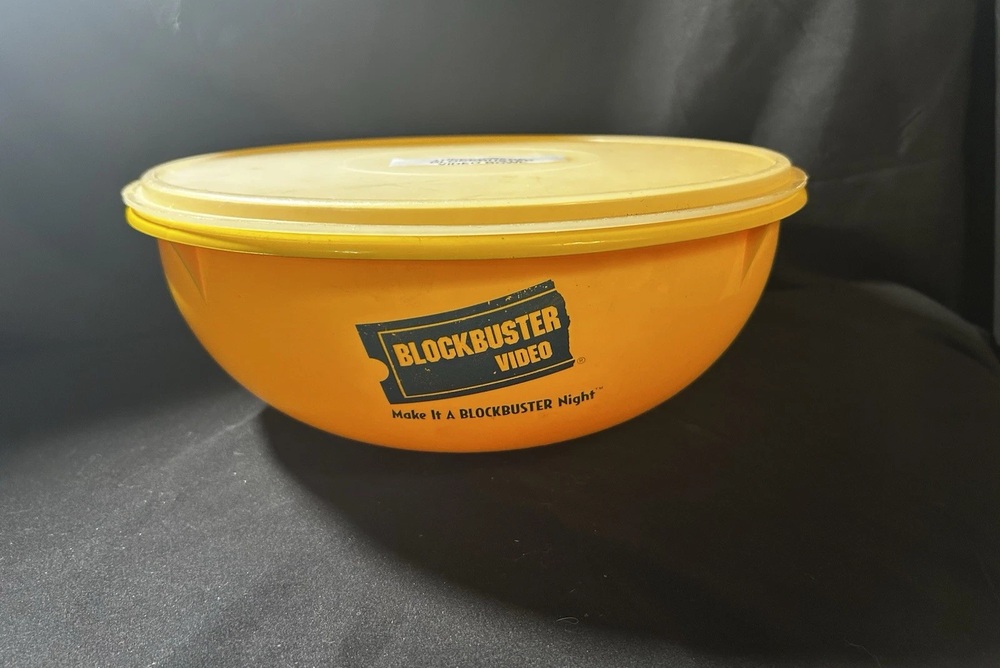
Tupperware partnered with Blockbuster Video at some point in the 1990s to produce a large yellow bowl, usually about 12 inches across, embossed with the video chain’s logo and fitted with a clear snap lid built to hold a family-sized batch of popcorn. It’s a purely nostalgic piece, since the value has almost nothing to do with the bowl itself and everything to do with the logo stamped into the plastic.
Clean examples with a crisp, unscratched logo and an intact lid typically bring around $60 in like-new condition, with most real-world examples landing somewhere in the $20 to $60 range depending on how worn the logo has gotten and whether the lid survived.
Check the embossed lettering first, since scratching across the Blockbuster name is the most common flaw and the one that hurts resale the most. The bowl should hold its round shape without warping, and the lid needs to seal tightly rather than just rest on top. A bowl without its lid is worth noticeably less, since the pairing is what makes the piece recognizable at a glance.
5. Pick-A-Deli pickle keeper
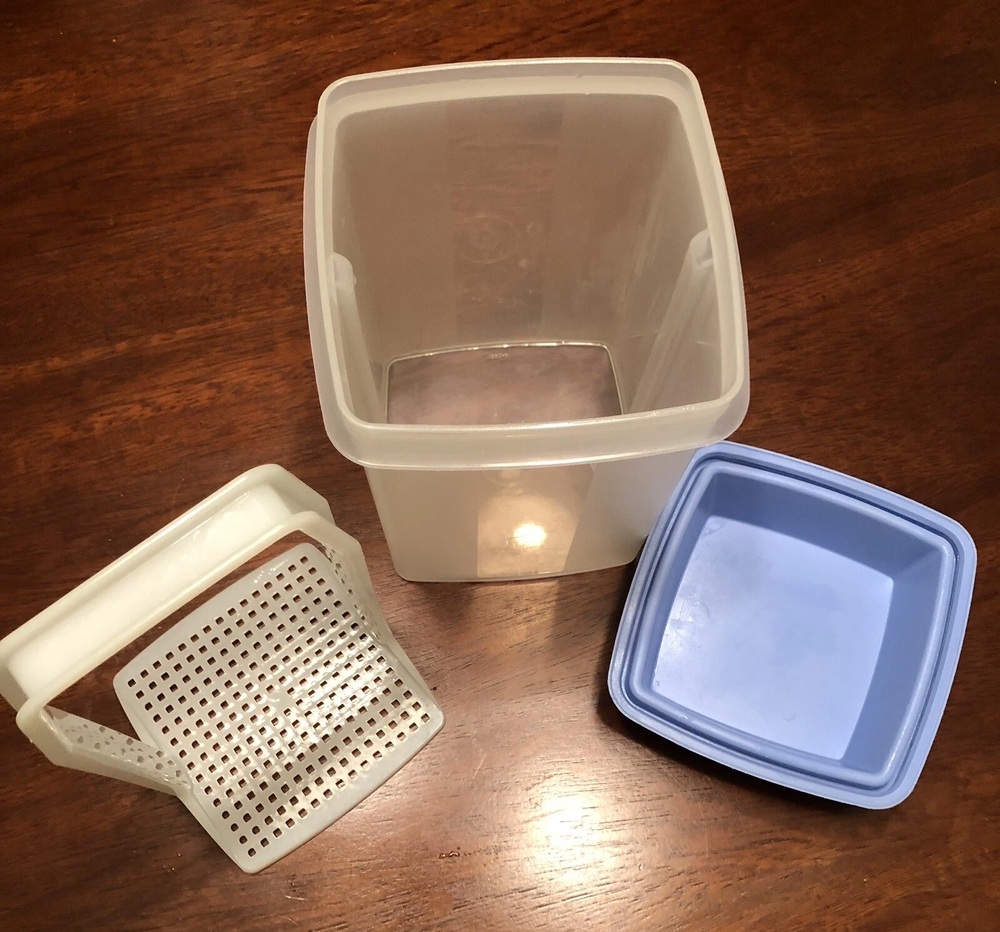
This one has an odd, almost architectural shape: a tall rectangular container with a perforated insert basket that holds pickles up out of the brine, keeping them from going soft. It showed up in avocado green, aqua, and a handful of other 1970s and 80s colors, and its distinctive silhouette has made it something of an internet curiosity in recent years among people rediscovering their grandparents’ kitchens.
Complete examples, meaning the outer container, the perforated insert, and a matching lid all present and undamaged, typically bring $10 to $20. The insert is the piece most often missing from estate sale finds, since it’s a separate, easy-to-misplace part, and a container without it sells for considerably less.
Check the lid for cracking around the hinge and make sure the insert actually fits the specific container it’s paired with, since Tupperware changed the mold slightly over the years and not every insert matches every base. Avocado green and the brighter 1970s colors tend to draw a bit more interest than plain white or almond versions of the same piece.
6. Hourglass salt and pepper shakers
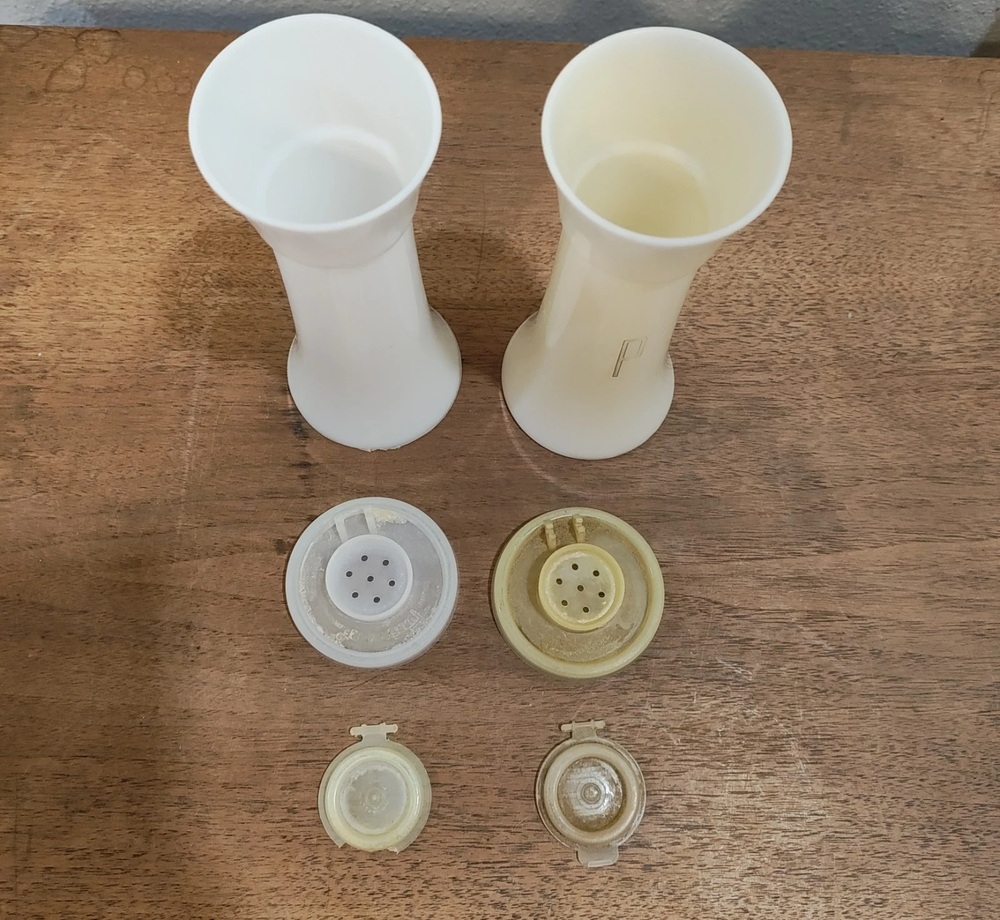
The hourglass shape, pinched in the middle and usually finished in white with silver lettering spelling out “S” and “P,” dates back to Tupperware’s 1954 Millionaire line and stuck around in various forms for decades afterward. A rarer variant sets the two shakers into a round atomic-style holder with a central toothpick cup, a design clearly borrowed from the era’s space-age aesthetic.
A basic matched pair with legible lettering and intact lids typically brings $10 to $25. The atomic holder version, when the stand and both shakers survive together, commands more, often climbing toward $35 to $40 for a complete set in good condition.
The silver lettering is the first thing to go, since repeated handwashing wears it down to almost nothing within a few decades, so a shaker with crisp, legible letters is worth noticeably more than one that’s gone blank. Check that the pepper and salt shaker are actually a true pair rather than two mismatched singles, and that both lids seal without rattling.
7. Tuppertoys Shape-O Ball
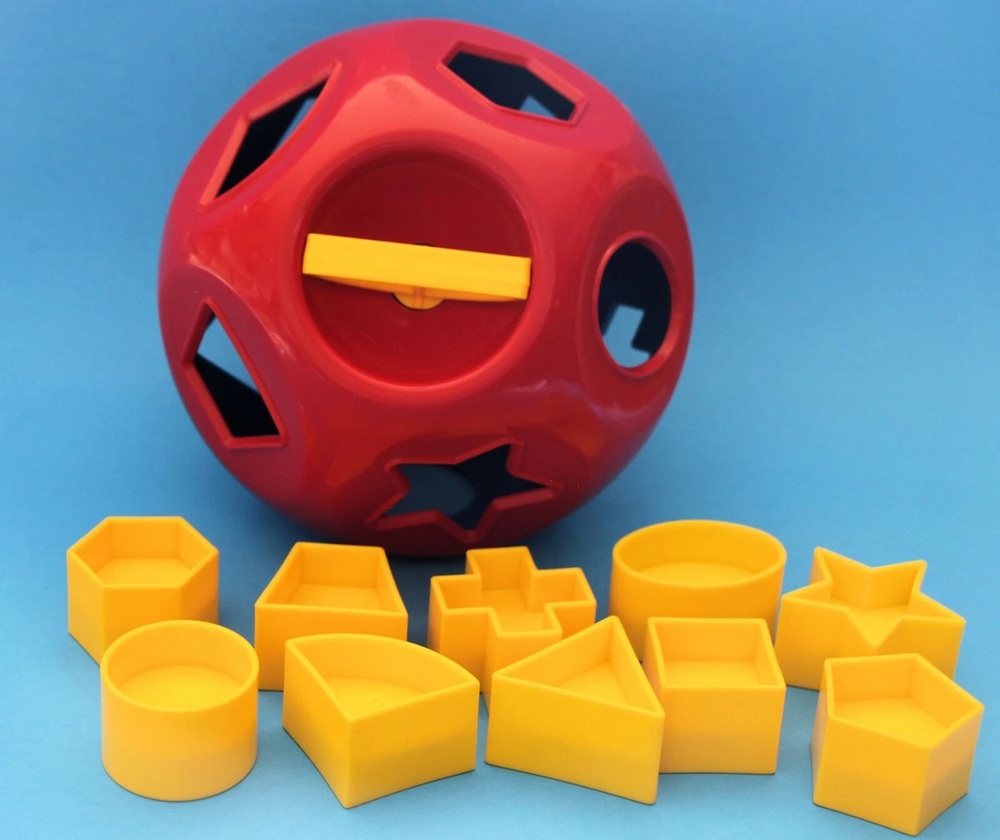
Tupperware launched its Tuppertoys line in the 1960s, and the Shape-O Ball, a split plastic sphere with ten shaped holes and matching colored pieces, first appeared in 1968. It’s one of the few Tupperware products most people recognize as a toy rather than kitchenware, and it’s been in some form of production, on and off, ever since.
A complete ball with all ten original shapes typically sells for $15 to $35 depending on condition and how close the colors are to their original brightness. Balls missing several shapes, which is common after decades in a toy box, sell for considerably less, often under $15.
Decades of a toddler gumming on the pieces take a toll, so check for tooth marks, faded color, and hairline cracks along the ball’s seam where it splits open. An original box adds a real premium if it’s survived, since most of these were played with hard enough that the packaging rarely made it past the first birthday.
8. Push-button pitcher with tumblers
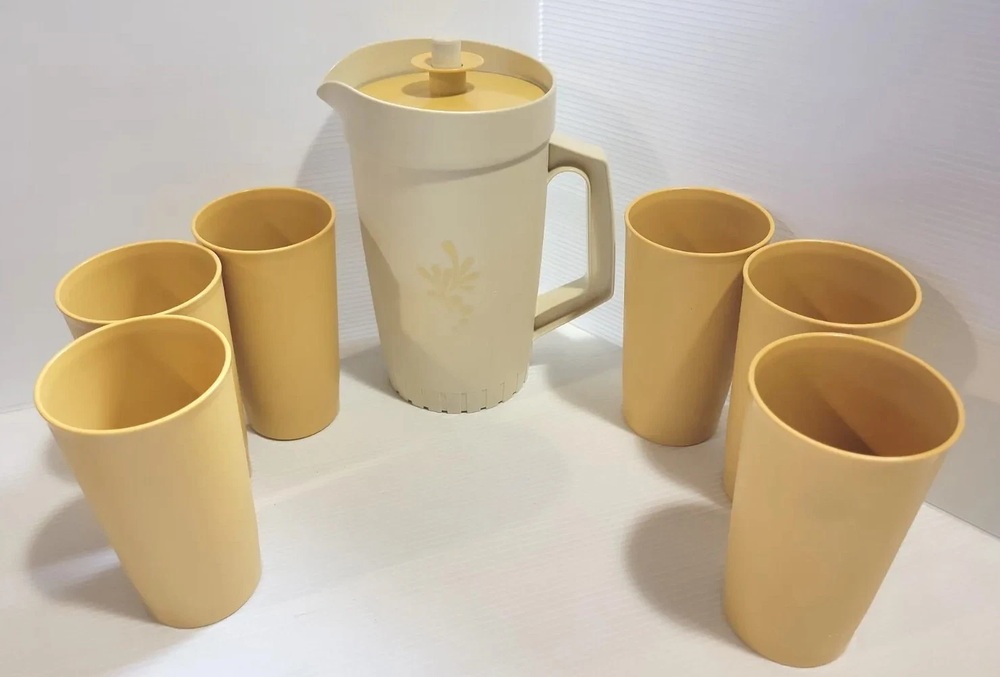
The 1980s version of this pitcher, usually in bright yellow, red, or blue with a push-button spout built into the lid, filled countless glasses of Kool-Aid and iced tea. It was frequently sold as a set with five or six matching tumblers, and the push-button mechanism was a genuine convenience feature at the time, letting a kid pour a drink one-handed.
A single pitcher in working condition typically brings $10 to $40, with the higher end reserved for sets that still include their full run of matching tumblers. A pitcher alone, without the cups, sells toward the lower end of that range.
The push-button mechanism is the thing to test first, since the internal gasket degrades with age and a pitcher that no longer seals or pours cleanly is worth much less to a buyer who actually wants to use it. Check the tumblers for consistent color across the whole set, since sun fading hits some cups harder than others depending on how they were stored.
9. Bell tumbler set
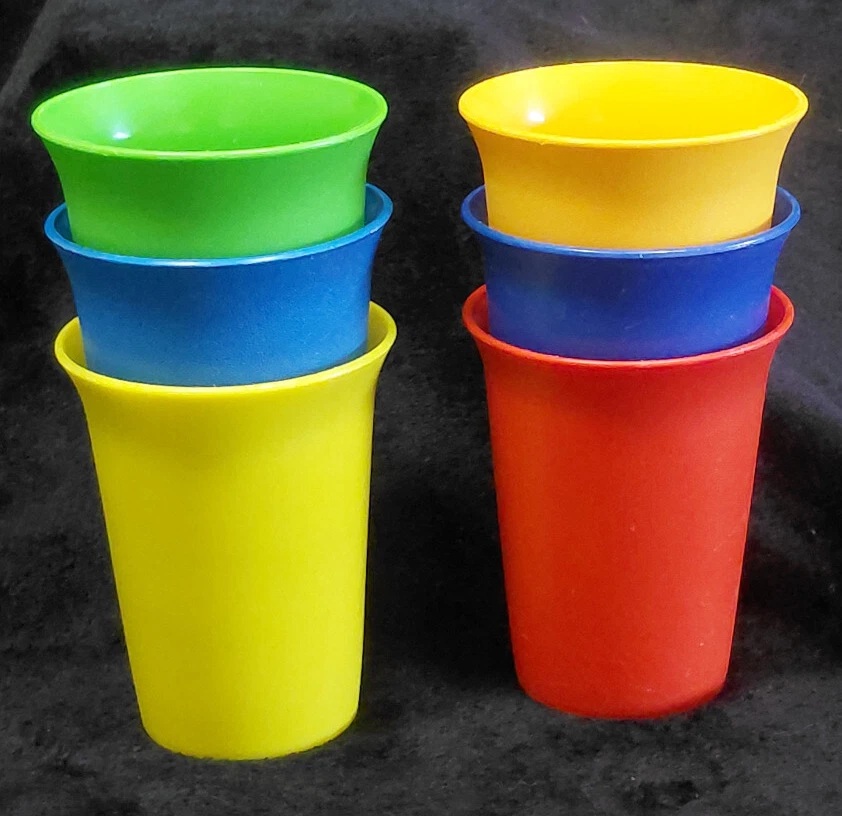
These small, flare-rimmed stacking cups, stamped with the mold number 109 on the base, were sold in bright primary colors and marketed partly as kids’ cups, since the size and the sturdy plastic held up to a child’s grip better than glass. They stack neatly inside one another, which is part of why full sets are harder to find intact than you’d expect.
A set of six to eight in a mix of primary colors typically brings $10 to $25, with larger matched sets from a single production run toward the top of that range. Individual cups sell for just a few dollars apiece.
Because they’re designed to stack, the rims take the most wear and are the first place to check for chips or warping that would keep a cup from nesting properly. Faded color is common on cups that spent years on a sunny windowsill, and a full set in consistent, vivid color is worth more than a technically complete set with one or two noticeably duller cups mixed in.
10. Deviled egg keeper
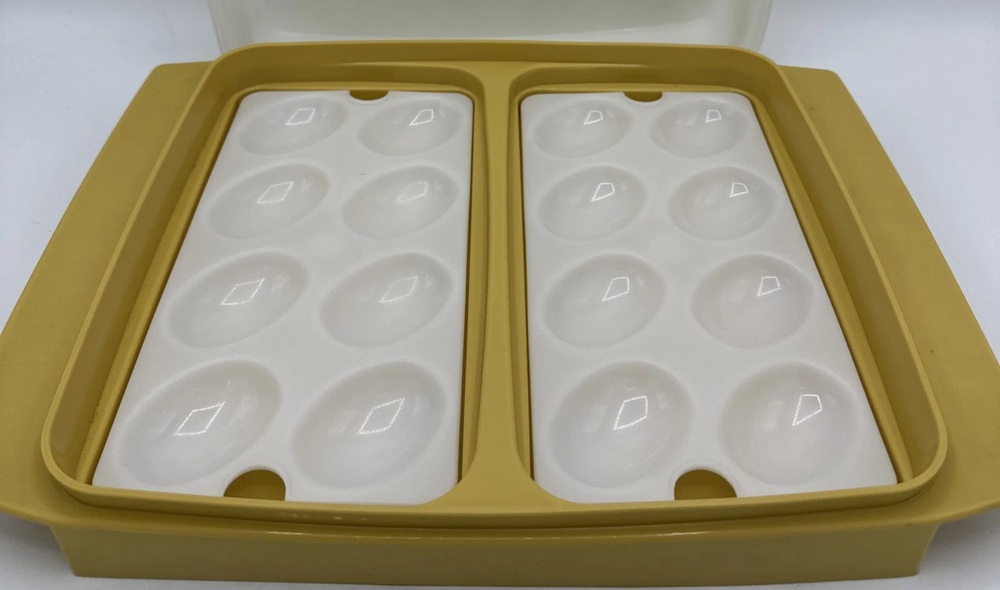
This one is exactly what it sounds like: an oval carrier with two removable trays, each with eighteen shallow wells sized for deviled egg halves, topped with a locking lid for transport to a potluck or holiday gathering. It showed up most commonly in harvest gold, almond, and beige, the standard 1970s neutral palette.
A complete carrier with both trays and a lid that seals properly typically brings $10 to $25, with brighter or less common colors occasionally pushing toward the higher end. A carrier missing one of its two trays sells for noticeably less, since the piece isn’t especially useful without a full set of wells.
Check that both trays are actually present and undamaged, since this is the part most often lost or cracked over the decades. The carrying handle should be intact and not brittle, and the lid needs to click into a genuine seal rather than just balance on top, or the whole point of a “carrier” is lost.
11. Avocado green mixing bowl set
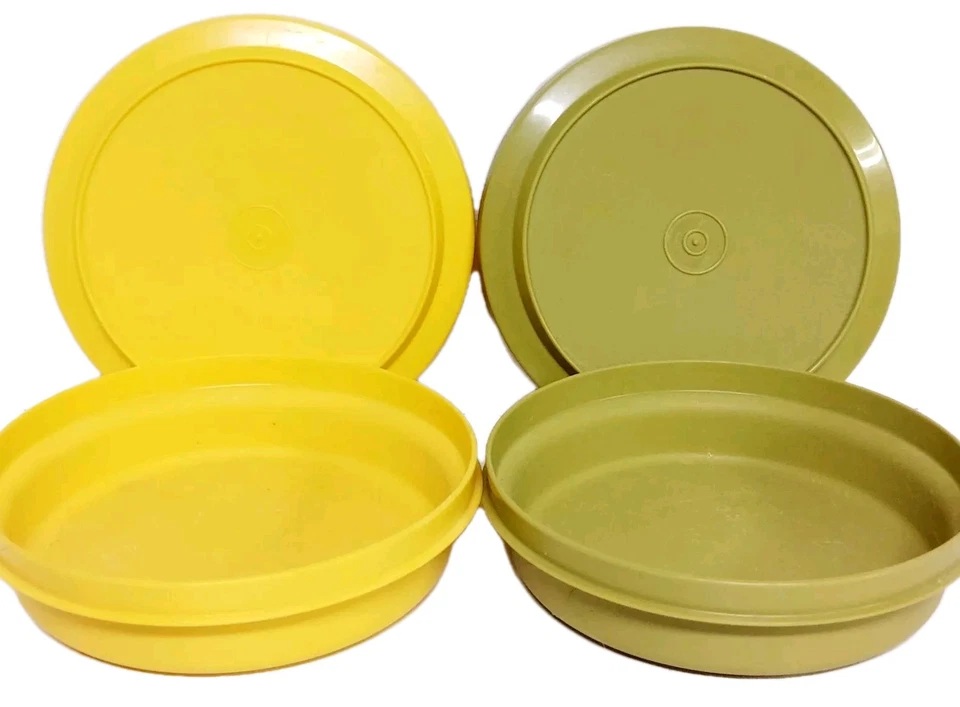
The classic flat-bottomed mixing bowls, sold in graduated sizes with snap-on lids, are common enough in white and clear, but the avocado green versions from the 1970s carry a real premium over their more common counterparts. A full nesting set with every lid present is the goal here, since single bowls turn up constantly and command very little on their own.
A pair of bowls in this color alone typically brings around $10, and a fuller nesting set of three or four with every lid present can climb toward $40 to $50 depending on how true the color has stayed. Mismatched lots assembled from different sources sell for considerably less than a genuinely matched nesting set.
Avocado green fades toward a duller olive with enough sun exposure, so compare the color across all the bowls in a set rather than taking a seller’s word that they match. Lids crack most often right at the snap edge, a flaw that’s easy to miss in a photo but obvious the moment you try to seal the bowl, so check that detail closely before assuming a set is complete.
12. Square Away sandwich keeper
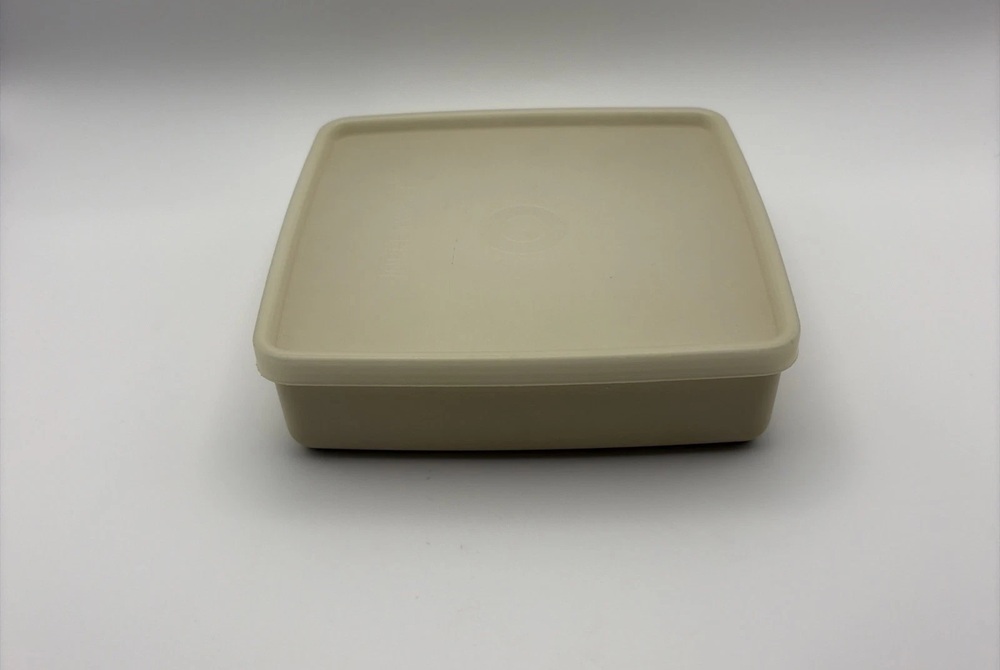
Tupperware’s Square Away line included a rectangular keeper sized for a single sandwich or a small loaf, with a clear lid that let you see what was inside without opening it. It’s a modest, everyday piece, but it turns up in enough colors and enough half-decent condition that it’s worth knowing what a clean one is actually worth before pricing it at a dollar.
A clean example with a clear, uncracked lid typically brings $10 to $25, with less common colors like teal and harvest gold toward the top of that range and plain white toward the bottom.
Clear lids are the weak point on this piece, since they craze and yellow faster than colored plastic does, and a cloudy lid pulls the price down noticeably even if the base itself is in good shape. Check for warping along the base too, since a keeper that no longer sits flat won’t seal properly, which defeats the purpose of the whole design.
13. Millionaire line pieces from 1954
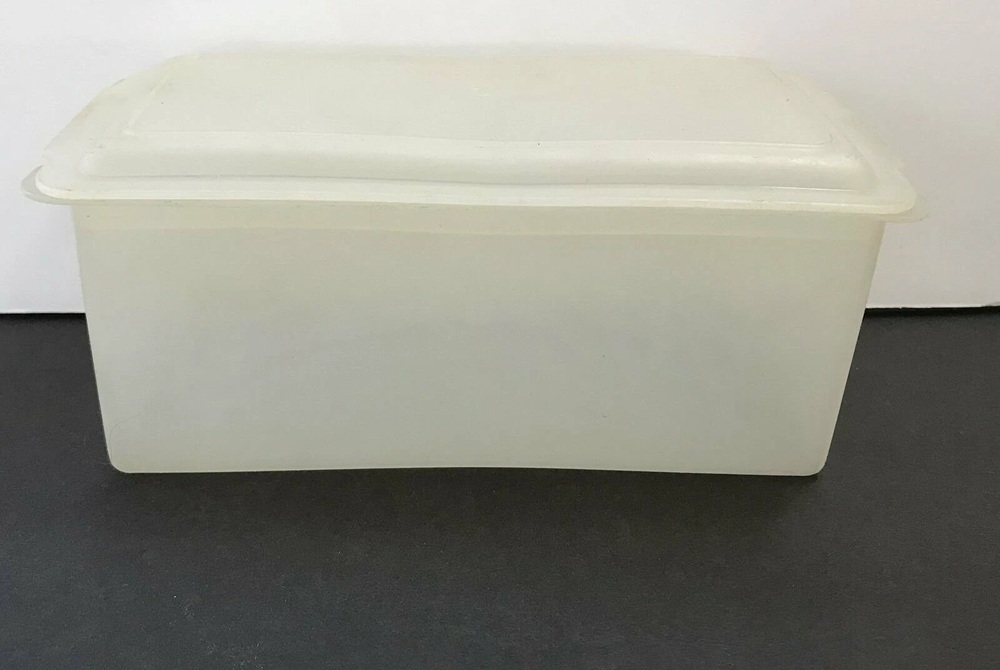
Before harvest gold and avocado green became the signature Tupperware colors, there was the Millionaire line: Tupperware’s first attempt at a genuinely upscale collection, introduced in 1954 in soft, almost pearlescent pastel tones. The line included handled canisters, butter dishes, and wedge-shaped pie keepers, all aimed at a slightly more formal table than the everyday storage bowls.
Individual pieces in good condition typically bring $10 to $20, with the handled canisters, sometimes called Handolier canisters, toward the higher end of that range because they’re less common than the simpler forms. The Millionaire Collection was Tupperware’s earliest push into fancier, pastel-hued pieces, which is part of why collectors specifically seek out pieces marked with the line’s distinctive soft coloring.
The pearlescent finish on these pieces is more delicate than later solid colors and tends to cloud or fade unevenly, so look closely at the surface under good light rather than relying on a quick glance. Hinged handles on the canisters are a common failure point, and a piece with its original handle intact is worth more than one that’s been glued or is missing it entirely.
14. Modular Mates spice carousel set
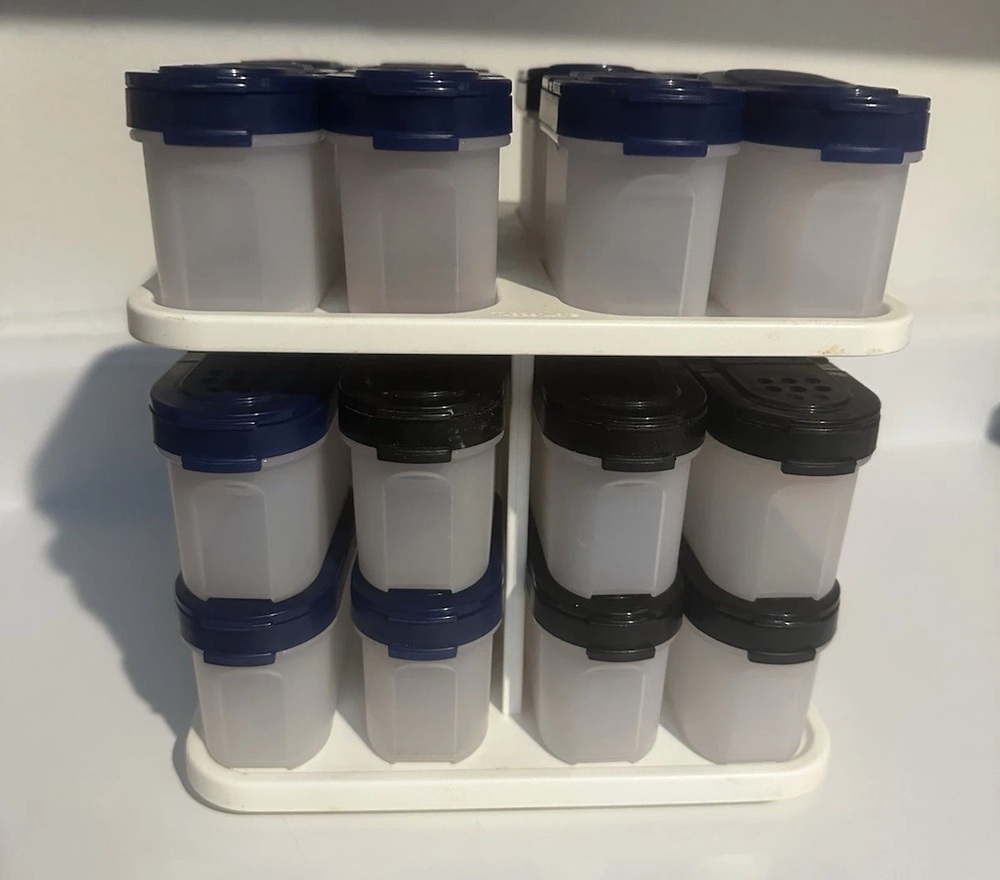
This one is a genuine design piece: square spice jars that interlock into a rotating carousel, each lid built with a dual function so one side shakes and the other flips open for scooping. A full set runs to sixteen individual jars arranged around the turntable, color-coded by lid so a home cook could find the right spice at a glance.
A complete carousel with all sixteen jars present and the turntable still spinning freely typically brings $40 to $75, with pricing shifting based on lid color and overall condition. Partial sets, which are common since individual jars get separated from the carousel over the years, sell for considerably less per piece.
Test the turntable mechanism before assuming a set is complete and functional, since a carousel that no longer rotates smoothly is a real flaw, not just a cosmetic one. Missing jars are the most common issue, so count carefully rather than trusting a listing’s description, and check that the dual-function lids still flip and shake the way they’re supposed to.
15. Ice Tups popsicle and ice tray set
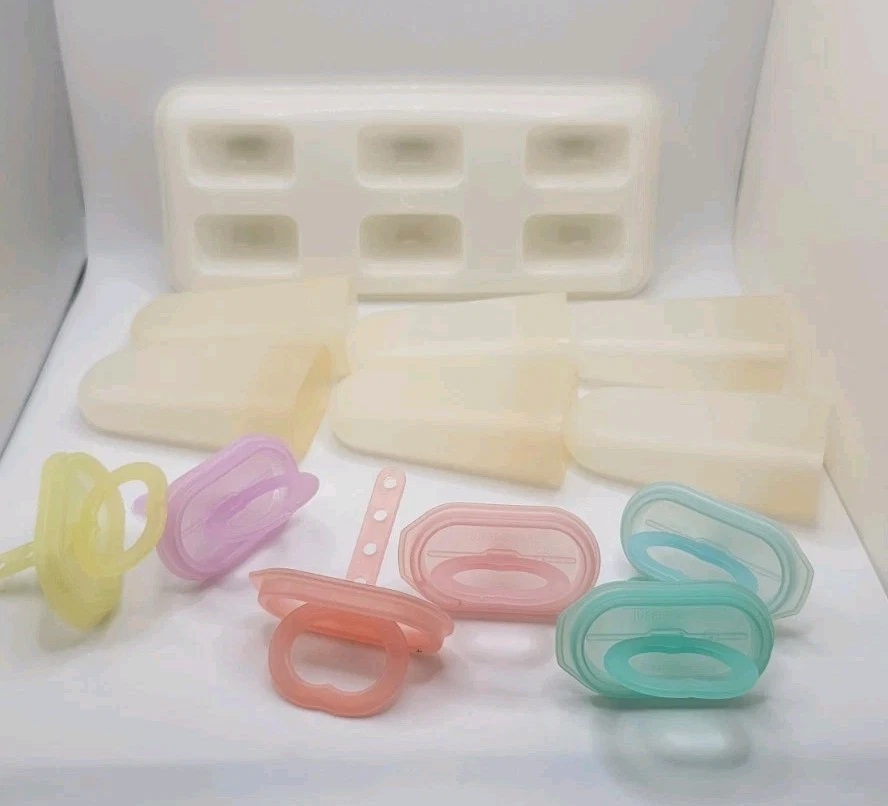
Introduced in the 1970s, Ice Tups were a line of flexible-bottomed molds designed for homemade popsicles, sold in bright, often neon colors with a matching tray to hold six molds upright in the freezer. The flexible silicone-style base made it easy to pop a finished popsicle free without cracking it, which was a genuine improvement over the rigid metal trays that came before.
A complete set with all six molds and the tray present typically brings $10 to $20, with especially bright or unusual colors occasionally pushing a bit higher.
The flexible bottoms are the part most likely to have degraded over fifty years of use, so check for cracking or a base that’s gone stiff rather than staying pliable. Missing sticks and a missing tray both reduce the value, since a mismatched handful of molds without their organizing tray is a much less complete, and much less photogenic, piece.
Bright, saturated colors generally outsell the more muted pastel versions, since the neon tones are more closely associated with the line’s 1970s heyday. A set that still includes its original reusable sticks is worth a little more than one where the sticks were lost and replaced with wooden substitutes over the years.
16. Tuppertoys child-size tea set
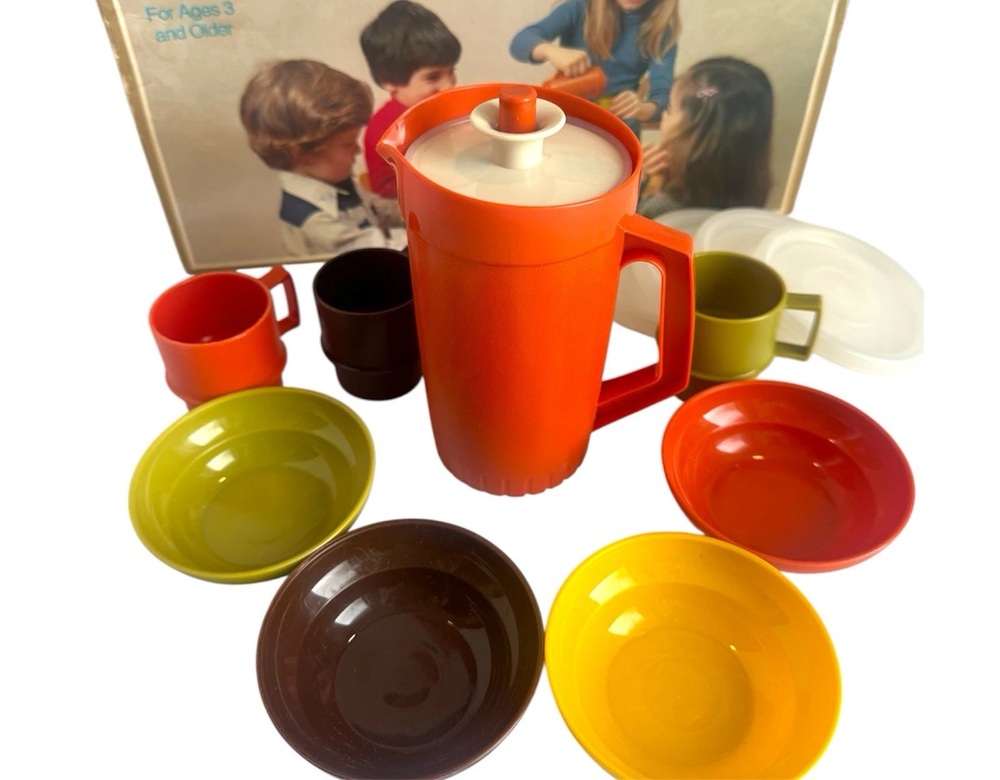
Part of the same toy line as the Shape-O Ball, Tupperware made miniature versions of its own pitcher-and-cup sets specifically for kids, letting a child “set the table” with a tiny matching pitcher, cups, and sometimes a tray, scaled down to doll-sized proportions. These were genuinely played with rather than displayed, which makes a complete set harder to find than you’d expect.
A full set in good condition typically brings $25 to $50, with pieces sold individually worth only a few dollars apiece.
Completeness is everything here, since these tiny pieces scattered easily and rarely all survived together in one toy box. Check for the matching mold numbers that tie a pitcher to its cups, and look for cracking around the handles, which are thinner and more fragile than their full-size counterparts and took the brunt of rough toddler play.
Color fading is harder to spot on pieces this small, so compare a cup against the pitcher in good light rather than a dim cabinet. A set still sold in its original mesh bag or small box is unusual enough to be worth a bit more, since most of these ended up loose in a toy bin within the first week.
17. Fix-N-Mix 26-cup mixing bowl
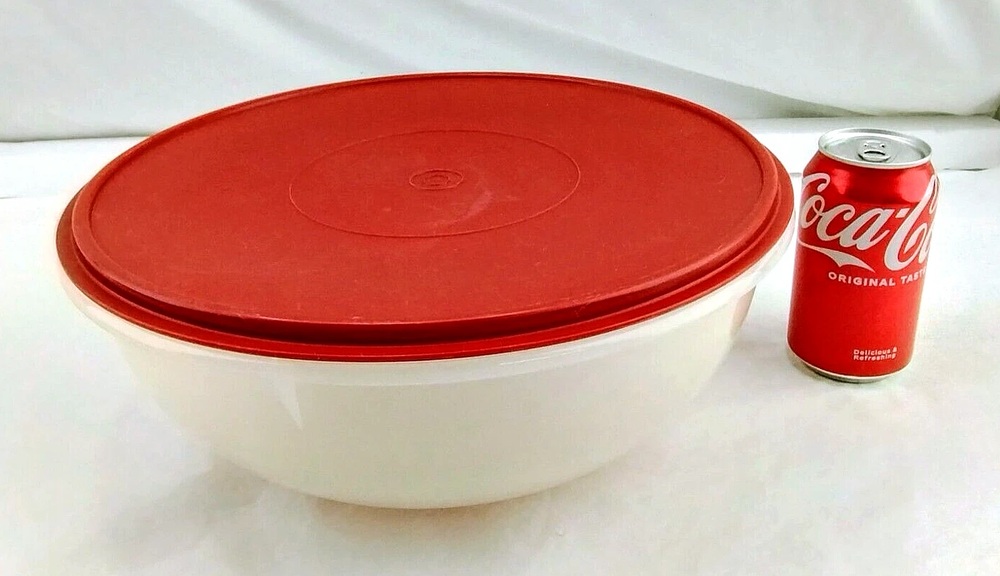
This is the giant of the mixing bowl lineup: a 12-inch bowl holding a full 26 cups, originally marketed for big-batch cooking and large families, and still genuinely useful today for anyone doing serious holiday baking. It’s not a flashy piece, but it has quietly become a favorite among home bakers who’ve discovered that a vintage one often outperforms anything currently sold in stores.
A clean example with its matching sheer lid intact typically brings $15 to $35, with color variants like sunflower yellow or avocado green occasionally bringing a bit more than the plain sheer version.
At this size, warping is the main concern, since a base that’s lost its flat bottom will wobble on the counter and won’t seal evenly under its lid. A bowl without its original lid is worth considerably less, since replacement lids for this specific size aren’t always easy to track down, and the pairing is part of what makes the piece complete.
18. Celery keeper with crisper insert
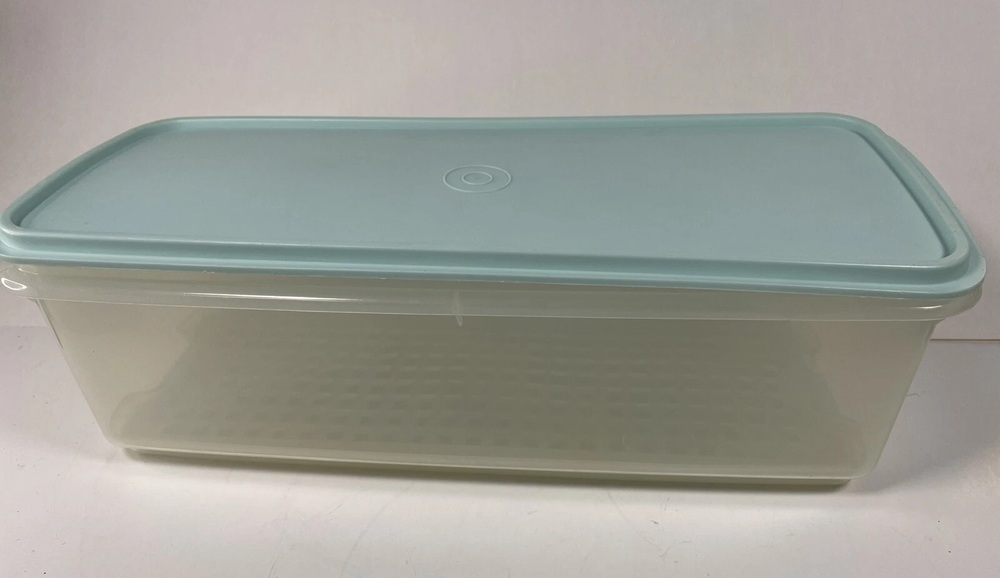
A long, narrow container built specifically to keep celery crisp in the refrigerator, this piece includes a ribbed or perforated insert that lifts the vegetables slightly, letting air circulate and moisture drain away from direct contact. It’s a strangely specific design for a single vegetable, which is part of its charm to collectors who appreciate Tupperware’s habit of building a dedicated container for nearly everything.
A complete keeper with its insert and a properly sealing lid typically brings $10 to $25, with jadeite and mint green editions generally drawing a bit more interest than plain white versions of the same piece.
The insert is the part most often missing from a secondhand find, since it’s a separate piece that’s easy to lose track of over the decades, so check carefully before assuming a listing includes one. Hinged lids crack at the joint with enough use, and a keeper that no longer closes securely won’t do its one job of actually keeping anything crisp.











