
That little ceramic couple leaning into each other on your grandmother’s windowsill was never just a kitchen afterthought. For most of the twentieth century, salt and pepper shakers were the cheapest souvenir a traveler could bring home and the easiest gift a hostess could receive, which means millions of pairs went into circulation, and a surprising number of them are still sitting in cabinets, junk drawers, and dollar bins today.
Most are worth a few dollars and nothing more. But certain makers, patterns, and figural designs built real collector followings, and a pair that looks like dime-store kitsch can be worth considerably more once you know the name stamped on the bottom. Condition decides almost everything here: these are small, breakable objects that lived on countertops, so chipped ears, replaced cork stoppers, and faded paint are the norm rather than the exception, and they knock a set down fast.
Table of contents
- 1. Van Tellingen hugging salt and pepper shakers
- 2. Shawnee Winnie and Smiley Pig shakers
- 3. Hull Pottery Little Red Riding Hood shakers
- 4. Royal Bayreuth tomato shakers
- 5. Rosemeade Pottery animal shakers
- 6. Fenton hobnail milk glass shakers
- 7. Occupied Japan Dutch boy and girl shakers
- 8. Vintage Fiesta dinnerware shakers
- 9. Holt-Howard winking Santa shakers
- 10. Noritake Azalea pattern shakers
- 11. McCoy Pottery strawberry shakers
- 12. Pennsbury Pottery Red Rooster shakers
- 13. Lefton China hand-painted shakers
- 14. Jadeite Fire-King tulip shakers
- 15. Jeannette Glass Doric pattern shakers
- 16. Josef Originals figural shakers
- 17. Goebel Friar Tuck shakers
- 18. Antique sterling silver figural shakers
1. Van Tellingen hugging salt and pepper shakers
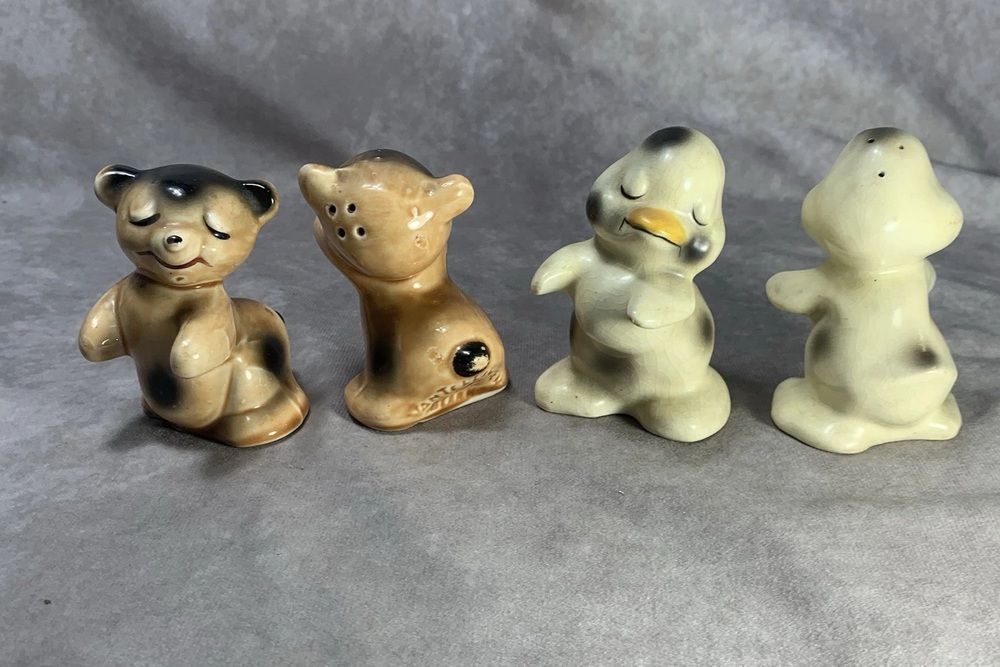
The “hugger” format, two figures standing close enough that their shoulders touch and a magnet or notch holds them together, was invented by illustrator Ruth Van Tellingen Bendel, who began producing the design through Regal China in the late 1940s before patenting it in 1949. Her original patent covered the bear version, but the line quickly expanded into bunnies, a Dutch boy and girl, and a sailor embracing a mermaid.
Common pairs like the hugging bears and bunnies are genuinely easy to find and typically bring $15 to $30 in decent shape. The Dutch couple and the sailor and mermaid pairing are scarcer and often run $30 to $50, more for mint examples with their original cork stoppers intact.
Check the base for “Van Tellingen” or “Pat. Pend.” stamped into the glaze, since reproductions exist without it. A missing cork or a hairline crack where the figures join is the most common flaw, and a set with both figures matching in paint tone is worth more than one where the colors have faded unevenly from sun exposure.
2. Shawnee Winnie and Smiley Pig shakers
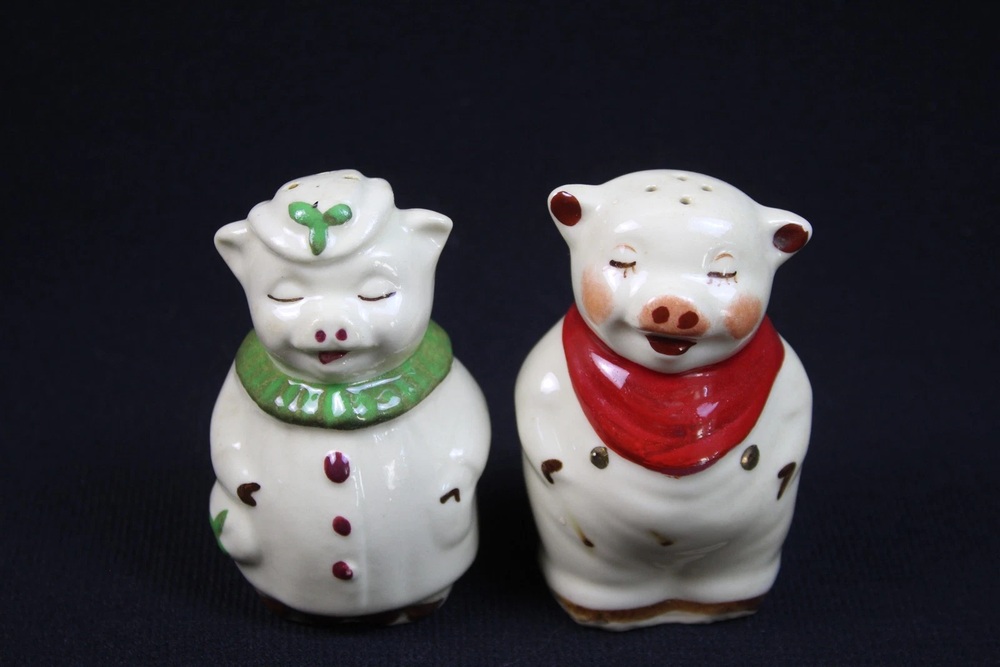
Shawnee Pottery of Zanesville, Ohio, introduced these grinning pig shakers around 1942, designed by Rudy Ganz as companions to the brand’s larger Smiley and Winnie cookie jars. The pottery operated from 1937 to 1961 and sold heavily through Sears, Woolworth, and door-to-door coffee premiums, which is why so many pairs survived into family cupboards.
Condition drives the price more than usual on these. A chipped or cracked pair can slip to $15 or less, while a clean pair in a common bib color, blue, green, or gold, typically brings $20 to $50. The scarcer red-bib and peach-bib colorways push toward $75 for pairs with no chips or crazing.
Look closely at the ear tips and the pig’s snout, which chip first, and confirm the impressed Shawnee mark on the underside before assuming a similar unmarked pig is the real thing. Original cork stoppers are frequently missing, and a set without them sells for noticeably less than a complete one.
3. Hull Pottery Little Red Riding Hood shakers
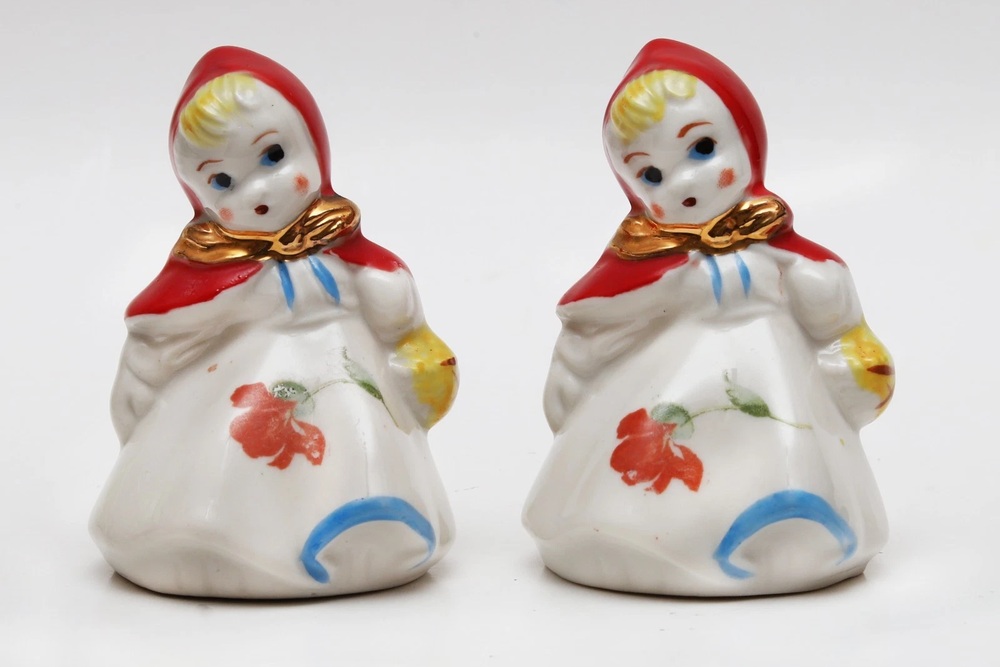
Hull Pottery, founded in Crooksville, Ohio in 1905, built an entire kitchenware line around Little Red Riding Hood between 1943 and 1957, with designer Louise Bauer creating the cookie jars, grease containers, and matching salt and pepper shakers that turn up most often in estate sales today.
The smaller, more common version of the shakers typically sells for $15 to $25 in good condition, considerably less than the cookie jar, which can run into the hundreds depending on the dress pattern. The larger, harder-to-find size brings closer to $45 to $70 even with a missing stopper or minor paint wear, since fewer of them survived.
Paint loss along the red hood and apron trim is the most common issue, along with hairline cracks near the base where decades of handling take their toll. A matched pair with crisp, unfaded paint and original cork stoppers brings more than one with mismatched replacements, and a few reproduction pairs have circulated with softer, less detailed features than the originals.
4. Royal Bayreuth tomato shakers
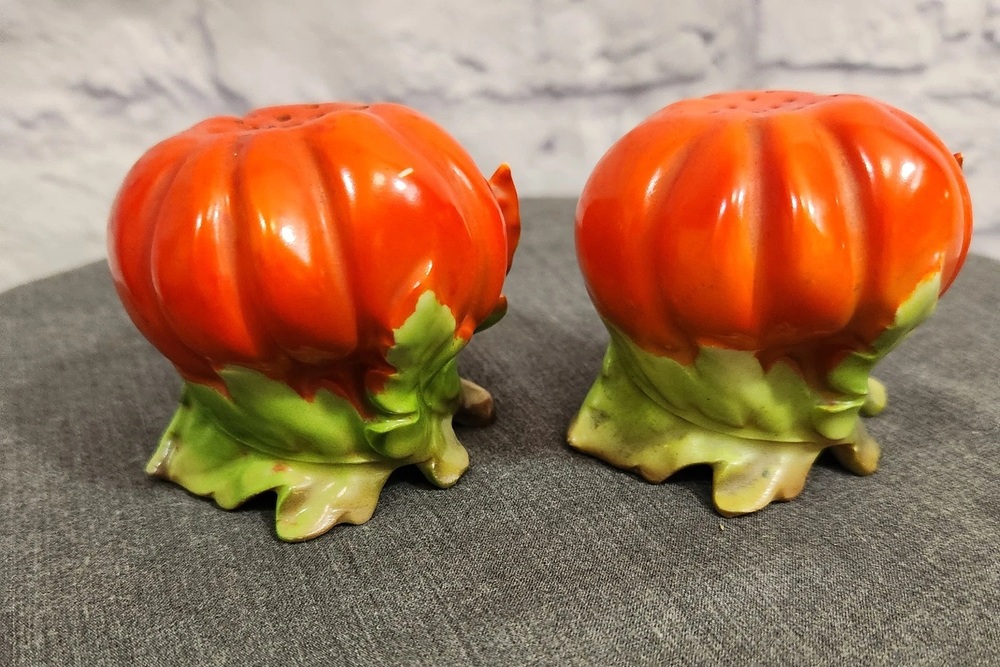
Royal Bayreuth, a German porcelain maker operating out of Tettau since 1794, produced an entire figural “tomato set” line of creamers, sugars, mustard jars, and salt and pepper shakers shaped like ripe red tomatoes with painted green leaves, most dating to the early twentieth century. A shaker pair alone typically brings $20 to $40, while the full set with creamer and sugar can reach $75 per piece.
The company also made lobster and strawberry versions of the same figural format, both scarcer and more valuable than the tomato.
Flip a piece over to check for the blue Royal Bayreuth mark, since the tomato shape has been widely copied by other importers without the mark at all. Paint loss on the raised leaf details and a missing cork stopper are the most common condition issues, and a shaker pair sold with its matching creamer and sugar bowl is worth meaningfully more than the same pieces sold separately.
5. Rosemeade Pottery animal shakers
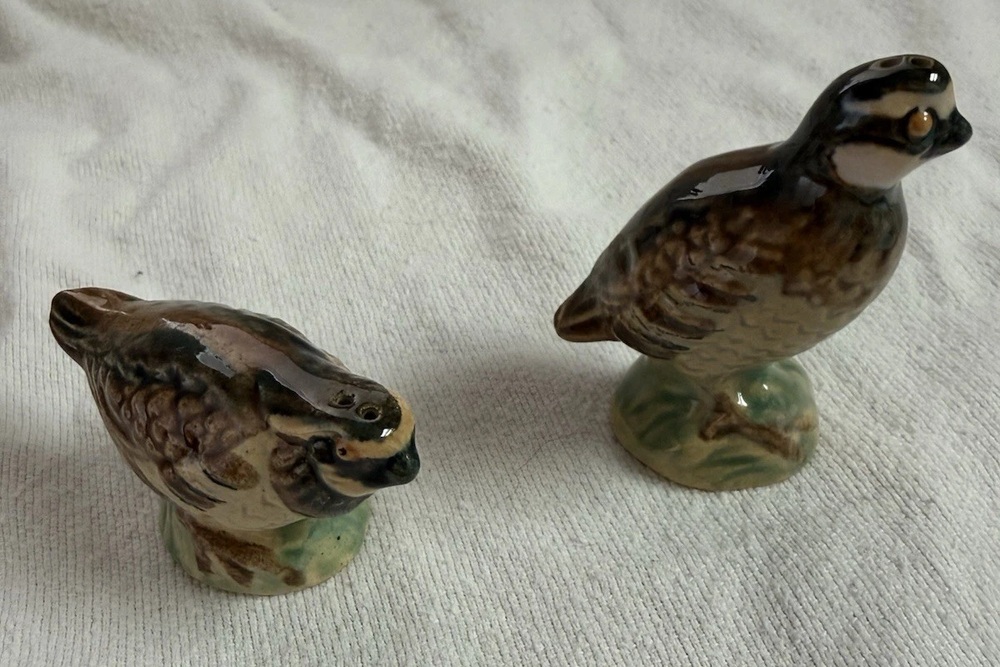
Rosemeade Pottery operated in Wahpeton, North Dakota from 1940 to 1961, founded by Laura Taylor, whose naturalistic animal designs drew on the wildlife of her own North Dakota farm childhood. The pottery turned out an enormous range of small figural salt and pepper shakers shaped like pheasants, quail, skunks, and prairie animals, most of them cast rather than thrown by hand.
Common birds like the pheasant and quail pairs typically sell for $15 to $35, while scarcer, less typical animals like a kangaroo pair bring $35 to $55 or more depending on how unusual the subject is.
The maker’s mark is a small impressed “Rosemeade” or a paper foil label on the base, and pieces missing the label are harder to confirm without comparing the mold details to a reference photo. Chips on the beak or tail tips are common on the bird designs, and foil labels, when present, add to the value since most have worn away over seventy-plus years.
6. Fenton hobnail milk glass shakers
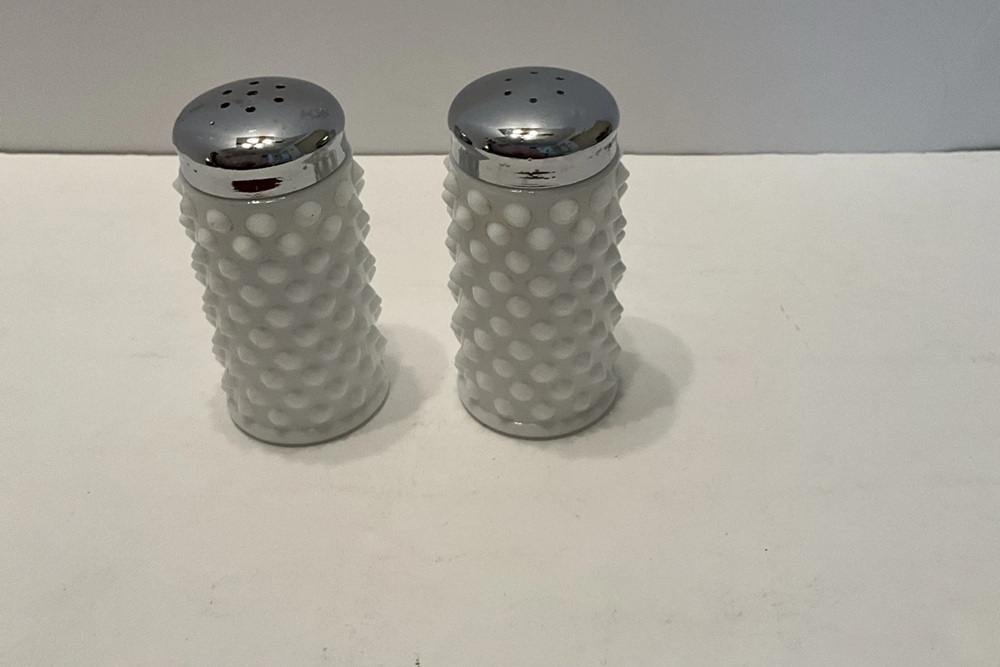
Fenton Art Glass, founded in Williamstown, West Virginia in 1905, made its white hobnail milk glass pattern, rows of small raised glass bumps, into one of the most recognizable American glassware lines of the mid-twentieth century before the company closed in 2011. Plain white hobnail footed shakers with their original metal lids typically sell for $20 to $45 in clean condition.
Colored versions in cranberry or blue opalescent glass are scarcer and bring $35 to $60 for a matched pair, sometimes more for cranberry, which collectors chase hardest.
Check the glass for a tiny oval Fenton sticker, since most pieces left the factory with one, though it rarely survives decades of dishwashing and its absence alone doesn’t mean a piece is fake. A cracked or badly rusted metal lid is the most common flaw and is worth replacing only with a period-correct one, since a mismatched modern lid noticeably lowers the price a buyer will pay. A full matching set with a sugar jar and tray is worth seeking out, since it brings more than the same pieces sold apart.
7. Occupied Japan Dutch boy and girl shakers
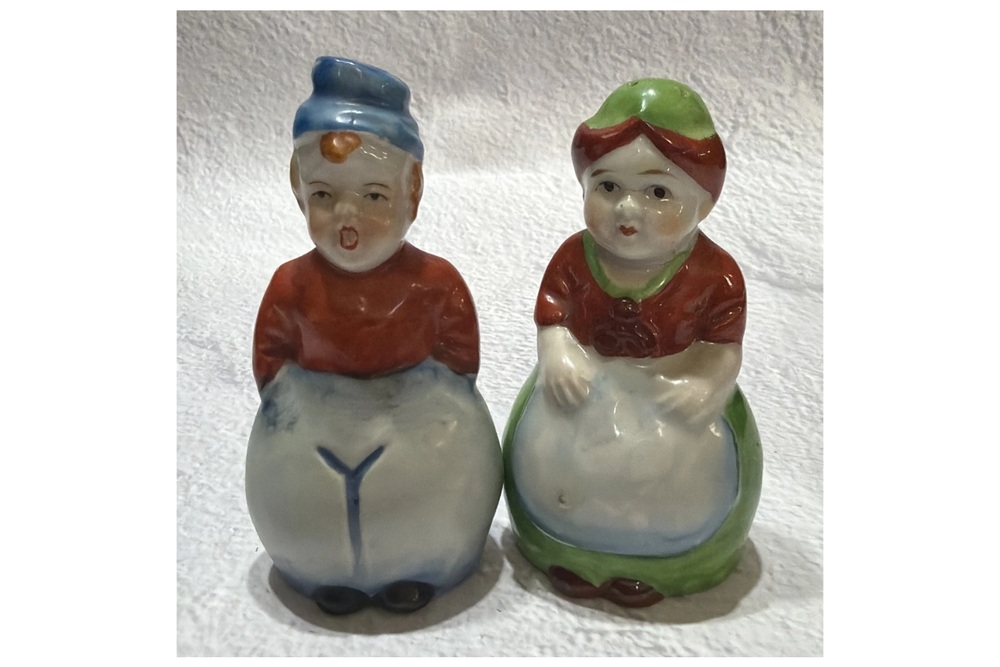
Between 1945 and 1952, items exported from Japan to the United States carried a “Made in Occupied Japan” mark, and ceramic salt and pepper shakers were one of the most commonly imported souvenir categories of the period. The Dutch boy and girl theme was especially popular, and a pair in that design, while not as valuable as pieces showing a full-length figure, is worth $12 to $20 today.
Other themes from the same era, teapots, chickens, and musicians, turn up regularly at similar prices.
The mark itself is what collectors look for first, stamped or printed on the base in small lettering that’s easy to miss under years of grime. A gentle wash in warm water, never anything abrasive, usually reveals it. Hairline cracks near the arms or hat brim are common on these lightweight pieces, and a set with its original cork stoppers intact is worth a little more than one with replacements.
8. Vintage Fiesta dinnerware shakers
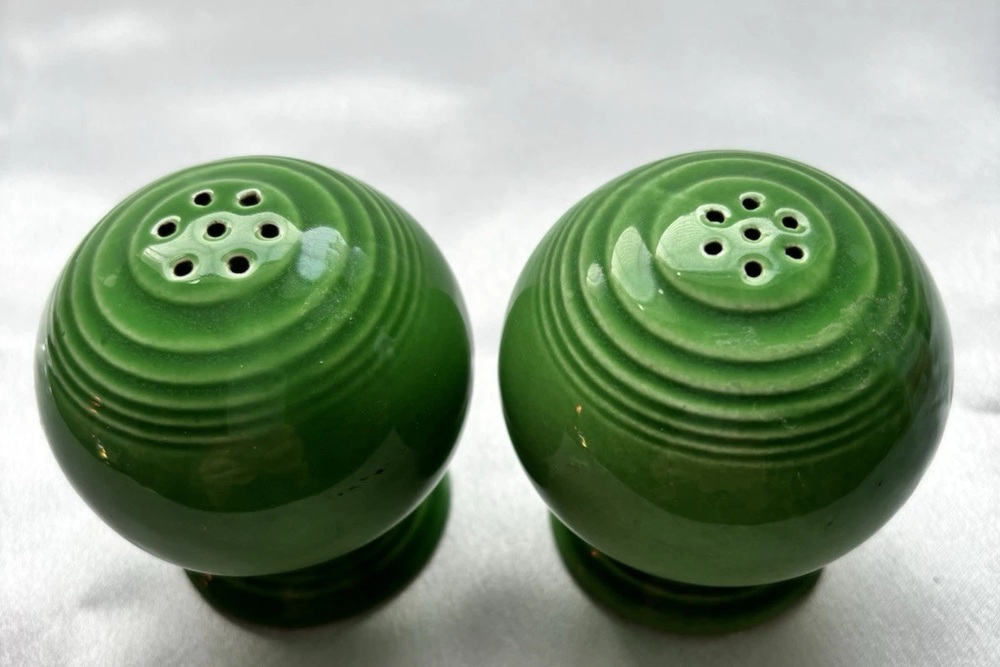
Original Fiesta, made by Homer Laughlin from 1936 to 1969, included small bulb-shaped salt and pepper shakers in every glaze color the line ever produced. A single shaker in a common original color, yellow, turquoise, or light green, runs about $25 to $35 through specialty dealers, so a matched pair in good condition typically totals $20 to $45 on the general secondhand market.
Medium green, introduced in 1959 as the line was winding down, is the color collectors chase hardest, and a pair in that glaze often sells in the $150 to $250 range, sometimes more for mint examples.
Because the shakers are small, Homer Laughlin never marked most of them, so color is the main way to identify an original piece rather than a later reissue, which runs in a noticeably different, more uniform palette. Chips on the fill-hole rim and a cork stopper that doesn’t match the original color are the usual condition flags, and a glaze with a slight sheen difference from modern Fiesta is a good sign of age.
9. Holt-Howard winking Santa shakers
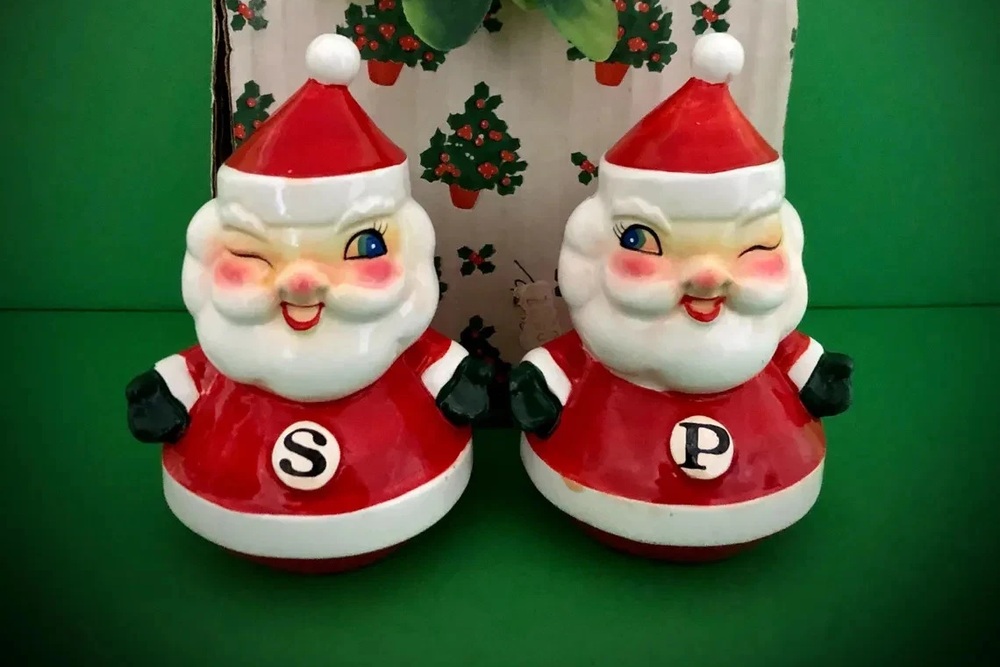
Holt-Howard was founded in 1949 by brothers John and Robert Howard along with college friend Grant Holt, who began importing cheerful, cartoon-faced ceramics from Japan and built an entire Christmas line around a winking Santa character through the late 1950s and 1960s. The standard winking Santa salt and pepper pair, often with a spring-loaded hat or stacking design, typically brings $50 to $80 today.
Rarer variations, including the stacking three-piece Santa design, climb considerably higher, with clean examples reaching $150 or more.
Flip a piece over and look for the stamped “HH” or “Holt-Howard” mark, since knockoff winking Santas without the mark are common and worth far less. Crazing in the glaze is typical and doesn’t hurt value much on its own, but a chipped hat point or a replaced cork stopper does, and a set still in its original box commands a real premium. The same winking-face line also made matching mugs, a sugar and creamer set, and an ashtray, so a shaker pair found alongside any of those is worth noting before splitting the lot up.
10. Noritake Azalea pattern shakers
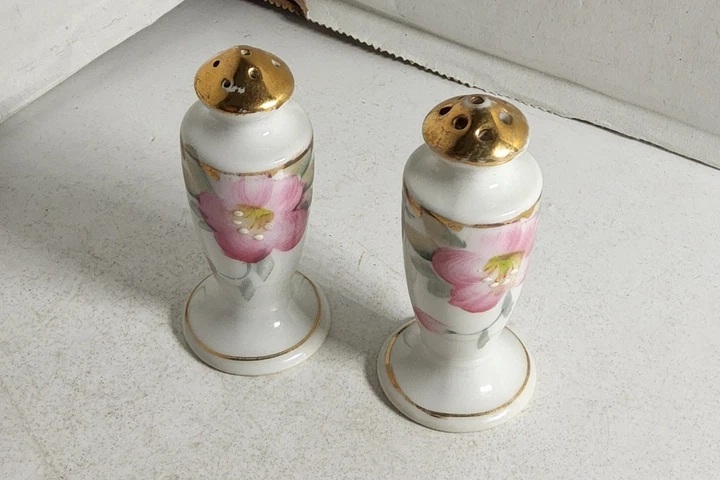
Noritake’s Azalea pattern, pink flowers with gold trim on fine white china, was one of the most widely distributed Japanese export patterns in American homes during the early and mid-twentieth century, often given away as a grocery or soap company premium. A shaker pair in clean condition typically sells for $10 to $25, and a matched six-piece set with the mustard jar, spoon, and tray brings $75 to $100.
The pattern was produced for decades, so pieces vary slightly in gold trim thickness depending on the era.
Worn gold trim is extremely common and expected on a pattern this old, and it only meaningfully hurts value when it’s worn through to bare porcelain on the handle or rim. A chip at the base, where the shaker sat flat on a table for decades, is the more serious flaw to check for, and a set sold with its original tray is worth more than the shakers alone.
11. McCoy Pottery strawberry shakers
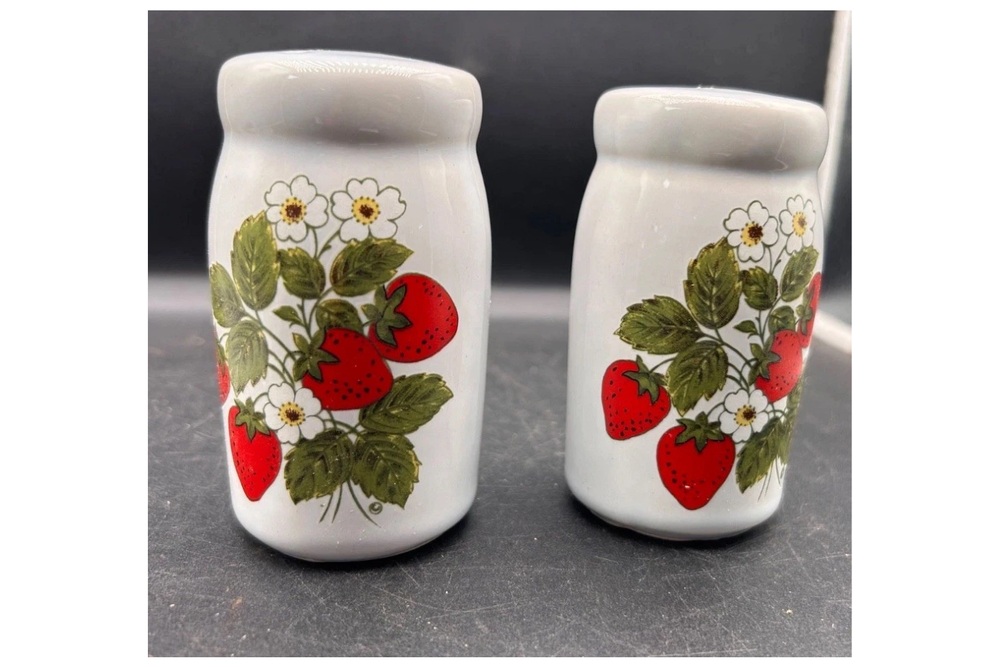
The Nelson McCoy Pottery Company, operating in Roseville, Ohio and marking its wares consistently from around 1929 onward, produced a Strawberry Country pattern late in its run, simple white stoneware decorated with painted strawberries, that became one of its most recognizable kitchen lines. A pair of strawberry-pattern shakers in good condition typically sells for $10 to $20, in the same range as McCoy’s other simple figural kitchen shakers from the same decades.
McCoy also made a matching pitcher, canisters, and a cookie jar in the same pattern, and a shaker pair sold alongside other strawberry pieces brings more as part of a grouping than alone.
Look for the “McCoy USA” or “McCoy” impressed mark on the base, since the company’s popularity has made it a frequent target for unmarked imitators. Chips along the raised strawberry details and a cloudy, worn glaze from years of dishwasher use are the most common flaws, and cork stoppers are often missing entirely by now.
12. Pennsbury Pottery Red Rooster shakers
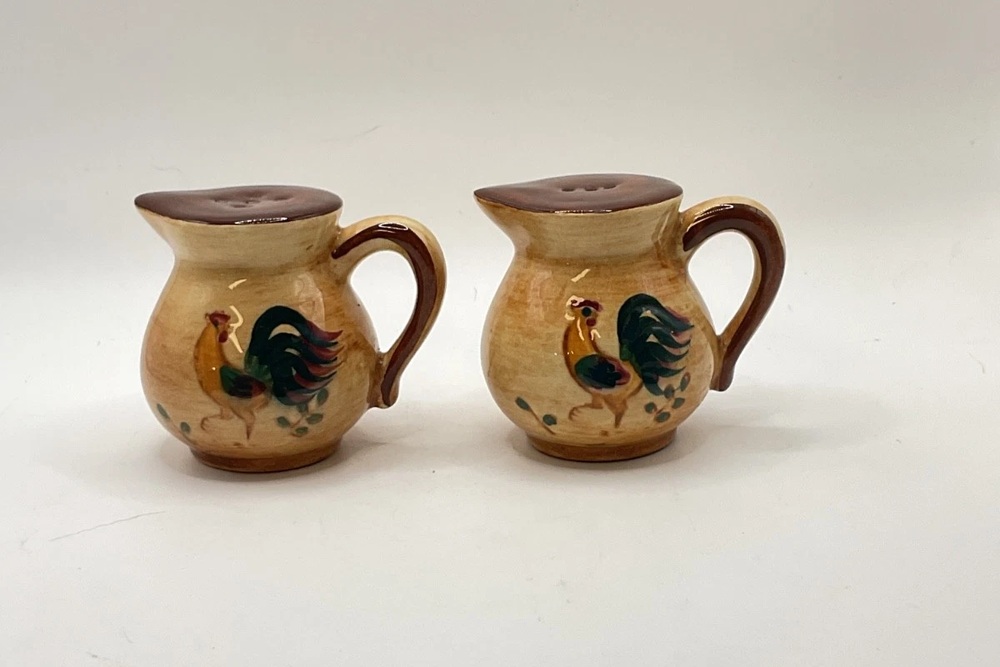
Pennsbury Pottery, hand-painting folk art designs in Morrisville, Pennsylvania from 1950 until it closed in 1971, built its best-known pattern, Red Rooster, around a strutting brown and red rooster motif that appeared across an entire dinnerware line. A single Red Rooster salt shaker typically runs about $15, so a matched pair usually totals $25 to $35.
The hand-painted nature of the line means no two pieces are perfectly identical, which collectors consider part of the appeal rather than a flaw.
Each piece was hand-decorated rather than transfer-printed, so brushstroke variation is normal and expected, not a sign of a fake. What does hurt value is chipped glaze along the rooster’s comb and tail, the most exposed details on the design, along with a missing or replaced cork stopper, which is common after seventy-plus years of use. Because the pottery closed in 1971 and never resumed production, there’s no reissue to worry about confusing with an original, which makes this one of the easier patterns to buy with confidence.
13. Lefton China hand-painted shakers
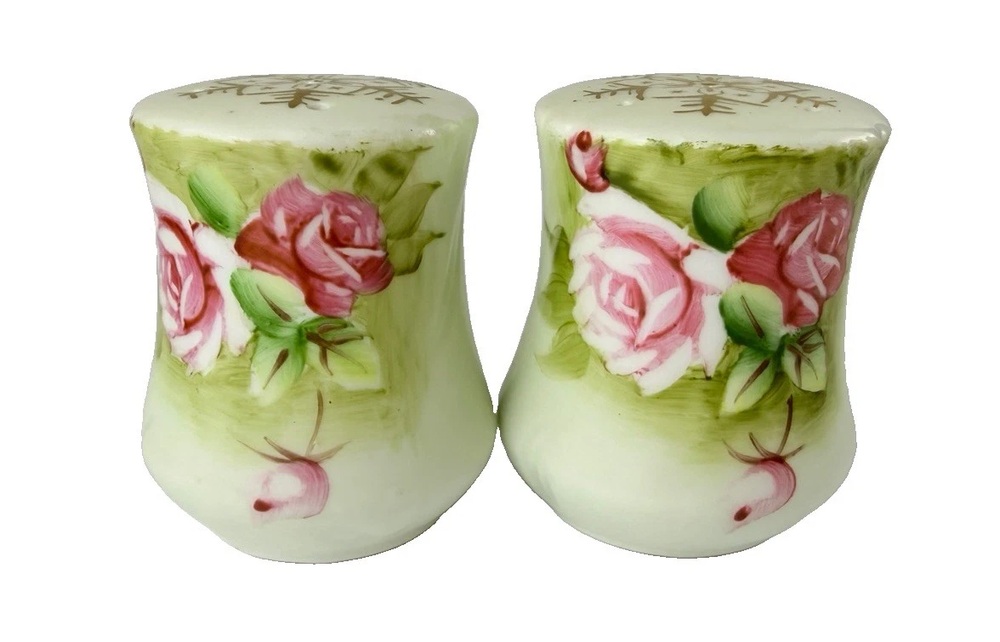
Lefton China, the giftware import business founded by Hungarian immigrant George Zoltan Lefton after World War II, brought enormous quantities of hand-painted Japanese ceramics into American department stores through the 1950s and 1960s, salt and pepper shakers included. A common hand-painted floral pair in good condition typically sells for $15 to $25.
Complete themed Lefton sets with a matching creamer, sugar bowl, or cookie jar bring more than the shakers alone, often $40 to $75 for a grouping in clean condition, since collectors pay a premium for pieces that still go together.
Look for the pink Lefton paper label or the stamped “Lefton” mark on the base, since the label is often the first thing to rub off after repeated hand washing, and plenty of genuine pieces survive with no label at all. Faded hand-painted details and a chipped glaze along the fill hole are the most common flaws on pieces this old, and a set with both pieces still showing crisp color is worth seeking out over a faded match.
14. Jadeite Fire-King tulip shakers
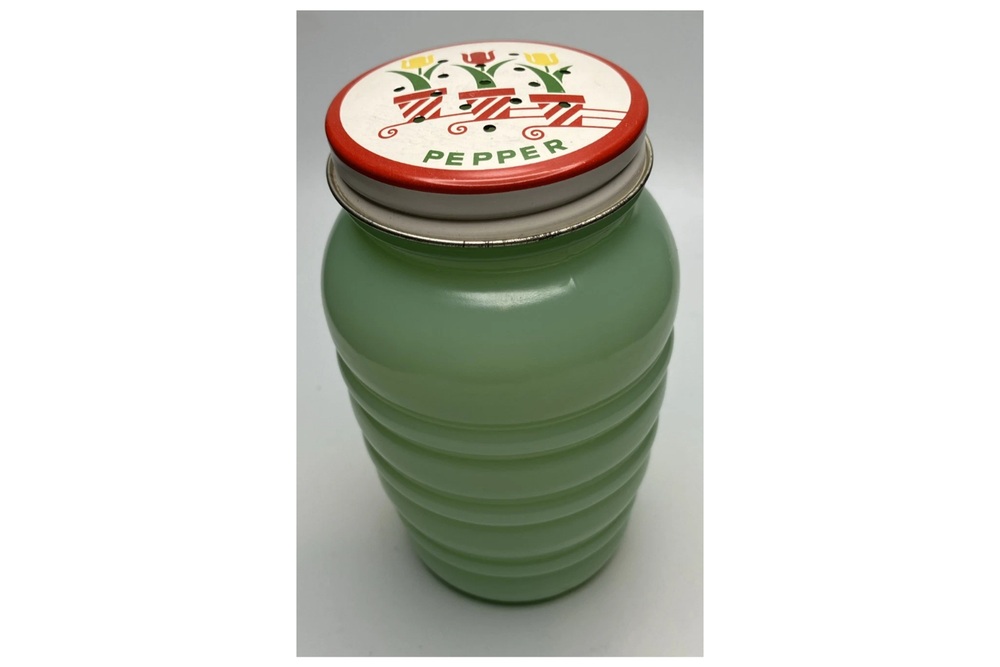
Anchor Hocking’s opaque green Jadeite glass, produced under the Fire-King name through the 1940s and into the 1970s, included a line of kitchen range shakers with embossed tulip designs and metal screw lids. A plain swirl or ribbed Jadeite pair typically sells for $20 to $40, while the tulip-pattern pair with its original mint lids has been valued at $90 to $100.
Jadeite without uranium content, which covers nearly all Fire-King production, is the safer and more common version to collect.
Check the metal lid for rust and flaking chrome, which is extremely common and knocks the price down noticeably, since a mismatched replacement lid is an easy substitution to spot. A faded or scuffed label on the lid, when a set still has one, adds a little to the value, and genuine Jadeite has a slightly uneven, cloudy quality that’s hard to fake in modern reproductions. Newer jadeite-look glass from the 1990s onward tends to be heavier and more evenly colored, which is usually enough to tell it apart on sight.
15. Jeannette Glass Doric pattern shakers
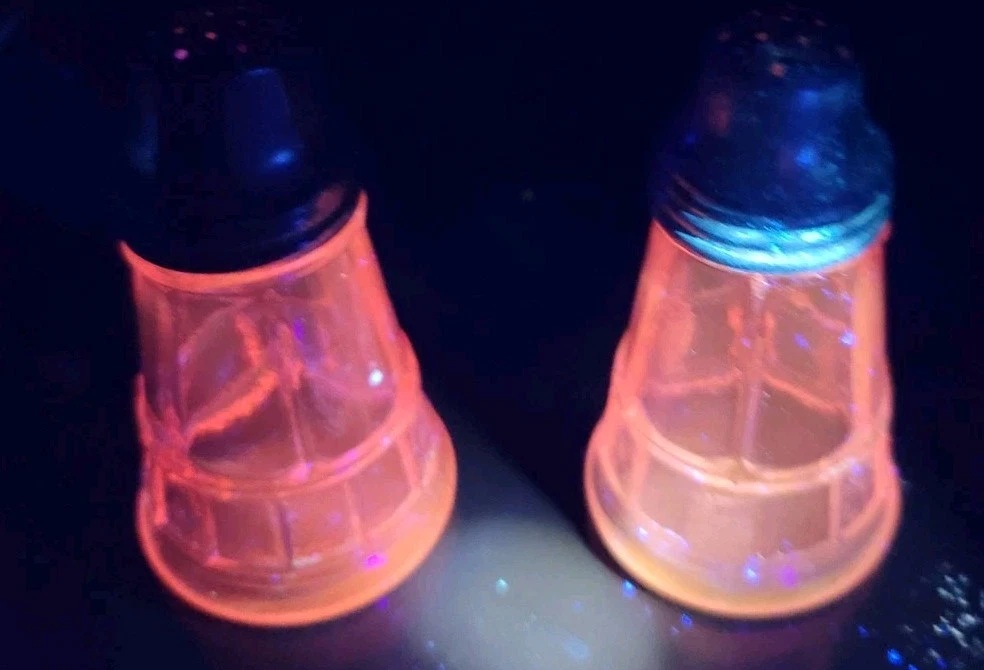
Jeannette Glass Company, one of the major Depression-era glass makers operating out of Jeannette, Pennsylvania, produced its Doric pattern in pink and green through the 1930s, including small ribbed salt and pepper shakers with metal screw lids designed for a kitchen range rather than a dining table. A pair in good condition typically sells for $20 to $25, in line with Jeannette’s other floral and ribbed range shakers from the same years.
Scarcer Depression-glass range shakers in black or cobalt blue from other makers of the same era command more, often climbing past $40 for a matched pair.
The metal lid is almost always the weak point, since decades near a stove meant rust and pitting were common even when the glass itself survived in excellent shape. A lid with its original paint intact, rather than bare rusted metal, adds real value, and a chip on the glass rim where the lid screws on is the most common damage to check for under good light.
16. Josef Originals figural shakers
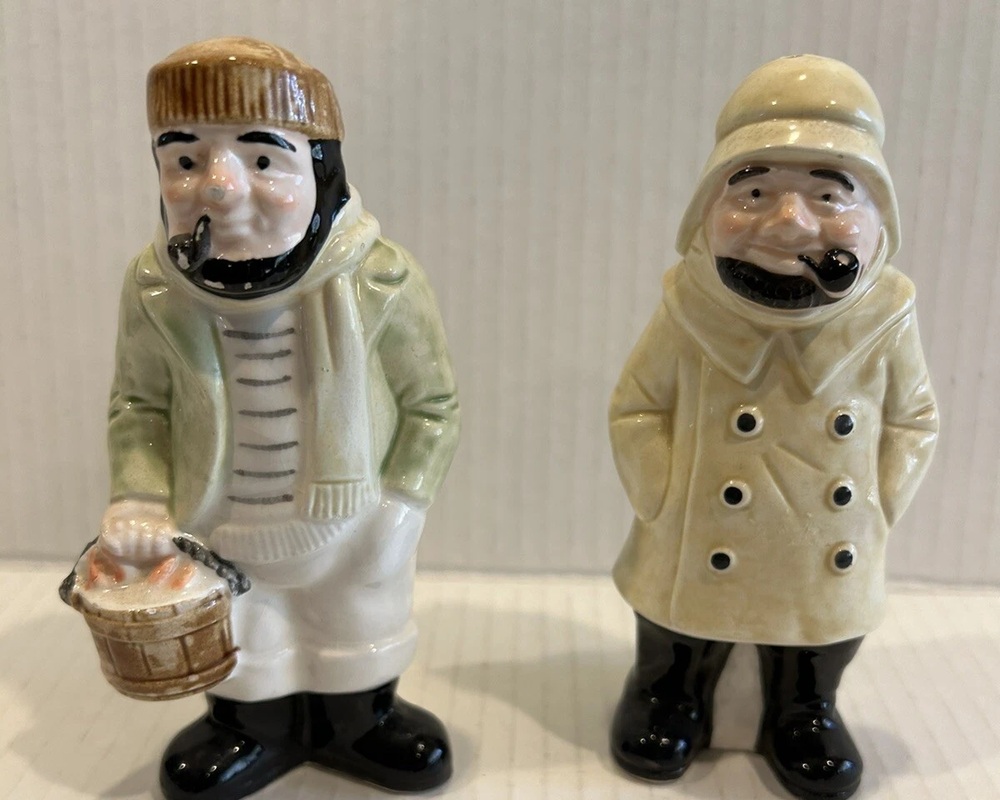
Josef Originals, a giftware line created by the George Good Corporation and manufactured in Japan and later Korea from the 1950s through the 1980s, turned out an enormous range of whimsical figural salt and pepper shakers, animals, children, and seasonal characters among them. Everyday figural pairs, like the round pig and rabbit designs, typically sell for $15 to $25, while seasonal Christmas designs like Santa and Mrs. Claus climb higher, often toward $50 for a clean pair, depending on the specific figure and condition.
The snowman and reindeer designs from the 1950s tend to sit at the higher end of that range.
A tiny printed paper label on the base, often a small shield or wafer sticker, is the clearest way to confirm a genuine Josef Originals piece, though it’s frequently missing by now. Chipped facial features and faded cold-paint details, which were brushed on rather than fired into the glaze, are the most common and most value-damaging flaws on these pieces.
17. Goebel Friar Tuck shakers
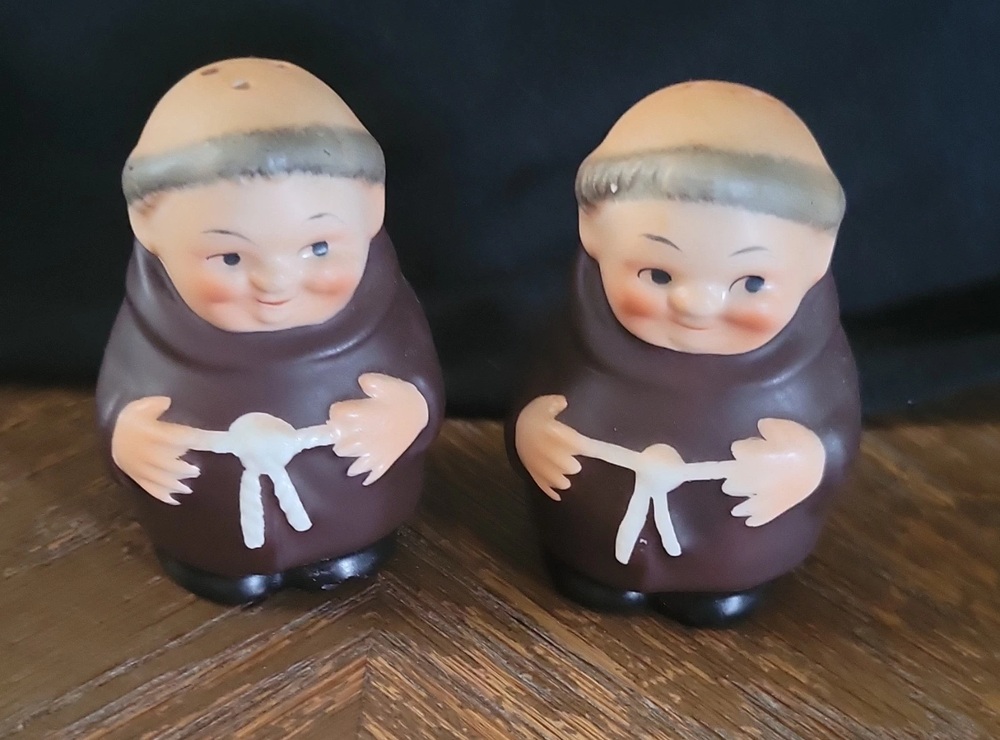
W. Goebel Porzellanfabrik of Germany, better known for its M.I. Hummel figurine line, also produced a separate and more lighthearted series of figural kitchenware featuring a round, grinning Friar Tuck monk, including matching salt and pepper shakers, creamers, and sugar bowls through the 1950s and 1960s. A shaker pair typically sells for $20 to $45, and a complete Friar Tuck set with creamer and sugar has been appraised at $50 to $75.
At the far end of the Goebel market, a Disney-licensed Goebel salt and pepper set has brought as much as $1,500, a separate and much scarcer collaboration line from the standard Friar Tuck pieces.
Every genuine piece carries the stamped Goebel bee-in-a-V trademark on the base, which changed shape slightly over the decades and helps narrow down a production date. Chips on the monk’s tonsure and a cracked or replaced cork stopper are the usual flaws to check for.
18. Antique sterling silver figural shakers
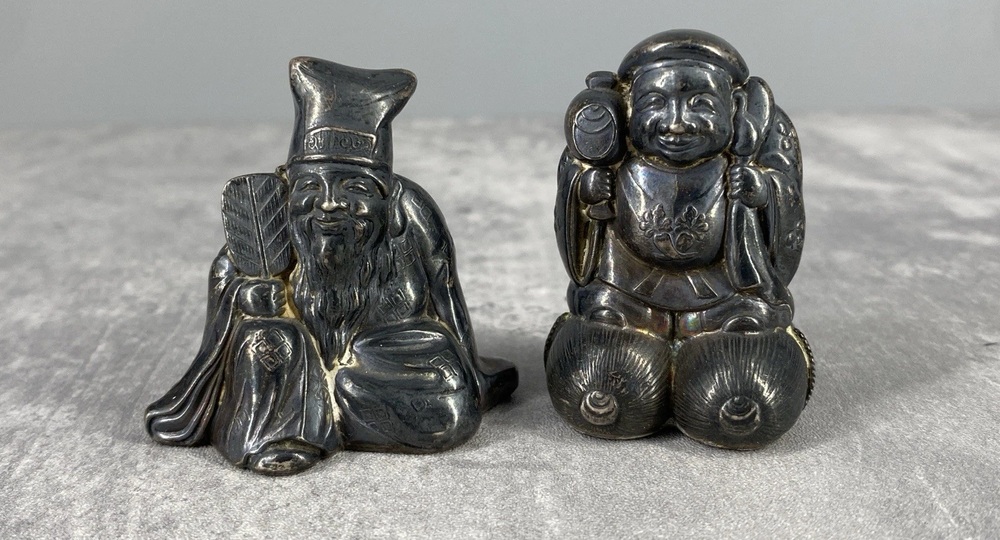
Sterling silver salt and pepper shakers from American and European makers, Gorham among the most common names found in family silver chests, were a staple wedding and anniversary gift from the Victorian era through the mid-twentieth century, often cast in figural shapes like shells, urns, or novelty animal forms. A signed pair in good condition typically brings $300 to $700, with weight and maker both affecting where in that range a set lands.
Rare Victorian novelty forms from major houses like Tiffany are worth considerably more, often climbing into the thousands, though that reflects an unusual combination of maker, age, and design rather than the typical sterling pair most people inherit.
Check for a full sterling hallmark rather than “silverplate” or “EPNS,” which look similar at a glance but are worth a fraction of the price. Dents, monogram removal scars, and a missing glass liner inside the shaker all reduce value, and tarnish alone is not a problem since it polishes off without damaging the silver underneath.











