
Your dad’s old tackle box has been sitting in the garage since he stopped fishing, full of rusty hooks, tangled line, and a few dozen wooden lures with chipped paint. Before any of it goes in the trash or off to a church sale, dump it out and look closely. Some of those battered old baits are worth more than the rod you’d use to cast them.
American lure collecting is a real market with real money behind it, built mostly around a handful of companies working out of small Midwest towns from roughly 1900 through the 1950s. Heddon of Dowagiac, Michigan sits at the center of it, but Creek Chub, South Bend, Pflueger, Shakespeare, and a string of smaller makers all have serious followings of their own. What separates a junk-drawer bait from a genuine find comes down to maker, model, color, and condition, in that order, and condition usually decides the final number.
The biggest trap in this hobby isn’t fakes, it’s repaints. A worn lure touched up to look mint is common enough that collectors check every example under strong light before they trust the paint.
1. Heddon River Runt Spook
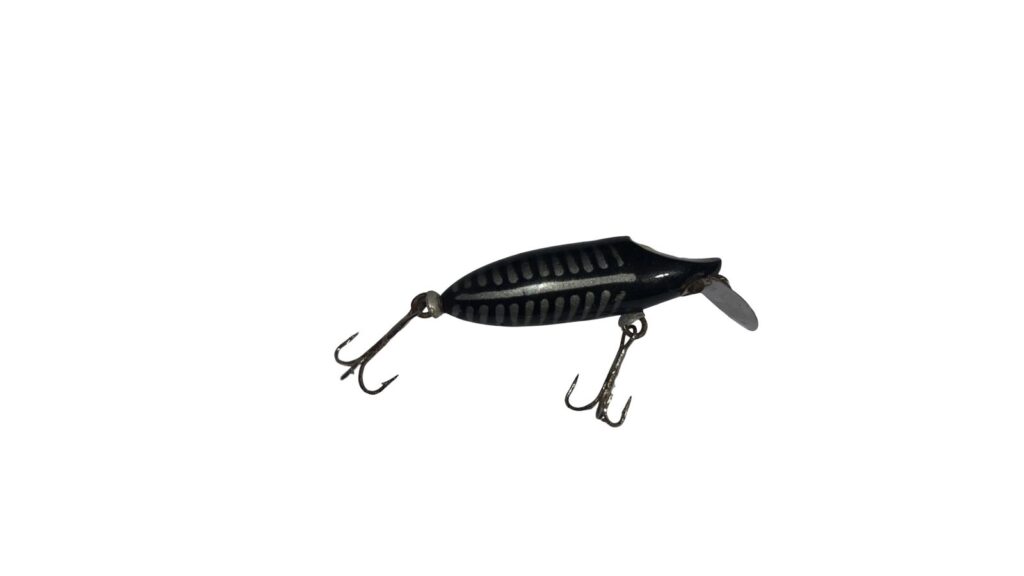
Heddon’s River Runt line goes back to 1929, with the plastic “Spook” versions following a few years later, and the company kept making them into the 1980s. That kind of volume, across dozens of colors and body styles, is exactly why most examples you’ll find are not worth much. Common finishes like perch scale or shore minnow in honest, used condition typically bring $5 to $20, which still beats the dollar or so Heddon charged for one new.
The scarcer colors are where it gets interesting. Luminous “Glow Worm” examples are hard to find in good shape because the heavy glow paint tends to bubble and flake with age, and finishes made for only a year or two, or weedless rigs like the No-Snag model, show up far less often at estate sales. Clean examples in those colors climb well past $200.
Check the eye style and line-tie hardware before getting excited. Earlier River Runts have a down-turned eye with a gold iris, and later ones switched to white. Mismatched hardware or an eye that’s clearly been swapped knocks the price down fast, and a glossy repaint erases the fine scale detail that made the original finish worth having.
2. Heddon Vamp
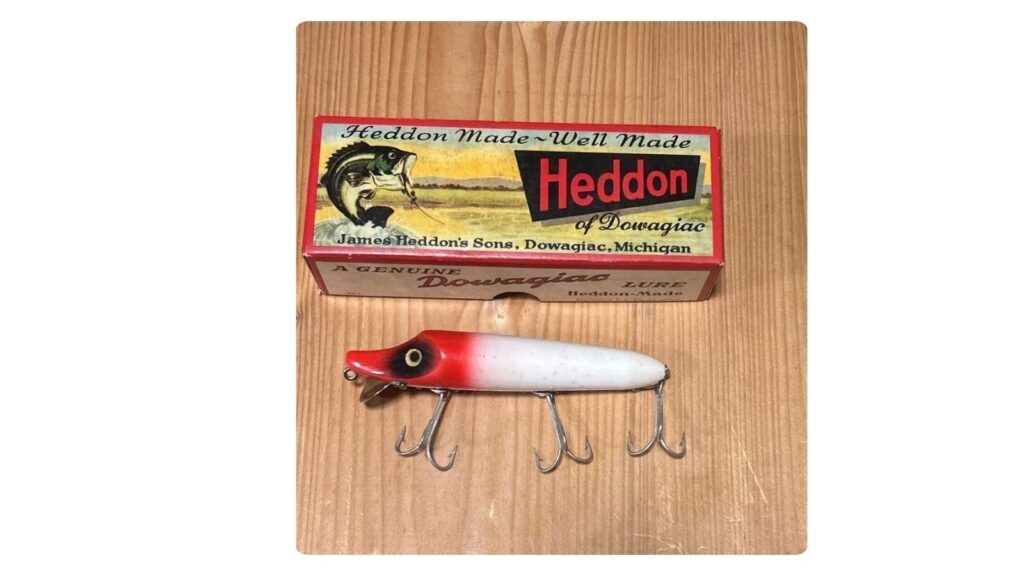
The Vamp is Heddon’s long, slim wood minnow, built with glass eyes and aimed at pike and bass, and it came in a long list of factory colors. Which color you’ve got matters more than almost anything else about the lure. A Vamp in the Allen Stripey finish, a pale scale pattern with a red head and stripe, typically brings around $550 in good, boxed condition, and the oversized Musky and Giant Vamp models built for bigger water go for more still.
Common colors in used condition are a fraction of that, often $20 to $75, so don’t get your hopes up over every Vamp that turns up. What separates the two is mostly paint and eyes: glass eyes that are intact and original, paint with real age rather than a slick repaint, and hardware that matches the lure’s era.
A matching, correctly labeled box roughly doubles what the lure alone brings, and even an empty original Heddon lure box is collectible on its own. Watch for replaced glass eyes especially. They’re a common, often hard-to-spot repair unless you know exactly what the originals look like up close, and they quietly cut the value even when the rest of the lure looks right.
3. Heddon 150 Underwater Minnow
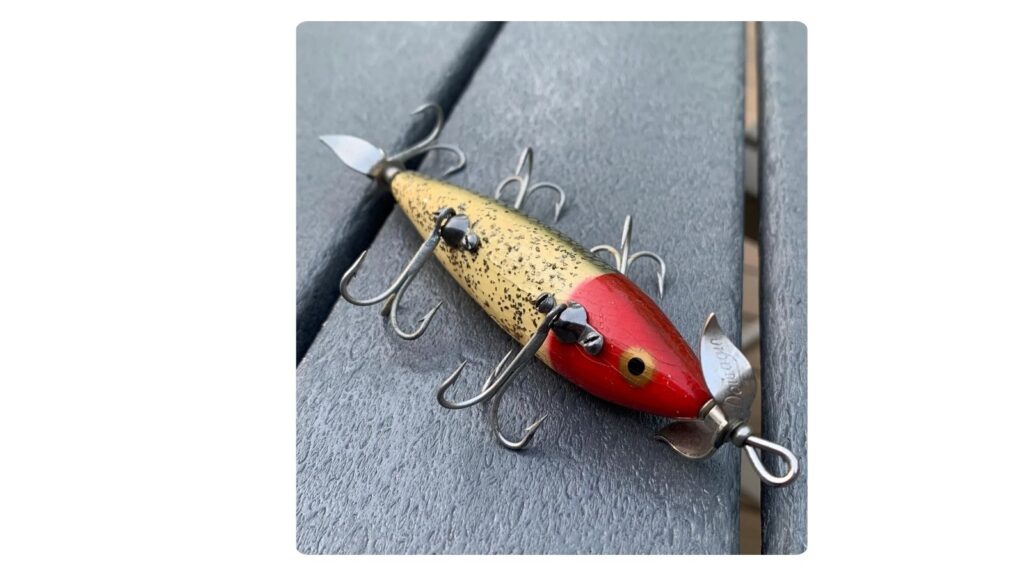
Before Heddon settled into the simpler lineup most collectors know, its earliest wood minnows carried model numbers like 150, part of the original Dowagiac Minnow family dating to the early 1900s. These are the lures that built the company’s reputation: multi-hook wood bodies with propeller blades front and back, glass eyes, and hand-finished paint that varied by color code.
A boxed 150 in perch scale, one of the more desirable and recognizable finishes, typically brings $700 to $1,000 in clean condition with its correct box. Loose examples with no box bring meaningfully less, often half that or under, and worn paint or a replaced propeller cuts further still.
This isn’t a lure most people stumble across loose in a kitchen drawer. It belongs more to a great-grandfather’s tackle collection than a modern garage, which is exactly why it’s worth knowing what to look for if an old wooden tackle box turns up in an inherited estate. Check the propeller blades for matching wear and era-correct styling, and look on the belly for the stamped model number that confirms what you actually have.
4. Creek Chub Injured Minnow
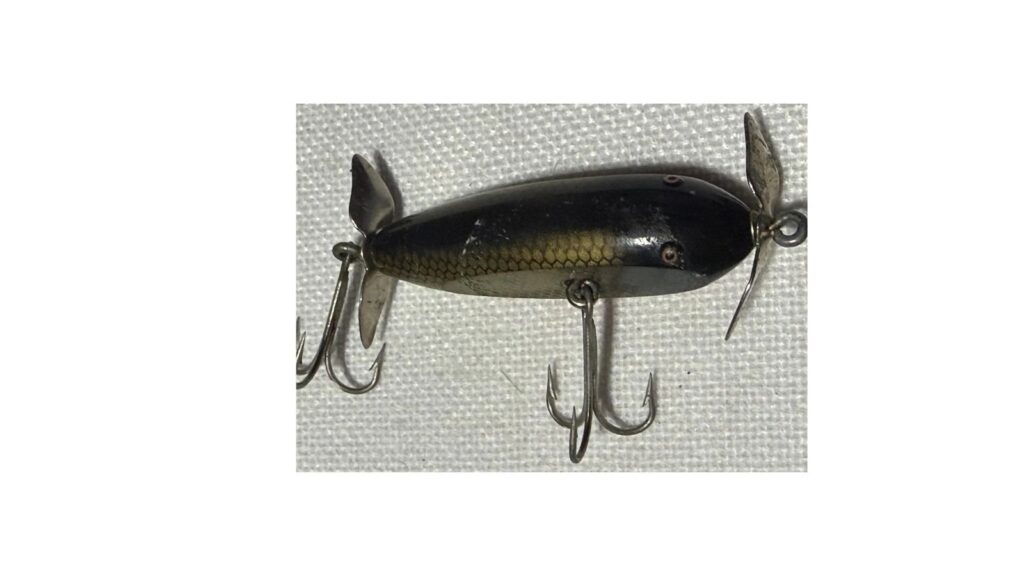
Creek Chub Bait Company started in Garrett, Indiana in 1906, and the Injured Minnow was one of its earliest standout designs, a wood bait built to wobble like a dying baitfish. Early examples have glass eyes and a lifelike, scaled paint job that was genuinely advanced for the era.
A well-preserved Injured Minnow with its original box typically sells for over $600. Loose, used examples without a box are far more common and far cheaper, often in the $30 to $100 range depending on paint and hardware condition, since this was a working bait that plenty of anglers actually fished rather than put on a shelf.
Glass eyes are the first thing to check. Replaced or modern eyes are common on lures this age and bring the price down even when the body and paint still look sharp. After that, look closely at the belly stamp and hook hardware for signs of mismatched repairs, since a lure assembled from parts of two different Injured Minnows is worth considerably less than a fully original example, however good it looks from a distance.
5. Creek Chub Baby Pikie
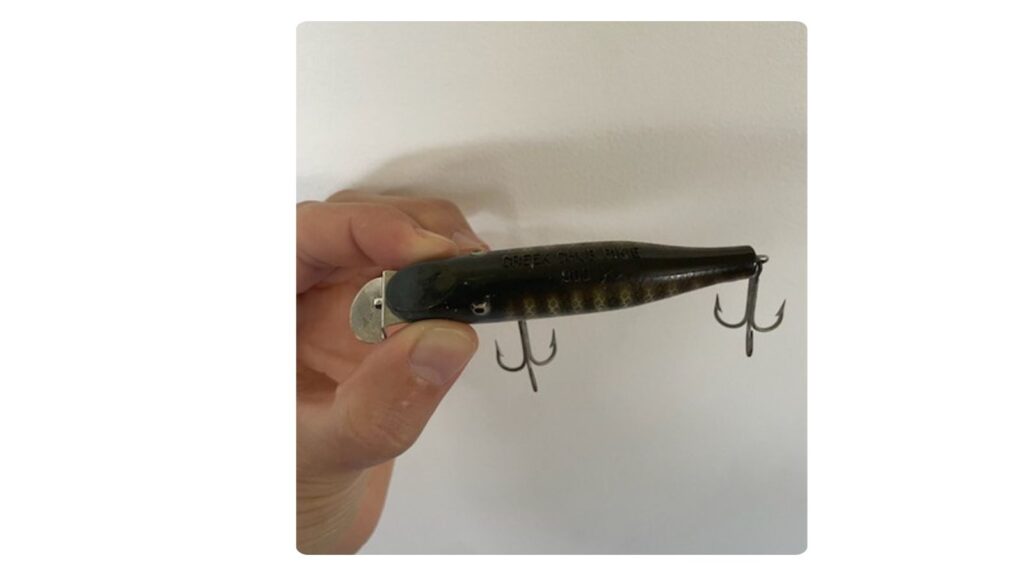
The Pikie Minnow became Creek Chub’s signature lure almost as soon as the company started, and the Baby Pikie is the smaller version, a jointed wood minnow shaped to mimic a wounded baitfish. It was made in huge numbers across several decades, which keeps most surviving examples affordable.
Clean examples with original hardware and decent paint typically bring $20 to $75, more for early glass-eye versions or less common colors, and considerably more with a correct printed box. This isn’t a lure that will fund a vacation on its own, but it’s a genuinely useful one to recognize, since Creek Chub baits turn up constantly in old tackle boxes without anyone realizing what they’re holding.
Check the belly for the Creek Chub stamp and confirm the glass eyes, where present, are original rather than replaced. A jointed Baby Pikie with a cracked or repaired joint is worth a fraction of one that still articulates correctly, and that’s easy enough to test by hand before buying or selling.
6. Creek Chub Darter
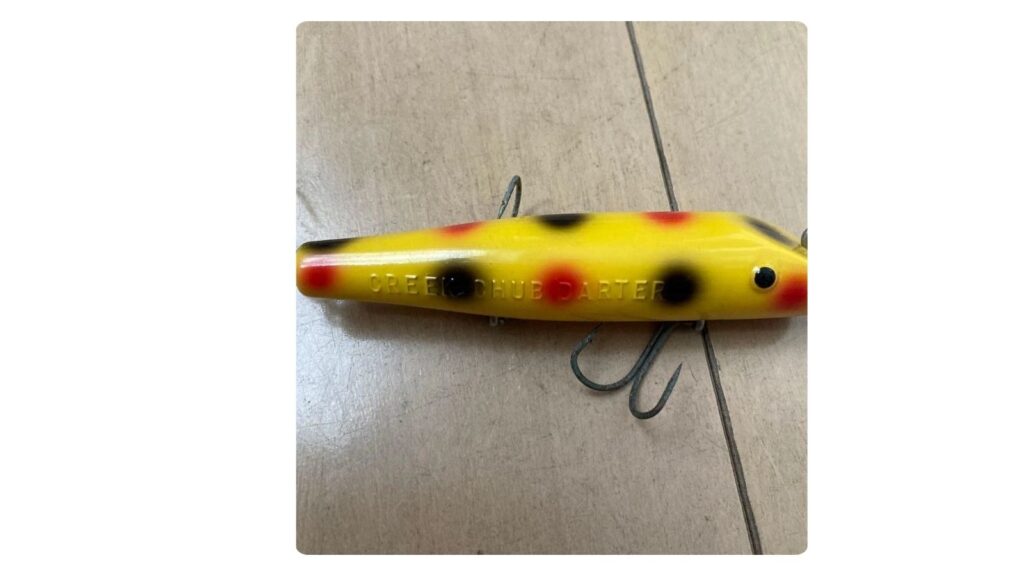
The Darter is another of Creek Chub’s signature shapes, built with a cupped face so it darts and dives erratically on a twitched retrieve instead of swimming in a straight line. Like most Creek Chub baits it was made in wood for decades before the company moved to lighter plastic bodies, and the wood versions with glass eyes are what collectors actually want.
Clean wood Darters with original glass eyes and solid paint typically bring $30 to $125, with early examples, boxed lures, and scarcer colors pushing toward the top of that range or past it. The later plastic-bodied versions are common and worth comparatively little.
As with most Creek Chub lures, the belly stamp and hardware style help date a given example, and one with replaced trebles or an obvious repaint should be priced as a well-loved fishing lure rather than a collectible. Pay close attention to the cupped face for chips, since that’s the part that takes the most abuse on the water and the part most often touched up before a sale.
7. South Bend Bass-Oreno
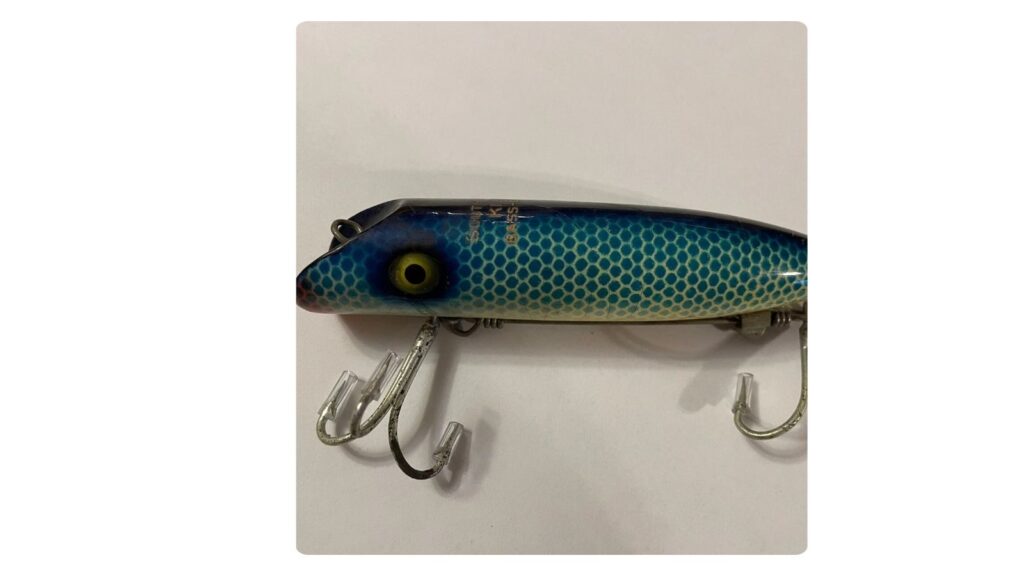
The Bass-Oreno put South Bend Bait Company on the map after it arrived in 1915, and the company kept making it, with small changes, for almost fifty years. Dating one isn’t hard once you know the markers: the earliest examples have no eyes at all, South Bend added glass eyes around 1926, and switched to simpler tack eyes in 1934 after the glass versions turned out to add too much weight to the lure.
Depending on age and condition, original Bass-Orenos typically run from about $6 up to $200 or more, with the earliest no-eye and glass-eye examples toward the top of that range and boxed lures higher still. The Bass-Oreno was made in such enormous numbers, across sixteen original colors and several more added later, that most examples you’ll find are genuinely common. A handful of early or unusual colors are the exception.
Don’t assume every South Bend lure in an old tackle box is cheap just because the standard Bass-Oreno usually is. Check paint and hook hardware carefully, since these were fished hard for half a century, and a repainted example should be treated as a decoration rather than a collectible.
8. South Bend Surf-Oreno
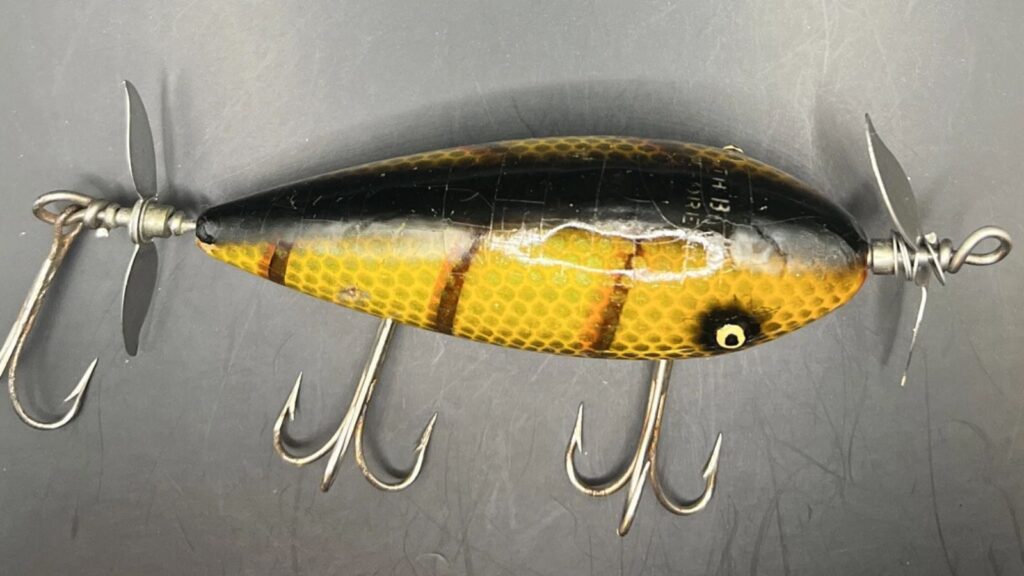
Built for saltwater, the Surf-Oreno is a scaled-up member of the Oreno family meant to survive rougher conditions and bigger fish than its freshwater cousins. It arrived in 1916 and kept the same basic shape as the rest of the line, just considerably larger and tougher.
Clean examples, especially in less common color patterns, typically sell for over $100, with exceptional boxed pieces bringing meaningfully more. Saltwater lures as a category get overlooked by some freshwater-focused collectors, which keeps prices a bit more approachable than you’d expect for a lure this size and this old, though interest has been climbing as more people realize these sat in the same tackle boxes as the common Bass-Oreno.
Size and weight meant these lures took a real beating from salt air and hard use, so rust on the hooks and hardware, pitting on any metal fittings, and sun-faded paint are all common and all reduce value. A Surf-Oreno that still has sharp paint and its original hook hardware, with no replacement trebles, is genuinely harder to find than the lure’s production numbers would suggest.
9. Arbogast Jitterbug
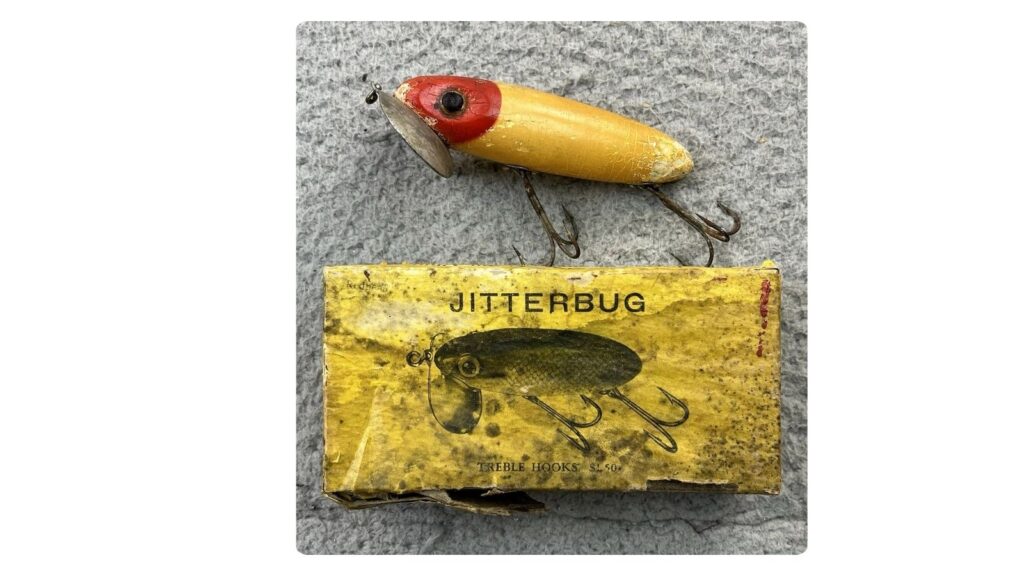
Fred Arbogast introduced the Jitterbug in 1938 out of Akron, Ohio, and its wide metal lip still makes the same loud, splashing commotion on the retrieve that made it a favorite for night fishing. Early wood-bodied Jitterbugs, made before the company shifted to plastic, are what collectors want most.
Vintage wood examples in their original box, with sharp paint and the correct lip and hook hardware, typically sell for upwards of $200. Loose, used examples without a box are far more common and far cheaper, often $10 to $40, since the Jitterbug has stayed in production in one form or another for over eighty years and plenty of well-worn ones are still floating around in tackle boxes.
Weight and sound are the giveaway for an early wood Jitterbug. Pick it up and tap it, since wood has a different heft and knock than the plastic bodies that came later. Check the metal lip shape too, since Arbogast changed the design more than once over the decades, and a mismatched lip on an otherwise old-looking body usually means a parts lure rather than an original.
10. Shakespeare Swimming Mouse
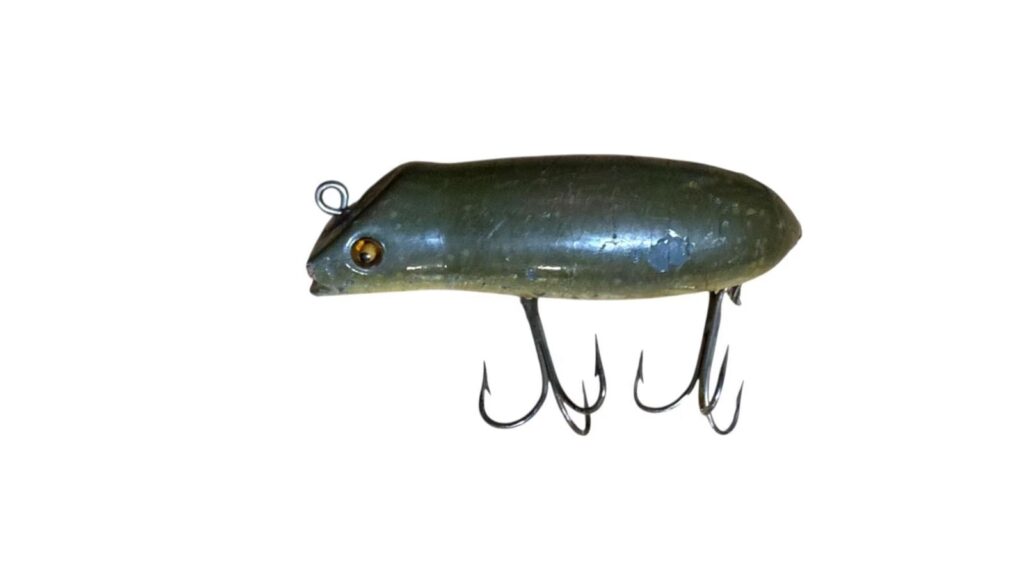
Shakespeare, the Kalamazoo, Michigan tackle maker, built the Swimming Mouse as a wood topwater lure shaped like a mouse, complete with a leather or fabric tail meant to twitch on the surface. It’s one of several wood baits the company made in the early to mid-1900s before shifting toward plastic lures.
Most surviving examples are common enough that clean ones in decent paint typically bring $15 to $50, with earlier glass-eye versions worth more than later painted-eye models. Shakespeare’s early 1900s “gem clip” rigged lures, a separate and scarcer line from the same company, have sold for several hundred dollars in top condition, which gives a sense of how much more the company’s rarer early wood baits can bring compared with a common Swimming Mouse.
Check the tail first. Original leather or fabric tails are often missing or replaced on Swimming Mice that actually got fished, and a replacement tail knocks the value down even when the body and paint are otherwise solid. After that, look at the glass eyes for cloudiness, cracks, or anything that suggests they’re not original to the lure.
11. Pflueger Never-Fail Minnow
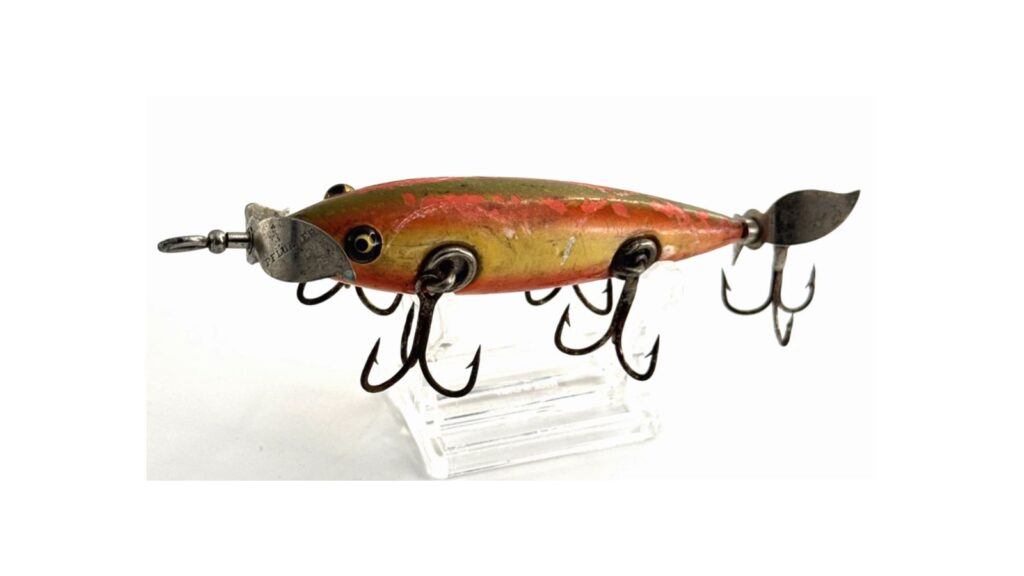
Pflueger’s Never-Fail Minnow is an early five-hook wood minnow from a company making fishing tackle in Akron, Ohio before most of its competitors existed. Multi-hook minnows like this one come from the earliest, most collectible era of American lure making, and they don’t turn up often outside established collections.
A Never-Fail Minnow in its original box, sometimes marked as the “Neptune Wooden Minnow,” typically brings around $500 in clean condition. Loose examples without a box, or ones with replaced hooks and hardware, sell for considerably less, often a few hundred dollars for a genuinely clean piece and well under that for a heavily used one.
Five-hook minnows like this got fished hard and lost often, which is part of why clean survivors carry a premium. Check that all five hook hangers and their hardware match in style and patina, since a lure that’s had hooks added or swapped over the decades will usually show it under close inspection, and any mismatch is worth factoring into what you’d pay or expect to get.
12. Paw Paw Wotta-Frog
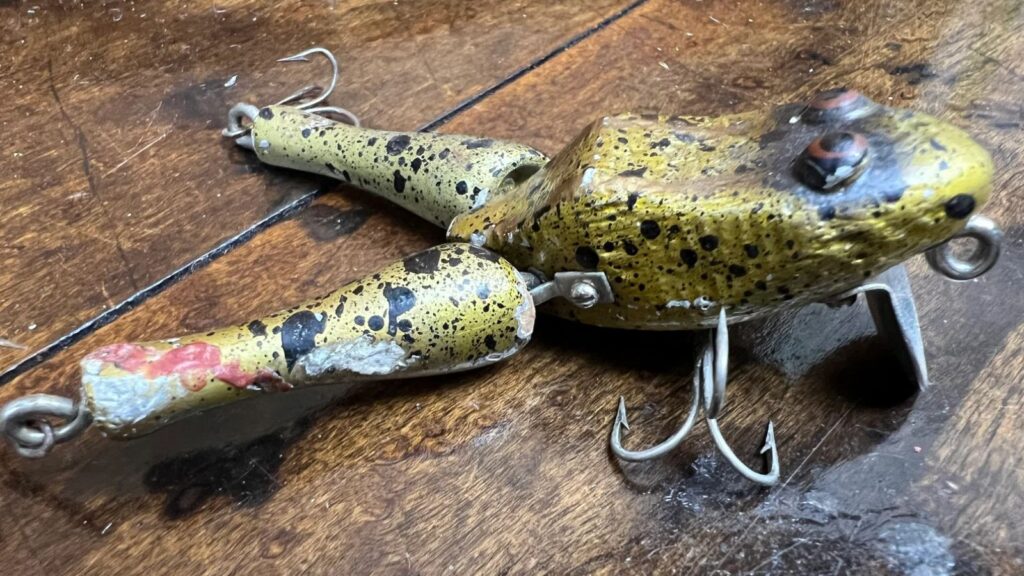
VintageeThings via Etsy
Paw Paw Bait Company, based in Paw Paw, Michigan, built the Wotta-Frog as a jointed, green-painted frog lure with legs that kick on the retrieve. Frog lures like this one are fragile by design, with thin jointed legs and delicate paint, so most surviving examples show real wear.
A Wotta-Frog with its original box and in genuinely pristine condition typically sells for over $100, with exceptional examples bringing more. A used example with chipped paint or a repaired leg joint is worth a fraction of that, sometimes just $15 to $30, since the whole appeal of a frog lure like this rests on its details staying intact.
Check every leg joint individually. A frog lure that’s been glued or pinned back together at a broken joint has lost both its function and most of its value. Paw Paw’s history traces back to the Moonlight Bait Company, which the founders renamed in 1928, so earlier Moonlight-marked frog lures from the same basic mold are a related but separate find worth looking for in the same old tackle box.
13. Oliver & Gruber Glowurm
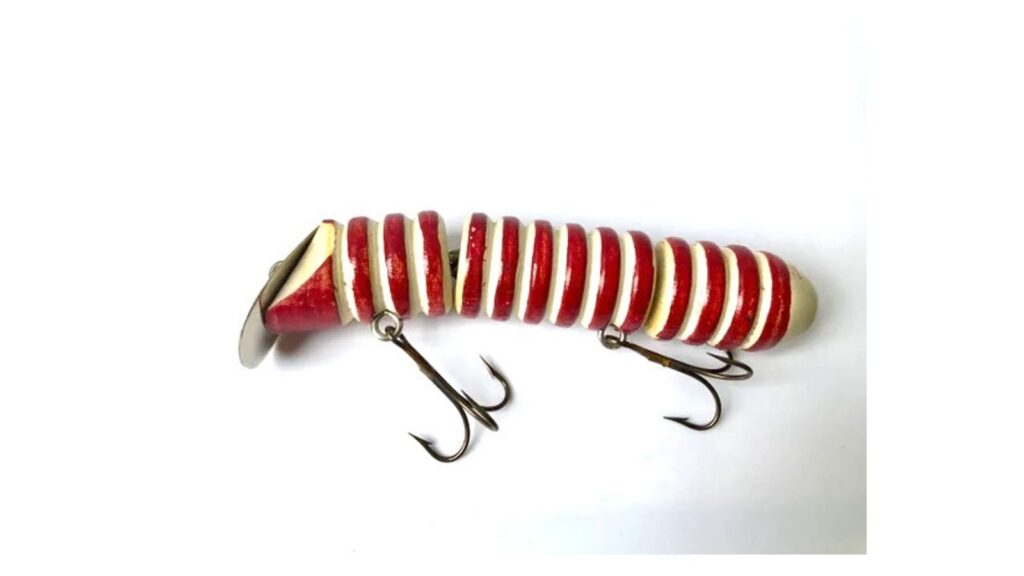
The Glowurm is a bass lure with a distinctive ridged, painted wood body, made by the short-lived firm of Oliver & Gruber before production stopped in 1924. A company that only made tackle for a handful of years leaves a small pool of survivors to begin with, and the Glowurm’s unusual ribbed shape makes it easy to pick out once you know what you’re looking at.
Lures in good condition, especially with the original box, have sold for $140. That’s a solid number for a lure most people have never heard of, and it reflects how few of these turn up compared with the giants of the era, not any kind of design breakthrough. A rough, heavily painted-over example is worth only a modest fraction of that price.
The ridges are the first thing to check. They’re part of what made the original paint job distinctive, and a repaint tends to fill in or blur that detail in a way a careful eye can spot. Because this brand is obscure enough that most sellers won’t know much about it beyond “old wooden lure,” it pays to look closely at the body shape and paint yourself rather than trust a listing’s description, and a lure in its correctly marked box is worth tracking down over a loose one every time.
14. Comstock Flying Hellgrammite
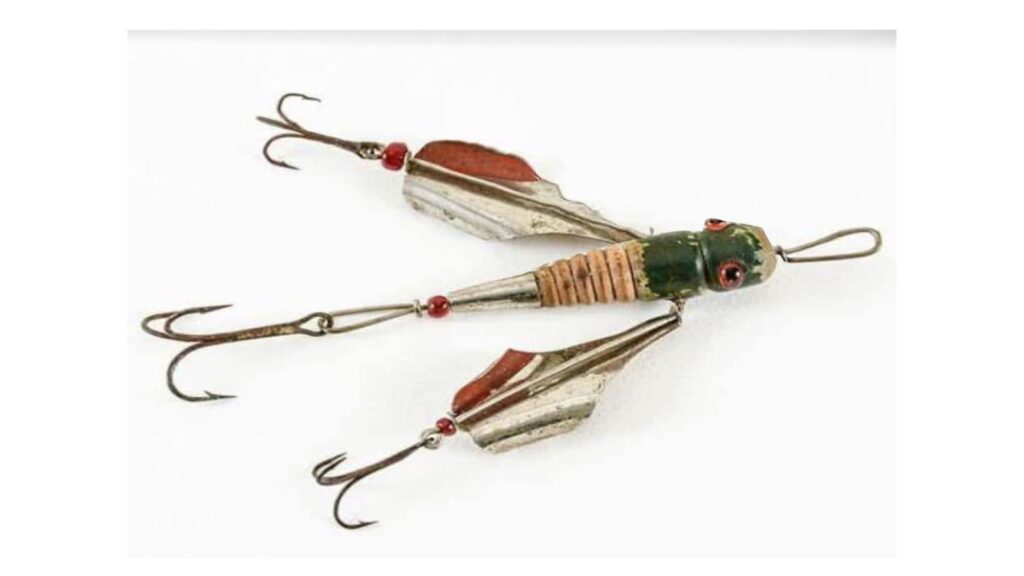
Harry Comstock of Fulton, New York made the Flying Hellgrammite around 1883, and it’s considered one of the very first lures built with glass eyes, a detail that later became standard across the whole industry. Shaped after the hellgrammite, an insect used as live bait, it has a winged, segmented body that was genuinely ahead of its time.
Well-kept original examples have fetched over $10,000 at the high end of the market, reflecting how few survive from a production run this early and this small. Lesser condition examples bring considerably less, but even a rough one with honest age and the right features is worth having checked by someone who specializes in early folk art lures.
The authentication wrinkle here matters. Pflueger’s predecessor company took over production of the same design not long after Comstock introduced it, adding its own luminous paint to the wings, and lures from that later run are a different and less valuable item than an original Comstock-made piece. Telling the two apart comes down to the paint, the eyes, and the overall hand-carved character of the earliest examples, which is exactly the kind of detail worth getting a specialist’s opinion on before assuming you’ve found a five-figure lure in an attic.











