
Somebody’s grandmother kept her good dishes in the china cabinet and her everyday glass in a box in the basement, and decades later that box is the one worth opening first. Depression glass was never meant to last. It was given away free with flour, sold for pennies at the five and dime, and used hard in kitchens all over the country during the 1920s and 1930s. Most of what survives is still worth very little.
But pattern, color, and form matter more than people expect, and a surprising amount of this glass is sitting in plain sight in inherited hutches, church sale boxes, and grandma’s good dishes. The checklist is always the same: no chips, no cracks, no cloudy “sick glass” from decades in a dishwasher, and as complete a set or piece as you can find.
1. Mayfair “Open Rose” pink
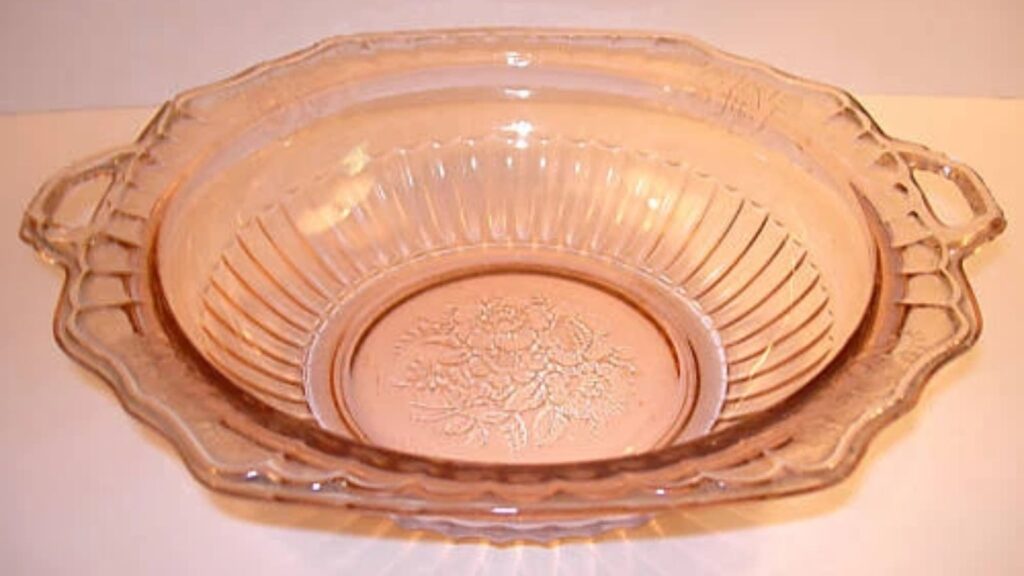
Hocking made Mayfair from 1931 to 1937, and the pink version turns up constantly in inherited sets because it was one of the most popular patterns of its era. Plates, cups, relish trays, and sugar bowls in good condition typically bring $15 to $35, with footed tumblers, cookie jars, and covered butter dishes pushing well past that into the hundreds.
What separates a decent find from a real one is color. Hocking also made Mayfair in a deep blue and a pale ice blue, in far smaller quantities than the pink, and footed tumblers in that deeper blue shade have brought $600 to $750 in clean condition. If you ever see a blue piece in this pattern, stop and look closer before you assume it’s ordinary glass.
Check the rim of any cup or plate for chip damage, since that’s where Mayfair takes the most wear, and look for cloudiness on the inside of pitchers and tumblers, which usually means years of dishwasher use and knocks the value down hard. The open rose design should be crisp and raised, not worn smooth.
2. Royal Lace cobalt blue
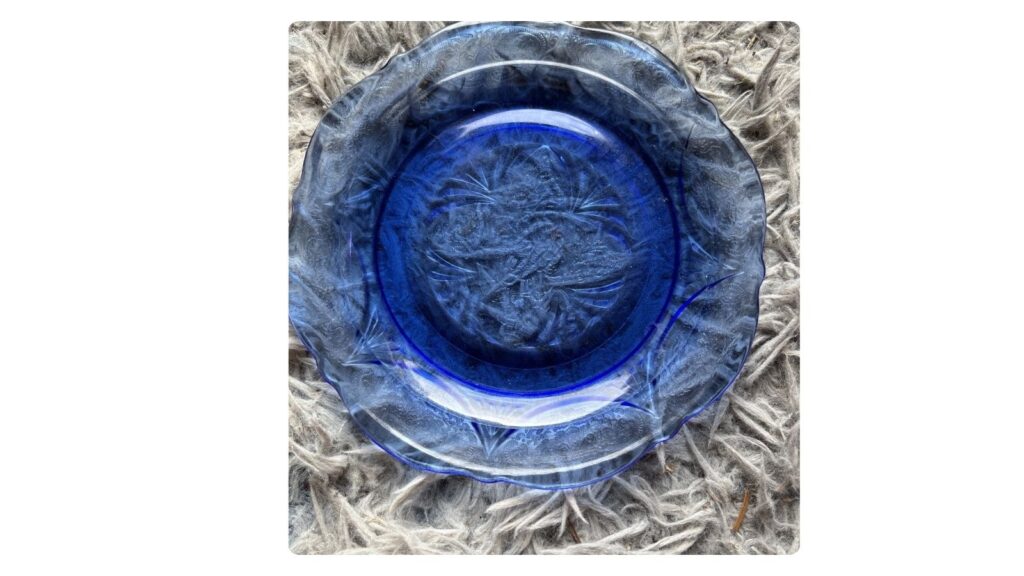
Hazel-Atlas produced Royal Lace from 1934 to 1941, and collectors treat the cobalt blue version as the top of the entire Depression glass market. The lacy, scrolled pattern shows up on everything from sherbets to candlesticks to a tall cookie jar, and in cobalt, common pieces typically bring $25 to $60, with the cookie jar, the acid-etched candlesticks, and the covered butter dish reaching several hundred.
Royal Lace also came in pink, green, and crystal, all worth considerably less than cobalt but still collectible, especially in less common forms like the footed pitcher or the nut bowl with its distinctive rolled edge.
Because this pattern has real money attached to it, check any cobalt piece closely for inner rim roughness, a cloudy haze from hard water or the dishwasher, and hairline cracks near handles and lids, all of which cut the price sharply. A sharp, fully raised lace pattern with no wear to the scrollwork is what separates a strong price from an average one.
3. American Sweetheart Monax
Brenda’s Glass ETC via eBay
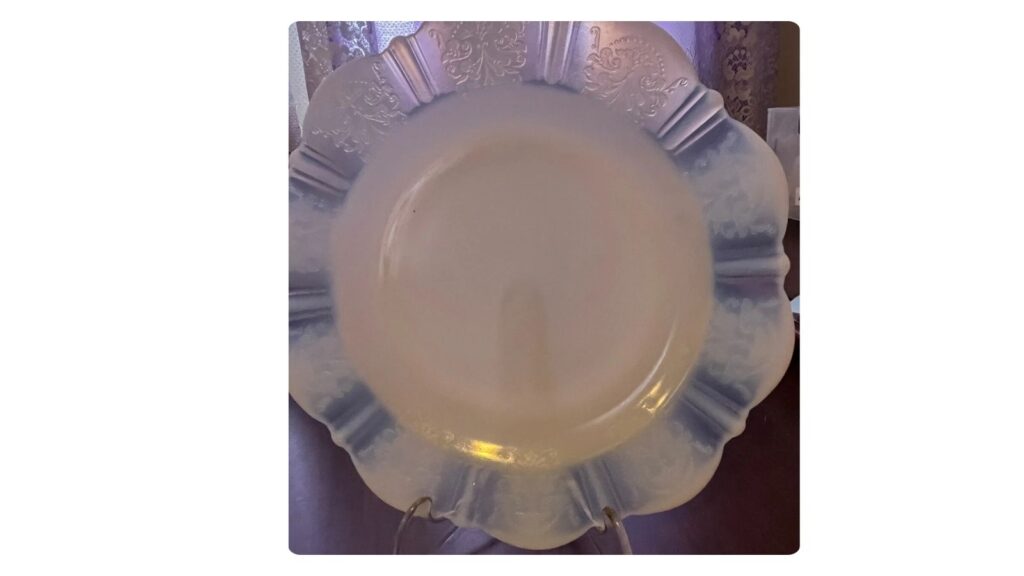
MacBeth-Evans made American Sweetheart from 1930 to 1936 in a soft floral scroll design, mostly in a milky opaque white called Monax and in pink. It was a popular wedding and shower gift at the time, which is why so many pieces survive in good shape. Monax dinner plates, cups, and the large serving salver typically bring $20 to $50 in clean condition.
Pink American Sweetheart runs a similar range, and both colors command more for serving pieces than for individual place settings, since full sets rarely survive intact.
MacBeth-Evans also made a handful of pieces in a deep ruby red and in cobalt blue, both produced in far smaller runs than the pink or Monax, so a red or blue piece in this pattern is worth a genuinely careful second look rather than assuming it’s a reproduction. Across all colors, check for scratching on the Monax surface from stacking, which shows up as a faint grey haze under good light, and inspect any lamp shade forms closely, since this pattern was also made into lighting and that glass chips easily at the fitter ring.
4. Cherry Blossom pink and green
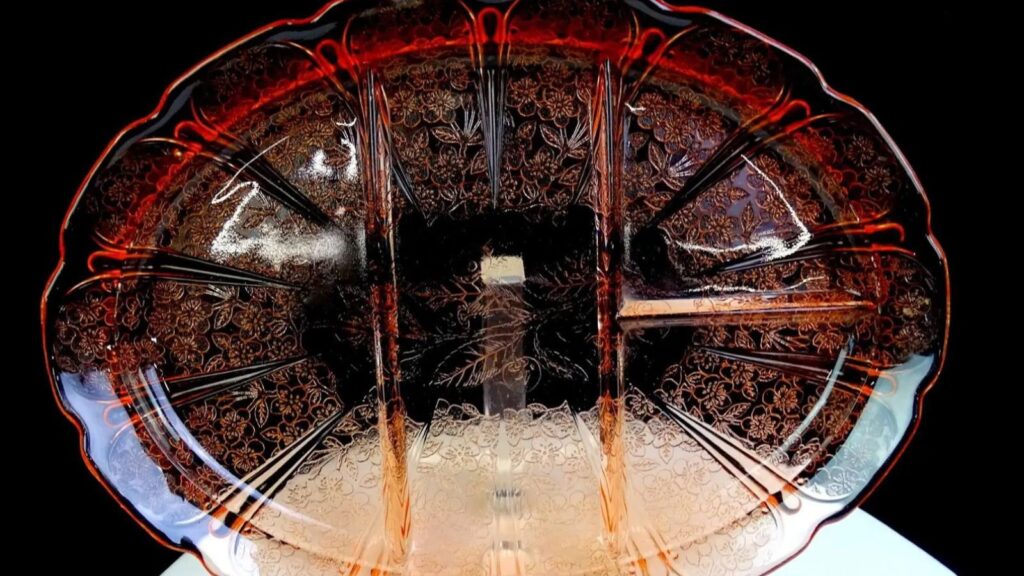
Jeannette Glass made Cherry Blossom from 1930 to 1939, and it remains one of the most recognized Depression glass patterns because of the branching cherry blossom design pressed into nearly every piece. Plates, cups, and berry bowls in pink or green typically bring $15 to $30 in good condition, with the covered butter dish, the cake plate on a pedestal foot, and the two-handled tray bringing meaningfully more.
Jeannette also made this pattern in a soft opaque blue called Delphite, which is scarcer than the pink or green and generally brings a real premium in any form.
This is also one of the most heavily reproduced Depression glass patterns, with reissues dating back to the 1970s and continuing since. Reproduction pieces tend to have softer, less defined cherry detailing and leaves that look slightly flattened compared to the crisp, deeply pressed originals, so compare any piece you find to a confirmed original photo before assuming you have the real thing, and never buy a high-value form like the butter dish without checking the mold detail closely.
5. Princess amber and topaz
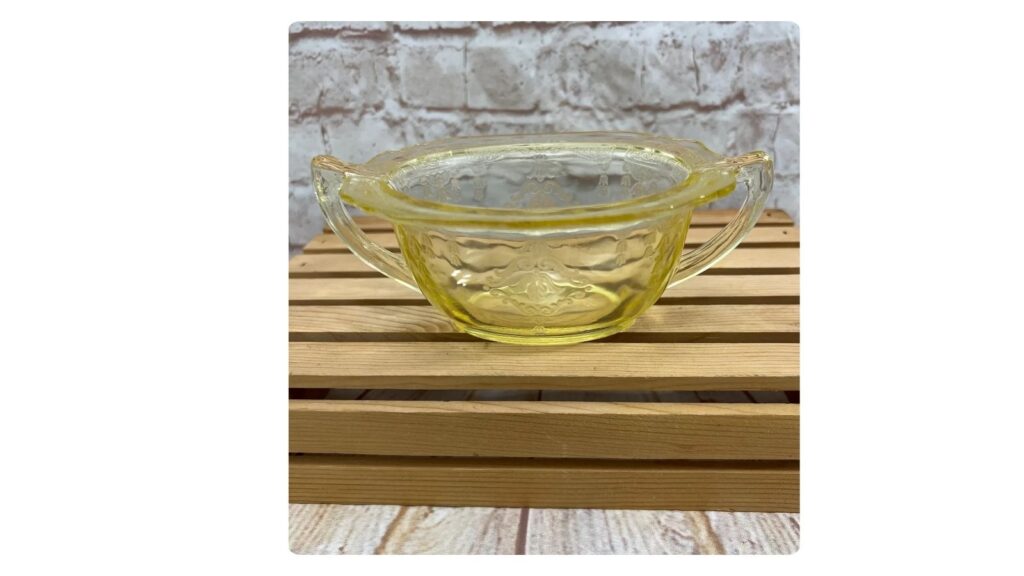
Hocking produced Princess from 1931 to 1935 in pink, green, and a soft yellow the company called topaz, with some pieces leaning closer to a deeper apricot shade. The pattern’s octagonal plates and lidded candy and cookie jars give it a distinct Art Deco look that sets it apart from rounder patterns of the same era. Cups, saucers, and plates typically bring $15 to $35 in clean condition.
Covered candy dishes, cookie jars, and the taller footed tumblers bring the most, especially in topaz, which was produced in smaller runs than pink or green and tends to vary noticeably in shade from piece to piece.
Because the topaz color isn’t consistent, buying online carries some risk, and it’s worth asking for a photo in natural light before paying a premium for what’s described as true topaz rather than the more common amber-leaning apricot. As with most Princess pieces, inner rim roughness on cups and tumblers is the most common flaw and the easiest one to miss in a dim photo.
6. Adam pink butter dish
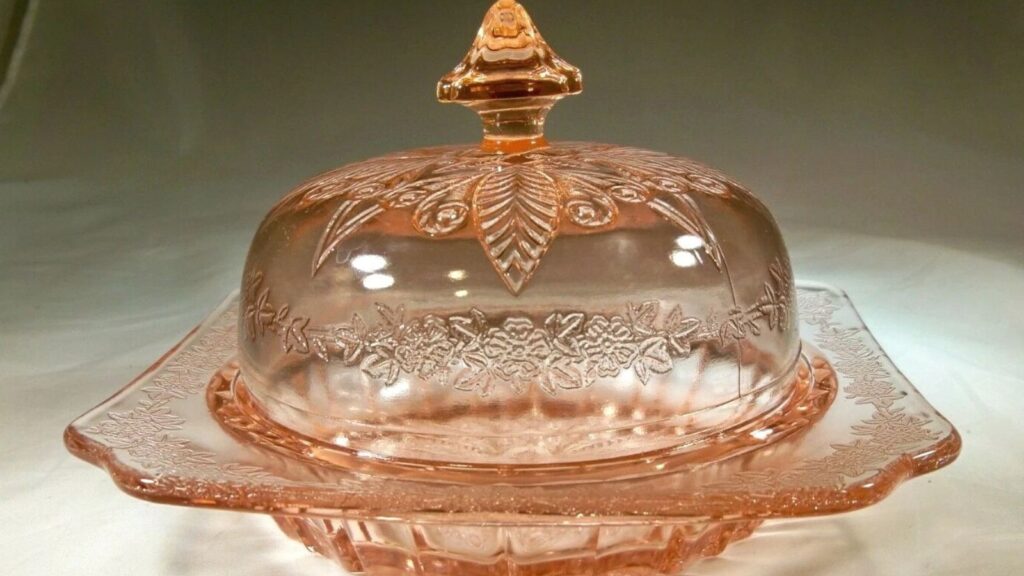
Jeannette’s Adam pattern ran from 1932 to 1934 in pink and green, with a sharp, geometric floral motif that reads almost Art Deco next to softer patterns like Cherry Blossom. Plates, berry bowls, and divided relish dishes are common enough to typically bring $12 to $25 apiece, which is exactly the kind of piece that gets mixed into a box of “assorted pink glass” at an estate sale without anyone noticing the pattern name.
The covered butter dish with its domed lid is the piece worth hunting for specifically. In good condition, with the lid intact and no chips along the dome’s rim, it regularly climbs into the $50 to $90 range, well above what the rest of the pattern brings.
Adam’s pink can run from a pale blush to a more saturated rose, and neither shade affects value much on its own, but the lid does. The domed lid is thin at the finial and chips easily, so check that spot first on any butter dish before getting excited, and look for a crisp, fully raised geometric pattern rather than one that’s gone soft from years of handwashing.
7. Sharon “Cabbage Rose” pink and amber
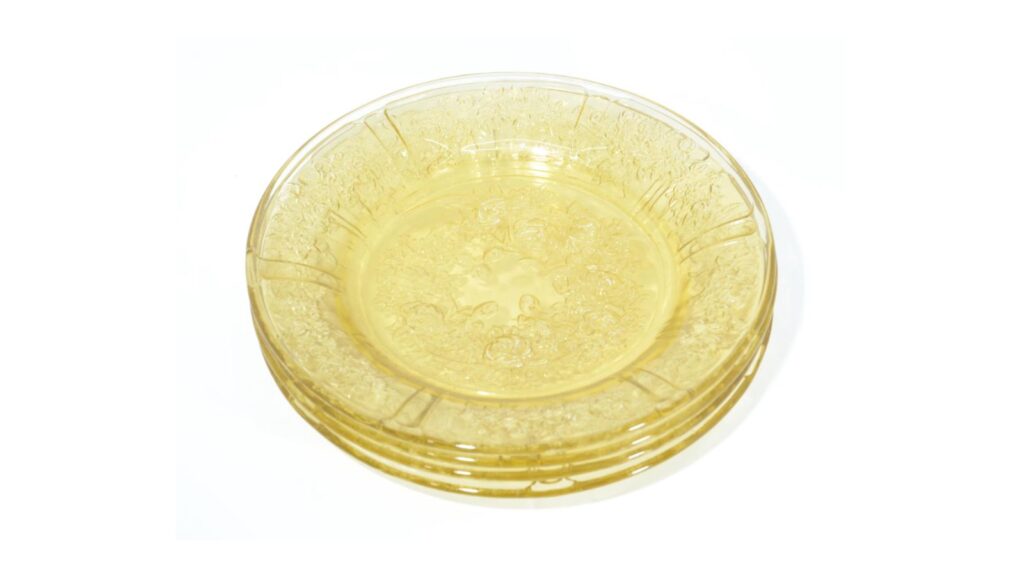
Federal Glass made Sharon, nicknamed Cabbage Rose for its large rounded floral motif, from 1935 to 1939 in pink, amber, and a smaller run of green. It was an affordable, everyday pattern at the time, which means it shows up often in inherited kitchen sets today. Cups, saucers, and berry bowls typically bring $12 to $25 in good condition, with amber running slightly behind pink in most forms.
The pieces worth real money are the covered cheese dish, the candy jar with its original lid, and the footed cake plate, all of which climb well past the everyday pieces into triple digits when complete and undamaged.
Lids are the weak point across this entire pattern. A Sharon butter dish, candy jar, or cheese dish without its matching lid is worth a fraction of a complete set, so always check that the finial and rim match the base in color and pattern depth before assuming a lidded piece is a matched original rather than a married pair.
8. Miss America pink
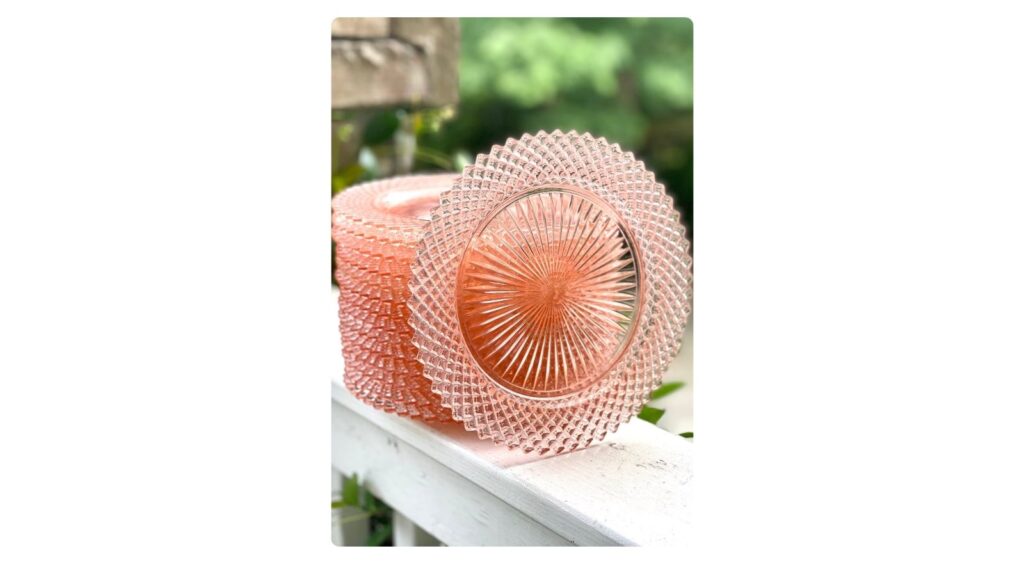
Hocking’s Miss America pattern ran from 1935 to 1938 and is instantly recognizable by its diamond-cut, almost cut-glass-looking surface, which was unusual for mass-produced Depression glass. Pink dinner plates, cups, and berry bowls typically bring $15 to $35, with the covered candy jar and the tall water pitcher bringing considerably more.
Hocking also made a small run of Miss America in an ice blue that collectors prize well above the standard pink, so a blue piece in this diamond pattern deserves a closer look before you assume it’s just tinted glass.
This is another pattern with known reproductions, particularly in the butter dish and the shakers, which were reissued decades after the original run with slightly softer diamond faceting and a different glass weight in hand. Run your fingers over the surface. Original Miss America has a crisp, almost prickly texture to the diamond pattern that reproductions tend to lack, and that single check catches most fakes before you’ve paid for them.
9. Windsor “Windsor Diamond” pink
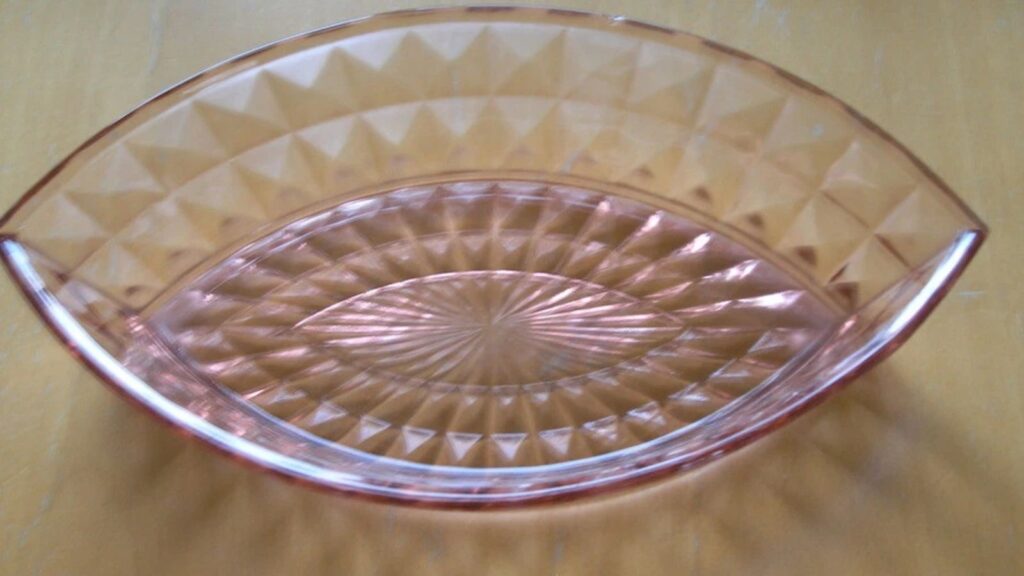
Jeannette made Windsor, sometimes called Windsor Diamond for its small repeating diamond pattern, from 1936 to 1946 in pink, green, and crystal. It’s a workhorse pattern that turns up constantly at estate sales because Jeannette produced an enormous range of forms, from plates and cups to relish trays and console bowls. Everyday pieces typically bring $15 to $25 in clean condition.
The covered candy dish, sometimes labeled Button and Cane for its pattern of small raised dots, is the standout piece in this line, regularly bringing $20 to $190 depending on how crisp the diamond detail is and whether the lid is a perfect match to the base.
Because Windsor was made for a full decade, the diamond pattern can look sharper or softer depending on when a particular piece was pressed, and that’s normal rather than a sign of damage. What does hurt value is the usual list: rim chips, inner cloudiness, and a lid that doesn’t sit flush, which on this pattern is often the first sign of a mismatched pair rather than a true set.
10. Madrid amber
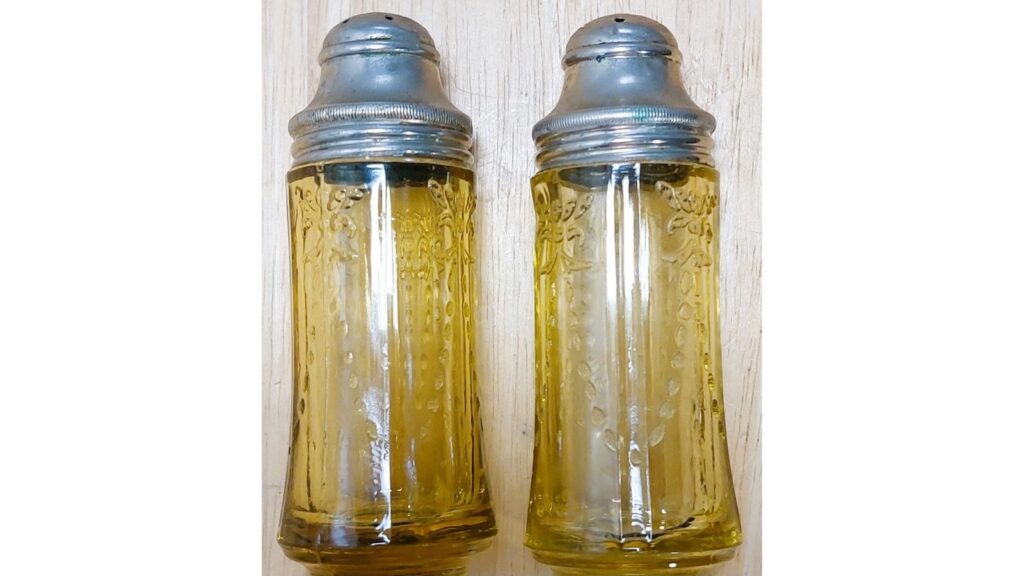
Federal Glass produced Madrid from 1932 to 1939, mostly in amber with smaller runs in pink, green, and blue, and its sunburst-style Art Deco pattern made it one of the more visually bold Depression glass lines. Amber dinner plates, cups, and saucers typically bring $10 to $20 in good condition, with the footed cake plate and the covered butter dish bringing more.
The color to watch for is blue. Federal only ever made a small amount of Madrid in blue, and those pieces are genuinely scarce compared to the amber that dominates the pattern.
Madrid is also the single Depression glass pattern most people need to know about when it comes to reissues. Federal brought the molds back in 1976 as a line called “Recollection,” made in amber and other colors and sold new in stores, and those pieces are common enough that they regularly get mixed in with original Depression-era Madrid in estate lots. Reissued pieces have “1976” worked into the mold, so flip anything you find before assuming it’s from the original 1930s run.
11. Iris and Herringbone iridescent
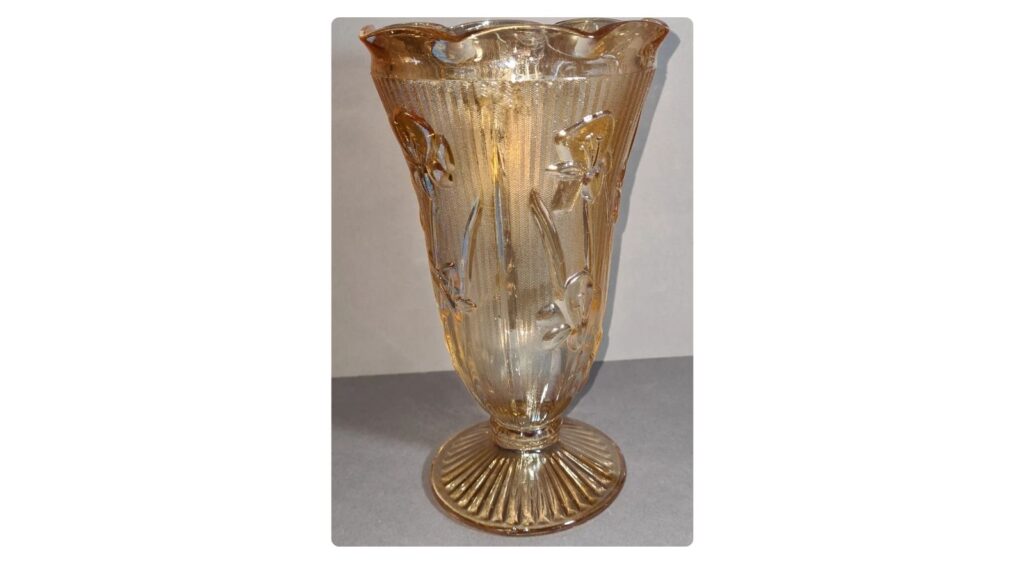
Jeannette made Iris and Herringbone, often called simply Iris, from 1928 into the early 1930s and then reissued it in later decades in new colors. The original run came mostly in crystal and in a marigold-style iridescent finish, with a sharp pointed iris petal pattern that stands out from the rounder florals common elsewhere in Depression glass. Common pieces typically bring $15 to $35 in good condition.
The vase, in the original iridescent finish and free of cloudiness, is the piece to watch for, regularly reaching $100 or more when the color is strong and even across the whole surface.
Because Jeannette kept making this pattern off and on for decades afterward, in pink, green, and other colors that were never part of the true Depression-era run, color alone isn’t a reliable way to date a piece. The iridescent finish itself is the giveaway for an original: it should look like an oil slick, shifting color as you turn it in the light, rather than a flat, even coating.











