
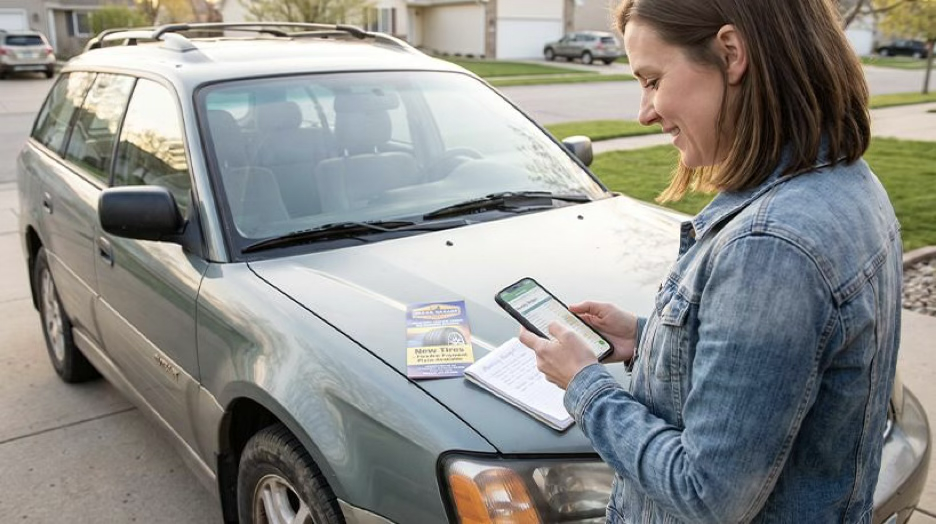
When you’re a single mom, your car often feels less like a convenience and more like a necessity. At that time, the last thing you need is another unexpected bill. Unfortunately, tires have a way of needing replacement at exactly the wrong time.
If you use your car regularly, like getting to work, taking your kids to school, and running everyday errands, you can’t afford to wait to replace your tires until you save enough money. But paying the entire cost upfront can put a lot of pressure on your budget, especially with rent, groceries, childcare, and other necessities.
The good news is that you have plenty of options. Tire financing and buy now, pay later methods can help you to replace your tires now while giving you more flexibility with your cash flow. Here are the top seven options to consider when choosing the best payment option.
Table of contents
Buy tires with a buy now, pay later plan
A buy now, pay later plan can let you purchase tires without paying the full cost upfront. Instead, you can make several installments over time. Depending on the provider and plan, you may be able to split the purchase into a few scheduled payments; some plans also offer interest-free financing.
However, not all buy now, pay later options work the same way. Some charge interest or fees, while the terms and eligibility requirements can vary. Before choosing a plan, look at the total amount you’re repaying, not just the size of individual payments.
When you’re budgeting as a single mom, consider whether the required payment fits comfortably into your monthly budget. Don’t choose a payment that only works if nothing unexpected happens. Keep enough room for essentials and the occasional financial surprise.
Use a tire financing program
Tire financing can help you spread the cost of a new set of tires over several months instead of paying the full amount upfront. Depending on the lender, purchase, and applicant, financing terms may vary, including the repayment period, interest rate, and any required down payment.
When comparing financing offers, don’t judge them by the monthly payment alone. A longer repayment period may lower your monthly bill but increase the total amount you repay.
Before signing for a financing program, include a checklist to compare your options:
- APR or interest rate
- Monthly payment
- Total amount repaid
- Fees
- Down payment
- Length of financing
- Late payment terms
For a single mom working with a limited budget, the goal isn’t simply to find the lowest monthly payment. It’s to find financing that you can easily manage from start to finish without putting other household expenses at risk.
Put the purchase on a credit card
A credit card can be a convenient way to pay for tires, especially when you need them unexpectedly and don’t have enough cash on hand. But whether it’s a good fit depends on how quickly you can pay it off and your card’s terms.
Before choosing this option, consider:
- Current APR
- Available credit
- How long it will take to pay off
- Whether the purchase could include credit utilization
- Total interest paid
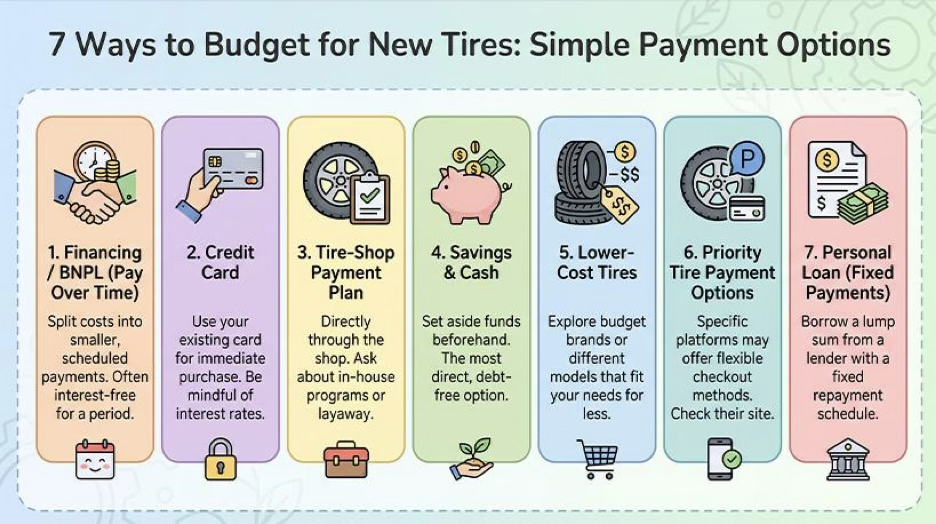
The credit card option makes sense if you pay the balance off quickly or have a legitimate promotional offer, such as a temporary 0% APR period. On the other hand, carrying a balance at a high interest rate can make a $700 tire purchase considerably more expensive over time.
The issue isn’t that credit cards are inherently bad. The cost of carrying the balance matters. Before using one, make sure you understand how the purchase fits into your overall budget and repayment plan. Building healthy credit habits can make it easier to use credit wisely and improve your financial independence.
Ask the tire shop about payment plans
Before assuming you have to pay for your tires all at once, ask the tire shop whether it offers financing or payment plans. Some retailers and installers may offer options that let you spread the purchase over several payments.
Be especially careful with promotional financing. A special rate may only apply for a limited period or come with specific conditions. Ask when the promotional period ends, what happens to any remaining balance afterward, and whether there are fees or other requirements you need to know.
Understanding the full cost upfront can help you choose a payment plan that fits your budget without creating an unexpected expense later.
Use savings but don’t empty your emergency fund
If you have enough money in savings to cover a new set of tires, paying in cash can be a smart way to avoid interest charges and financing fees. But it doesn’t mean you should automatically drain your savings account just to avoid taking on debt.
An emergency fund protects you when an unexpected expense comes up. For a single-income household, that safety net can be especially valuable. A medical expense, childcare issue, or additional vehicle repair could quickly turn a tire purchase into a bigger financial strain.
Before paying for tires outright, calculate how much you’ll have left in savings. If the purchase would reduce your emergency savings, borrowing a manageable amount may be better than leaving yourself without a financial cushion.
Paying cash isn’t the best option if it leaves you vulnerable. In some cases, preserving a reasonable emergency cushion and using a low-cost financing option for part of the purchase may make more sense.
How to decide if tire financing fits your budget
Before you agree to tire financing, take a few moments to ensure the payment fits your budget. Ask yourself these three questions before you finance a new set of tires:
1. Do I need the tires now?
If you have worn and unsafe tires, delaying the purchase could put you and your family at risk. In that case, financing may be preferable to driving on tires that need to be replaced.
2. Can I afford the payment?
Look at your payment in the context of your entire monthly budget. Add it to your existing expenses, including rent, groceries, childcare, utilities, gas, and debt payments. Make sure there’s enough room in your budget without relying on every dollar of your income. If your budget feels tight, these money management tips for single moms can help you find a little more breathing room.
3. What will the tires actually cost me?
A monthly payment may sound manageable, but what will you pay altogether? Compare the total repayment amount, including interest and fees, rather than choosing an option based only on the monthly payment.
The best financing option is one you can comfortably afford and understand from start to finish.
Conclusion: Financing tires doesn’t have to mean financial failure
Buying new tires when you don’t have the cash to pay upfront doesn’t mean you’ve failed financially. Sometimes, an unexpected car expense simply arrives at a difficult time.
Choose a payment option that works with your budget, not against it.
Whether you use a buy now, pay later option, tire financing, a credit card, a payment plan, or some combination of savings and financing, take the time to understand the interest, fees, monthly payment, and total cost.
Protecting your emergency savings can be just as important as avoiding debt. You don’t have to make the perfect financial decision; you just need to make one that keeps your car safe, your family moving, and your finances manageable.










