
A bigger paycheck often seems to come with a catch: years in college, a pile of student loans, or a career path that feels shaky the minute the economy slows down.
There is another lane. Hospitals still need trained people at the bedside. Factories need technicians who can fix expensive equipment. Aircraft have to be inspected and repaired. Buildings need heat, elevators need inspections, and families still need skilled people when something serious goes wrong.
Most of these careers require real training. That may mean an associate degree, apprenticeship, license, certificate, or several years of hands-on experience. But none depends on spending four years in college before you can build a solid career.
1. Calibration technician

Calibration technicians are the people who make sure measuring equipment is actually measuring correctly. That matters more than it sounds. A thermometer in a pharmaceutical plant, a pressure gauge on industrial equipment, or an electronic tester used on aircraft can cause expensive or dangerous problems if it is even slightly off. Technicians test instruments against known standards, make adjustments, document results, and troubleshoot equipment that will not stay within specifications. Median pay is about $67,820 per year.
This is a surprisingly strong little career niche. Employment is projected to grow about 5%, helped partly by the growing number and complexity of instruments used in manufacturing, healthcare, research, and other technical industries. An associate degree in electronics, engineering technology, or a related subject is a common route, although some employers hire people with technical certificates and relevant experience. The work rewards patience and precision more than brute strength. Machines can collect measurements, but somebody still has to determine whether the instrument itself can be trusted, trace the cause of a bad reading, and certify that critical equipment is working within tolerance.
2. CT technologist
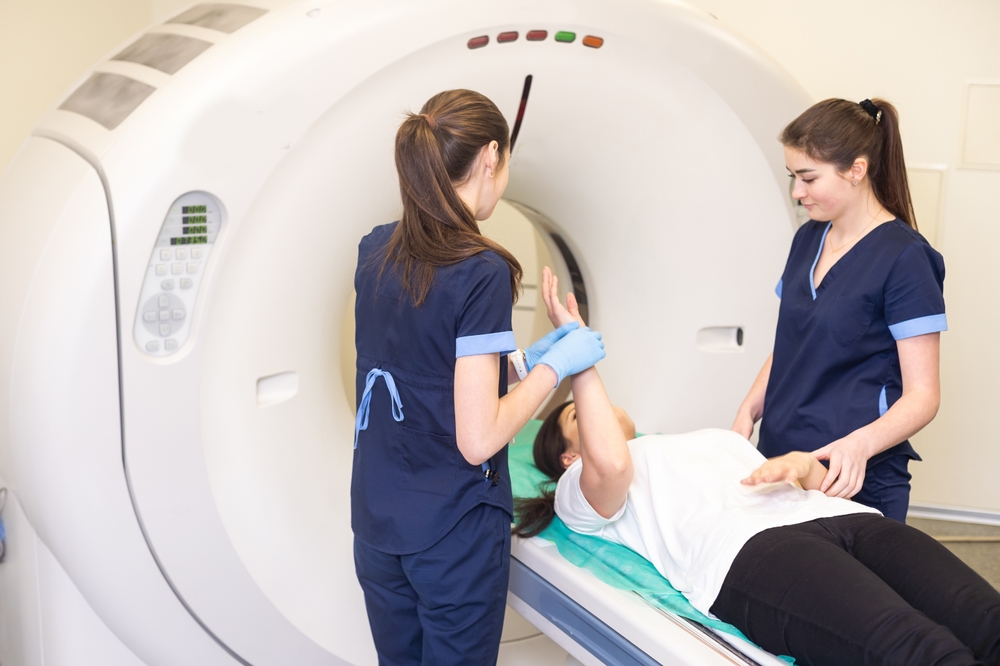
CT technologists run the scanners that create detailed images doctors use to spot internal injuries, tumors, blood clots, infections, and other medical problems. This is not a job where you simply press a button and walk away. You position patients correctly, choose scanning protocols, work with contrast materials, watch for reactions, and help people who may be frightened, sick, injured, or unable to stay still. Average national pay is around $83,423 per year.
The usual path starts with an accredited radiologic technology program, commonly an associate degree, followed by certification and additional CT training. Some working radiologic technologists add CT credentials rather than returning to school for another full degree. The wider radiologic imaging field is projected to keep growing as an older population needs more diagnostic testing. Hospitals, emergency departments, imaging centers, and outpatient facilities all use CT. Software can improve images and help doctors review scans, but the scanner still needs a trained person who can safely handle radiation, adapt the exam to the patient in front of them, and recognize when something is going wrong during the procedure.
3. Aircraft mechanic

Aircraft mechanics inspect, maintain, troubleshoot, and repair airplanes and helicopters. They may work on engines, hydraulic systems, landing gear, flight controls, structural components, or dozens of other systems that have to function correctly before an aircraft leaves the ground. The work involves technical manuals and diagnostic equipment, but also plenty of hands-on inspection. A strange vibration, unusual wear pattern, loose fitting, or damaged component can require judgment that comes from training and experience. Median pay for aircraft mechanics and service technicians is about $79,870 per year.
You can train through an approved aviation maintenance program instead of earning a bachelor’s degree. Another route is qualifying through documented work or military experience and then earning the required mechanic certifications. Employment for aircraft and avionics mechanics and technicians is projected to grow faster than the overall job market, with thousands of openings expected each year. Airlines, repair stations, manufacturers, charter companies, cargo operators, and government fleets all need maintenance workers. Aircraft can become more computerized, but that does not eliminate the need for someone to physically inspect, test, repair, and sign off on safety-critical equipment.
4. Hearing aid specialist

Hearing aid specialists test people’s hearing, help select appropriate hearing aids, fit the devices, make adjustments, and teach customers how to use and care for them. They also troubleshoot uncomfortable fittings, feedback, poor sound quality, and other problems that can make an expensive hearing aid end up forgotten in a drawer. Median pay is around $65,160 per year.
This is one of the more unusual healthcare careers because the typical entry education is a high school diploma rather than a college degree. You generally learn through supervised training and must meet licensing requirements before practicing independently. Requirements vary, so expect testing and documented practical experience. The employment outlook is especially strong, with the occupation projected to grow by roughly 19% over the coming decade. An aging population is a big reason. Hearing aids are also becoming more sophisticated, which gives customers more options but creates a continuing need for people who can properly fit and adjust them. The job combines healthcare, technical troubleshooting, and face-to-face service, particularly with customers who may need several appointments before a device works comfortably.
5. Stationary engineer and boiler operator

Large hospitals, factories, campuses, hotels, and other facilities cannot simply shut down when the heating or mechanical plant has a problem. Stationary engineers and boiler operators keep those systems running. They monitor boilers, pumps, compressors, controls, gauges, and other equipment, make adjustments, test water and fuel systems, perform maintenance, and respond when readings suddenly look wrong. Median pay is about $78,620 per year.
A high school diploma is generally enough to enter the field, followed by substantial on-the-job training or an apprenticeship. Depending on the equipment and employer, you may also need a license or have to pass competency exams before working without supervision. Employment is projected to grow about as fast as the overall job market, with thousands of openings expected as experienced workers leave the occupation. The work is particularly steady in places that operate around the clock. Hospitals still need steam, heat, hot water, cooling, and mechanical systems at 3 a.m. A control system can alert you that something is wrong, but a trained operator has to understand what the readings mean and safely fix the problem.
6. Cardiac cath lab technologist
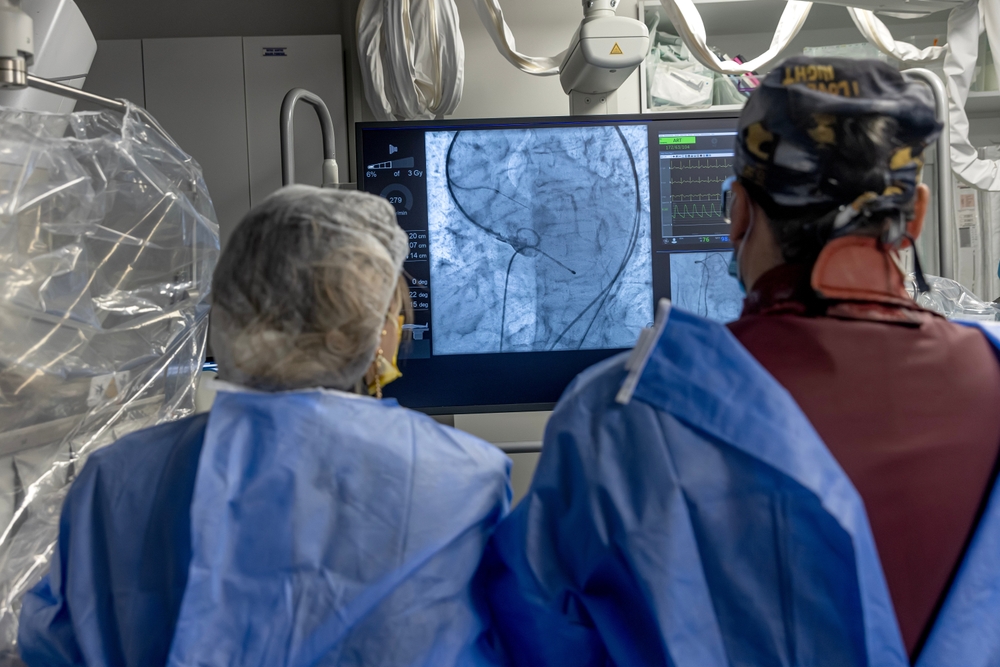
Cardiac cath lab technologists work with medical teams during procedures used to diagnose and treat heart and blood vessel problems. You may prepare patients, set up equipment, monitor vital signs, operate imaging systems, maintain a sterile field, and assist while doctors place catheters or perform procedures such as angioplasty. It is technical work in a room where everyone needs to know exactly what is happening. Average pay for a cardiac cath lab technologist is about $80,717 per year.
There are several ways into the field. Many workers complete an associate-level cardiovascular technology program, while others first qualify in radiologic technology and add cardiovascular training and credentials. Hospitals commonly prefer or require professional certification. The broader cardiovascular technologist field is projected to grow about as fast as the overall workforce as heart disease remains a major reason people need medical care. Cath labs are also expanding beyond basic diagnostic procedures as more heart problems can be treated through minimally invasive techniques. This job requires somebody at the patient’s side who can respond immediately when a heart rhythm changes, equipment malfunctions, or a physician needs assistance during a procedure.
7. Fire inspector

Fire inspectors look for conditions that could turn an ordinary building into a disaster. They inspect alarms, exits, sprinkler systems, storage practices, occupancy limits, and other fire-safety issues. Some also investigate fires to determine where and how they started. The job mixes field inspections, technical knowledge, interviews, evidence, and enforcement. Median pay for fire inspectors is about $73,680 per year.
This usually is not a first job straight out of high school. Many inspectors spend time as firefighters or in another fire-safety role before moving into inspection work. The typical educational floor is still a high school diploma, followed by job training and often professional certification. Fire inspectors and investigators are expected to see steady employment growth, and existing buildings need repeated inspections as codes, owners, occupants, and uses change. New construction adds more work. It is a good example of a career where experience can eventually matter more than collecting another degree. Inspection software may handle forms and records, but somebody still has to walk the property, spot hazards that do not fit neatly into a checklist, talk with owners, and decide whether a building meets safety rules.
8. Mechatronics technician
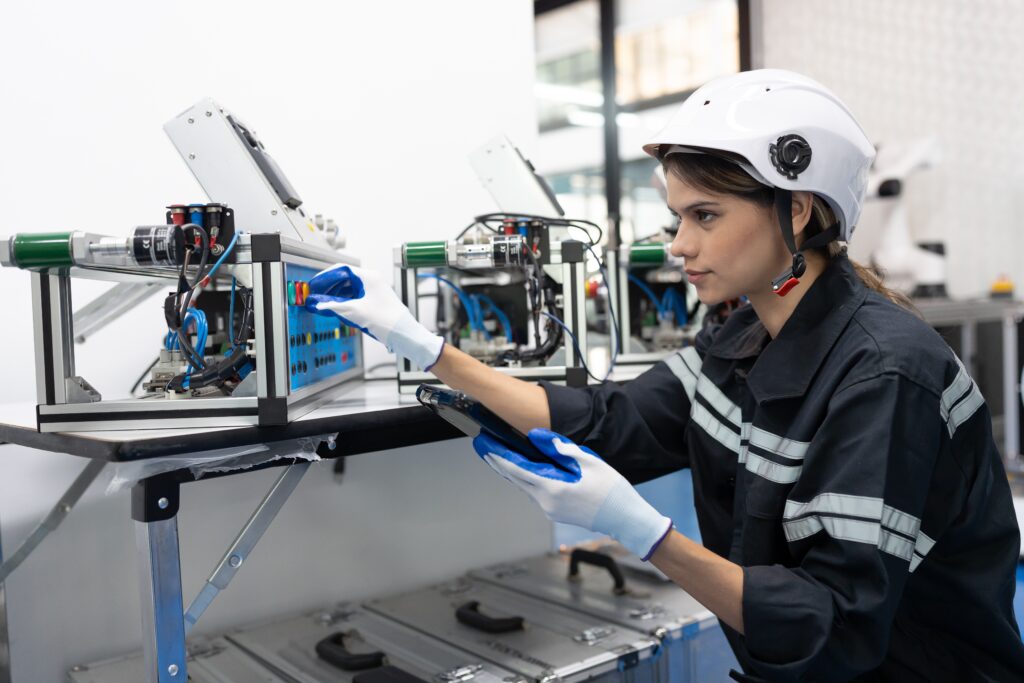
Factories are filling up with robots, automated conveyors, sensors, programmable equipment, and computer-controlled machinery. Mechatronics technicians help keep all of that hardware working. They may test electrical circuits, repair mechanical components, adjust robotic systems, troubleshoot sensors, replace motors, and figure out why two parts of an automated system have stopped communicating properly. Median pay for electro-mechanical and mechatronics technologists and technicians is about $73,900 per year.
An associate degree is common, but postsecondary certificate programs are another accepted path into the occupation. Training usually combines electronics, mechanics, hydraulics, computers, and industrial controls rather than focusing on only one trade. Employment is projected to remain steady, with ongoing openings as manufacturers add and upgrade automated systems. Automation cuts some repetitive production jobs, but it also creates expensive equipment that has to be installed, tested, maintained, and repaired. When a robotic line stops and production is losing money by the minute, a company needs someone who understands both the mechanical and electronic sides of the problem. That combination of hands-on troubleshooting skills can also transfer among manufacturing, transportation equipment, electronics, and research facilities.
9. Occupational therapy assistant

Occupational therapy assistants help people regain everyday skills after an injury, illness, disability, or major health event. That might mean helping a stroke patient relearn how to dress, working with a child on motor skills, teaching someone how to use adaptive equipment, or helping an older adult safely move through a home again. You work under an occupational therapist but spend a lot of your day directly with patients. Median pay is about $72,300 per year.
The usual route is a two-year accredited associate degree followed by whatever licensing or certification is required before you practice. Employment for occupational therapy assistants is projected to jump more than 20%, making this one of the faster-growing careers on the list. The aging population is part of the reason, but occupational therapy is used with people of many ages in rehabilitation centers, hospitals, schools, nursing facilities, outpatient clinics, and home healthcare. Technology can track progress or suggest exercises, but therapy depends heavily on watching how a real person moves, modifying an activity when it is not working, and getting somebody through tasks that may be painful, frustrating, or frightening.
10. Transportation electronics repairer

Modern trains, buses, ships, and other transportation equipment depend on far more electronics than they did a generation ago. Transportation electronics repairers install, inspect, test, and repair systems used for communication, control, navigation, monitoring, and other functions. They may trace wiring faults, test electronic components, replace damaged equipment, or diagnose a system that works intermittently. Median pay for electrical and electronics installers and repairers working specifically on transportation equipment is about $84,890 per year.
A high school diploma is generally the starting point, followed by technical education, work experience, or extensive employer training. Electronics certificates and military technical experience can also be useful. Employment in this particular specialty is projected to grow around 5% as transportation equipment becomes more electronically complex. The job is a useful alternative for someone who likes electronics but does not want to spend every day sitting at a desk. A diagnostic system can point toward a fault, but someone still has to open panels, test circuits, isolate the actual failure, replace components, and make sure the equipment is safe before passengers or freight start moving again.
11. Polysomnographic technologist
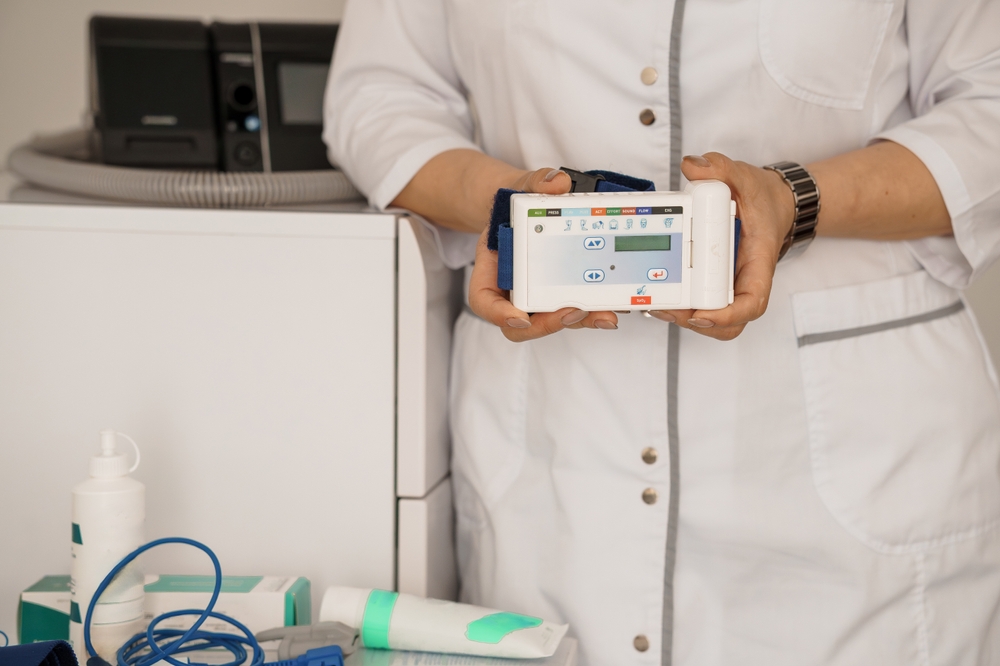
Polysomnographic technologists, often called sleep technologists, monitor patients during overnight sleep studies. They attach sensors, track breathing and oxygen levels, record brain and muscle activity, watch for abnormal events, and make sure the data collected during the night is usable. They may work with patients being tested for sleep apnea, narcolepsy, unusual nighttime movements, or other sleep disorders. Average pay is around $65,900 per year.
You do not need to spend four years in school to enter sleep technology. Paths include accredited certificate or associate programs, and there are credentialing routes that combine focused education with supervised clinical experience. Hospitals and sleep centers often prefer workers who earn a recognized professional credential. The broader group of specialized health technologists is projected to grow faster than the overall job market. Sleep testing also is difficult to turn into a completely hands-off process. Sensors fall off, patients wake up confused, breathing patterns suddenly change, and equipment behaves differently on actual people than it does in a training manual. Much of the work happens overnight, which can be a downside, but those shifts also make the occupation a useful option for people who do not want a standard daytime schedule.
12. Crane and tower operator

Crane and tower operators move steel, concrete, machinery, containers, and other heavy loads that cannot be picked up any other practical way. On a busy construction or industrial site, an operator has to judge distance, load movement, wind, signals, obstacles, and the people working below. A mistake can damage equipment or seriously injure someone, so this is much more than pulling a few levers. Median pay for crane and tower operators is about $68,080 per year.
A bachelor’s degree is not part of the normal path. Operators commonly start with a high school education, learn through structured training and work experience, and obtain the certifications required for the cranes they operate. Employment for crane and tower operators is projected to grow around 4%, helped by ongoing construction and the constant movement of heavy materials in ports, industrial facilities, and infrastructure projects. Remote controls and safety systems can make cranes easier to operate, but they do not remove the need for a skilled person to understand the load and conditions at the worksite. Experienced operators who can handle larger or more complicated equipment can also move into higher-responsibility assignments.
13. Avionics technician
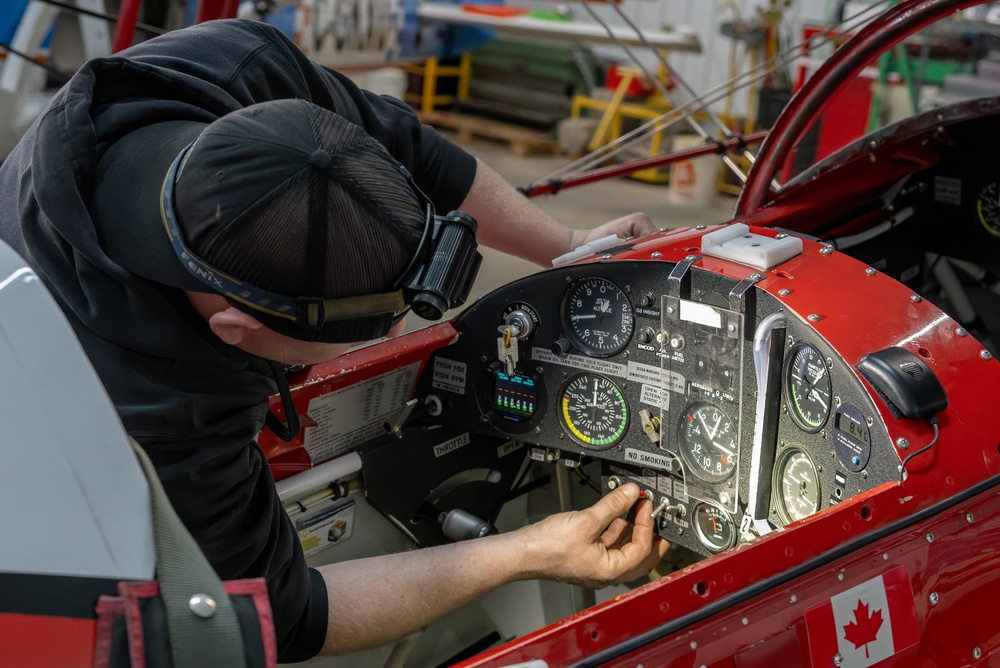
Avionics technicians specialize in the electronic systems packed inside aircraft. They test and repair navigation equipment, communication systems, radar, flight instruments, wiring, and computer-controlled components. When pilots report an intermittent warning or a system fails a test, the technician may have to trace the problem through connectors, wiring, modules, and sensors until the actual fault is found. Median pay is about $82,280 per year.
Technical school programs can prepare you for this work without a bachelor’s degree, and military electronics training is another common background. Some workers also hold aircraft mechanic credentials because the combination makes them more useful to employers. Employment for aircraft and avionics mechanics and technicians is projected to grow about 6%, with regular openings from fleet expansion, maintenance needs, and workers leaving the occupation. Aircraft electronics are becoming more advanced rather than disappearing. That creates a continuing need for technicians who understand how the systems interact and can physically test them. Airlines, manufacturers, maintenance companies, cargo operators, and aviation service businesses all employ avionics workers, so the skill set is not tied to a single kind of employer.
14. Funeral home manager

Funeral home managers handle one of those jobs most people rarely think about until their family urgently needs someone who knows what to do. Managers coordinate staff, schedules, services, transportation, paperwork, facilities, vendors, and the many details that have to come together after a death. They also spend time with grieving families who may be making difficult decisions on a short deadline. Median pay is about $78,790 per year.
The standard educational route is usually an associate degree in mortuary science or funeral service rather than a bachelor’s program. Licensing generally requires supervised practical training and an examination, and managers normally build experience before taking charge of a location. Employment for funeral home managers is projected to grow about 4%. The type of service families choose may change, including more cremations and simpler arrangements, but families still need transportation, legal documents, remains handled correctly, facilities managed, and someone who can calmly coordinate the process. It is difficult work emotionally and schedules can be unpredictable, but it relies heavily on judgment, organization, trust, and face-to-face communication when people are under serious stress.
15. Surgical assistant

Surgical assistants work directly with surgeons during operations. Depending on the procedure, they may help position the patient, control bleeding, hold tissue, use instruments, apply clamps, close wounds, or perform other tasks under the surgeon’s direction. This is different from a surgical technologist role and generally comes with more clinical responsibility. Median pay is about $66,800 per year.
The typical education is a postsecondary program rather than a bachelor’s degree, although the exact path depends on your previous healthcare experience and the training program you choose. Certification is commonly preferred and may be required by employers. Employment for surgical assistants is projected to grow around 6%. Hospitals and surgical centers continue to perform large numbers of operations, including procedures for an aging population that is living longer with conditions requiring surgical care. This is also work that happens inches from an actual patient. Equipment and imaging can help the surgical team, but a qualified person still needs to react instantly when tissue moves, bleeding starts, an instrument is needed, or the surgeon changes course during a procedure.
16. Millwright

Millwrights install, move, align, dismantle, and repair the heavy machinery used in factories, power facilities, processing plants, and other industrial workplaces. When a company brings in a massive new production machine, millwrights may assemble it piece by piece, level it, align moving parts, connect components, and test the finished installation. They also tear down equipment for repairs and replace worn bearings, shafts, motors, belts, and other parts. Median pay is about $65,700 per year.
Most millwrights learn through a paid apprenticeship lasting several years, typically starting with a high school diploma. Apprentices study welding, rigging, hydraulics, blueprints, precision measurement, and mechanical troubleshooting while getting paid for on-the-job hours. Employment for millwrights themselves is expected to stay fairly steady, while the larger industrial machinery maintenance field is growing much faster. One reason is simple: factories are installing more complicated machinery, and complicated machinery breaks, drifts out of alignment, or eventually wears out. Even highly automated plants need people who can crawl around the equipment, identify a mechanical failure, safely move multi-ton components, and put the whole system back together.
17. Respiratory therapist

Respiratory therapists care for people who cannot breathe normally on their own. They give breathing treatments, test lung function, manage ventilators, monitor oxygen, help with airway emergencies, and work with patients who have conditions such as asthma, pneumonia, COPD, or serious injuries. They can work everywhere from emergency rooms and intensive care units to rehabilitation and long-term care facilities. Median pay is about $82,280 per year.
An associate degree is the typical entry route, followed by professional credentials and licensing where required. Employment is projected to grow about 9%, much faster than the overall job market. An older population means more patients with chronic lung problems, while hospitals and nursing facilities continue to need therapists who can manage complicated respiratory equipment. This is hands-on clinical work where small changes matter. A ventilator can display numbers and alarms, but a respiratory therapist has to evaluate the person connected to it, determine why breathing has changed, make the right adjustments, and coordinate with nurses and physicians. Hospitals also operate around the clock, so evening, overnight, and weekend schedules are common.
18. Property manager

Property managers keep apartment buildings, rental communities, commercial spaces, and other properties running. They deal with tenants, maintenance problems, contractors, inspections, budgets, vacancies, leases, emergencies, and owners who expect the property to stay occupied and in good condition. Some days are paperwork-heavy. Others involve a broken pipe, an angry tenant, a contractor who did not show up, and an owner who wants an answer immediately. Median pay for property, real estate, and community association managers is about $69,990 per year.
A high school diploma plus several years of related experience is a recognized path into the occupation, although some employers prefer additional education. Licensing may be required depending on the duties involved. Employment is projected to grow about 4%, with tens of thousands of openings expected each year as properties continue to need day-to-day management and experienced workers leave the field. Software can collect rent, schedule work orders, and send reminders. It cannot inspect water damage, negotiate with a difficult vendor, calm down residents during an emergency, or walk through a property and notice problems before they become expensive repairs.











