
You made a qualified charitable distribution from your IRA sometime this year. Maybe it went to your church, maybe your old university, maybe the food bank down the street. You knocked out part of your required withdrawal, kept the amount off your taxable income, and felt pretty good about it. Then your Form 1099-R showed up, and the box that’s supposed to flag your donation either isn’t checked the way you expected, or it isn’t checked at all.
For 2026, the most you can send straight from a traditional IRA to charity tax-free is $111,000 per person, up from $108,000 the year before. That’s real money, and for anyone 70½ or older who gives generously, it’s one of the few moves left in the tax code that keeps income out of your return entirely instead of just deducting it after the fact.
The wrinkle this year isn’t in the giving. It’s in the paperwork. The IRS built a new code for custodians to use when they flag one of these donations, and custodians are applying it in noticeably different ways depending on how you actually sent the money.
If you wrote the check yourself using an IRA checkbook, there’s a real chance your form won’t say what you assumed it would say. That’s worth understanding before you sit down to file, because this year, what your form shows and what the law actually requires aren’t always the same thing.
The new code that showed up on your 1099-R
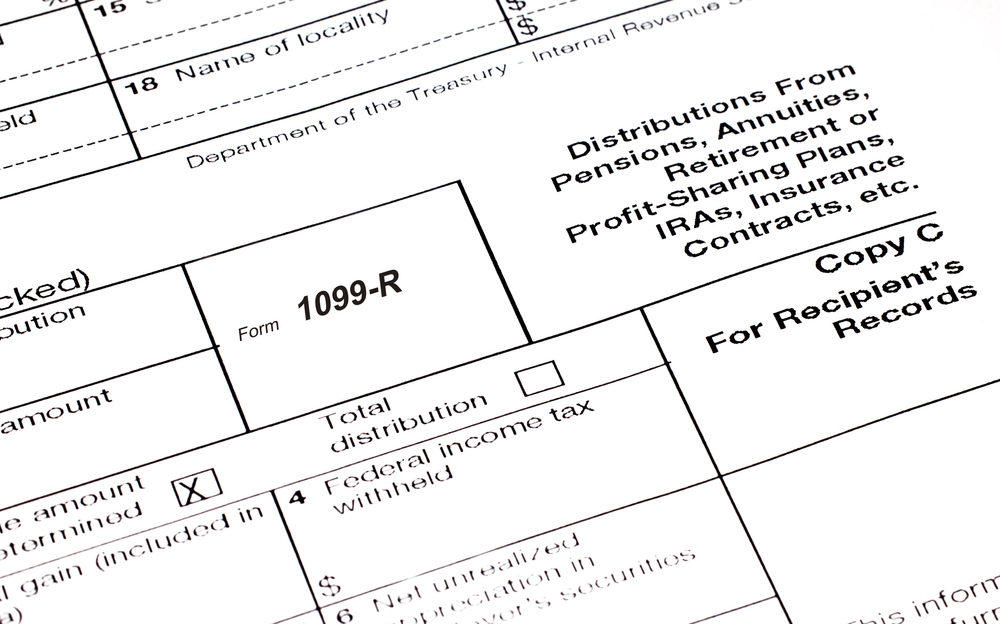
For as long as qualified charitable distributions have existed, custodians reported them the same way they reported any other IRA withdrawal. A normal distribution got Code 7. A distribution from an inherited IRA got Code 4. There was never a special marker for money that went to charity instead of into your pocket, so it fell entirely on you to tell the IRS, on your own return, that part of your withdrawal didn’t count as income.
That changed with the 2025 Form 1099-R, when the IRS introduced Code Y specifically to identify a qualified charitable distribution. Custodians pushed back hard enough over the mid-year timing that the IRS made the code optional for 2025, and it’s staying optional for 2026 filings too. When a custodian does use it, Code Y gets paired with another code, so you might see Y7 for a normal QCD or Y4 for one made from an inherited IRA.
Because none of this is mandatory yet, plenty of custodians simply aren’t bothering. Your form can look identical to last year’s even though the underlying rule changed underneath it.
Why an IRA checkbook is causing headaches
Plenty of custodians give IRA owners a physical checkbook tied to the account, letting you pay bills or make gifts by writing a check yourself instead of calling in a formal distribution request. People have used that feature to make qualified charitable distributions for years without any trouble.
Now that custodians have a code reserved for distributions they personally know are headed to charity, some of them have decided a checkbook check they didn’t process themselves doesn’t meet that bar. Some custodians will still code checkbook donations as QCDs under the right circumstances, while others have taken the position that a check the IRA owner writes personally can’t qualify at all, at least for reporting purposes.
The result is that some IRA owners this filing season have a 1099-R that looks exactly like an ordinary withdrawal, even though every dollar landed in a charity’s account. This isn’t a new rule about who qualifies for a QCD. It’s a disagreement among custodians about how much certainty they need before they’ll put a special label on a transaction they didn’t personally process.
The code was never the law

None of this reporting confusion changes what actually determines whether your gift counts as a qualified charitable distribution. That’s set by the tax code itself, not by whichever box a custodian checks.
The IRS’s own guidance on how to report a QCD predates Code Y by years and hasn’t changed. You report the full distribution on the IRA line of your Form 1040, enter zero as the taxable amount, and write “QCD” next to it. That’s the process that’s always applied, and it still works exactly the same way whether or not Box 7 carries the new label.
Financial planners who work with retirees have made the same point since the rule rolled out. Reporting is an administrative convenience, not a legal requirement, and a missing code doesn’t retroactively turn a valid donation into taxable income.
There’s one wrinkle worth knowing about separately: the same IRS guidance says you also need to file Form 8606 if you had nondeductible contributions in the traditional IRA and took another distribution that year, or if the qualified charitable distribution came from a Roth IRA. That requirement has nothing to do with Code Y either. It’s just another piece of the process that hasn’t changed.
What actually has to be true for your gift to count

Strip away the Form 1099-R confusion and the requirements for a qualified charitable distribution haven’t moved. You need to be 70½ or older at the time of the distribution. The money has to come from a traditional IRA, not an active SEP or SIMPLE plan, and it has to transfer directly to a qualifying 501(c)(3), never to a donor-advised fund or a private foundation. The $111,000 annual limit applies per person for 2026, and a married couple can move up to $222,000 combined if each spouse owns an IRA and gives from their own account.
If you’re using an IRA checkbook, there’s one rule that matters more than any code: the check has to be made payable to the charity, not to you, even if you’re the one physically writing it and dropping it in the mail. That requirement has nothing to do with this year’s reporting changes. It’s been the standard since QCDs became a permanent part of the tax code, and it’s still the thing that actually decides whether your gift qualifies.
What to do about it this tax season
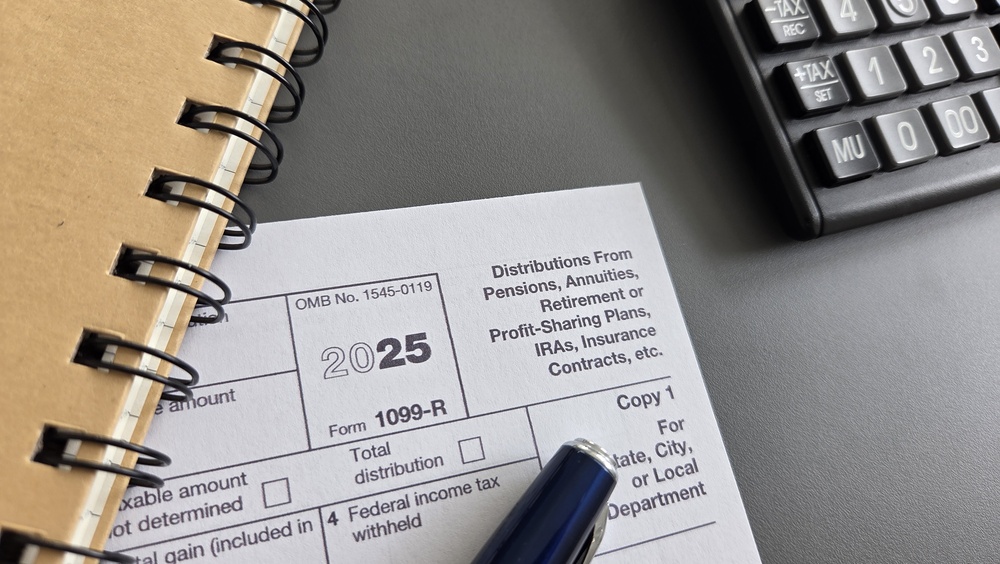
Check Box 7 as soon as your 1099-R arrives. If Code Y, Y7, or Y4 shows up, your custodian has already flagged the donation for you. If none of those appear and you know you made a legitimate qualified charitable distribution, that absence isn’t proof you did something wrong. It just means the reporting is still up to you, exactly as it’s always been. Report the full distribution, zero out the taxable amount, and note “QCD” on the line.
Hold onto the charity’s written acknowledgment confirming you received nothing of value in exchange for the gift. That document carries more weight with the IRS than anything printed on a 1099-R.
If you’re planning to use an IRA checkbook this year, ask your custodian upfront how they intend to code a check written to a charity. Some will tell you plainly they won’t use Code Y for checkbook transactions no matter what. If that’s the case, consider requesting a direct transfer instead, so there’s no ambiguity waiting for you in January.
And if a custodian does miscode a distribution, or you spot an error on the form, contact them and ask for a correction. Just don’t assume a coding mistake changes your right to the exclusion. It doesn’t.
The tax break itself hasn’t moved. Only the paperwork around it has, and right now, custodians are still the ones catching up.











