
Somebody hands you a $2 bill at a diner as a joke, or you’re going through a parent’s dresser drawer and find one folded flat under some old photos. Almost everyone assumes it’s automatically valuable, just because it’s a $2 bill and you don’t see them often. Almost none of them actually are.
That mismatch between assumption and reality is the whole story with $2 bills. The Bureau of Engraving and Printing still makes them today, and the vast majority in circulation, including most from 1976 onward, are worth exactly two dollars. What actually moves a $2 bill into collector territory has nothing to do with the denomination being unusual. It comes down to the series year, the seal color, whether the serial number does something interesting, and whether the paper has ever been folded.
This list runs from bills you might genuinely have sitting in a drawer right now up through the older large-size notes that occasionally turn up in an inherited collection. Check the seal color and the serial number before you spend anything, and don’t assume a plain, well-worn bill is worth more just because of its age.
Table of contents
- 1976 first day issue $2 bill with an original postmark
- 1976 $2 star note from a scarce Federal Reserve district
- Any $2 bill with a fancy serial number
- 1963 or 1963A red seal $2 bill, uncirculated
- 1953 red seal $2 star note
- 1928D red seal $2 bill
- 1928B red seal $2 bill
- 1899 $2 silver certificate, the “Mini Porthole” note
- 1918 $2 Federal Reserve Bank Note, the “Battleship” note
- $2 bill with a genuine printing error
1976 first day issue $2 bill with an original postmark
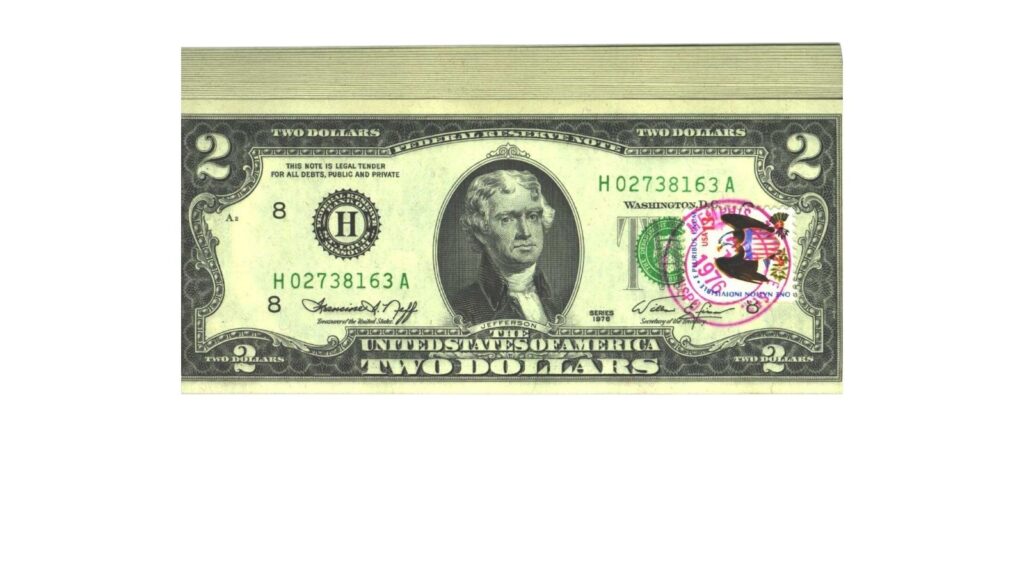
When the redesigned $2 bill launched on April 13, 1976, Thomas Jefferson’s birthday, people lined up at banks to get one, then rushed to the post office to have it postmarked that same day as a keepsake. Those postmarked notes, usually still attached to an envelope with a commemorative stamp and sometimes a decorative cachet, are called first day issues.
A basic first day cover from an ordinary city brings modest money, but examples from a notable city like Philadelphia or Washington, D.C., with a nice cachet design can bring $30 to $75, and a first day cover holding a star note climbs higher still. The value lives in the whole package, envelope, stamp, cancellation, and bill together, not the $2 note by itself. Check that the postmark is genuinely from April 1976 and not added later with a rubber stamp, and keep the envelope intact rather than removing the bill. Cutting a first day cover apart destroys most of what makes it worth anything.
1976 $2 star note from a scarce Federal Reserve district
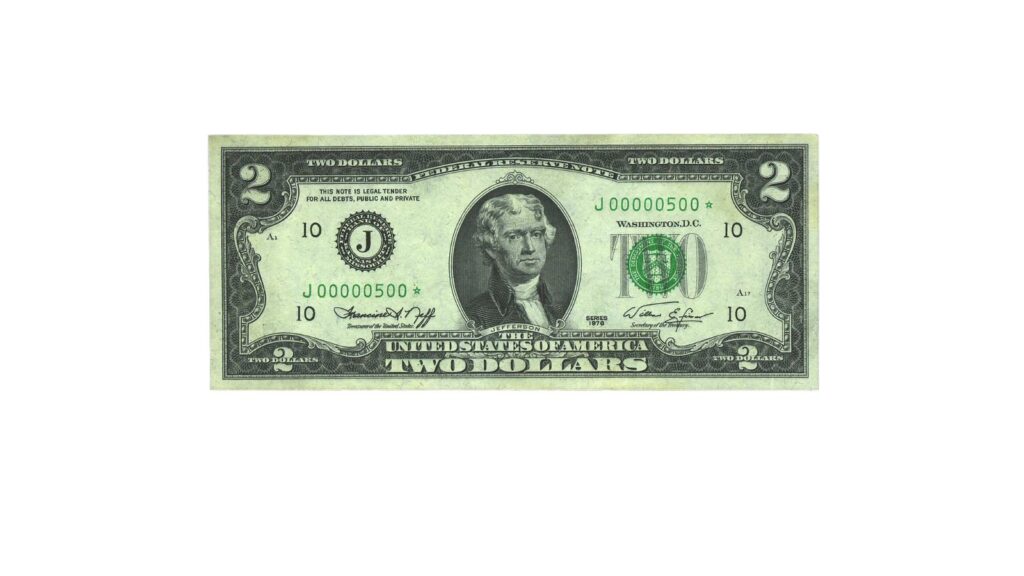
A star symbol at the end of the serial number means the bill is a replacement note, printed to take the place of one damaged during production. Most 1976 star notes are common enough to bring only a modest premium over face value. A handful of Federal Reserve districts, though, had noticeably smaller print runs for their star notes, and those command real money.
Check the letter printed before the serial number. Districts including Minneapolis, Kansas City, and San Francisco had some of the smaller 1976 star note print runs, and uncirculated examples from those runs can bring $50 to $200 or more, compared to $15 to $30 for a common district in similar condition. A worn example is still worth checking but brings far less than a crisp one. This is a genuinely accessible find since 1976 twos still circulate in family collections and old bank envelopes, and most people have never thought to check the letter prefix at all.
Any $2 bill with a fancy serial number
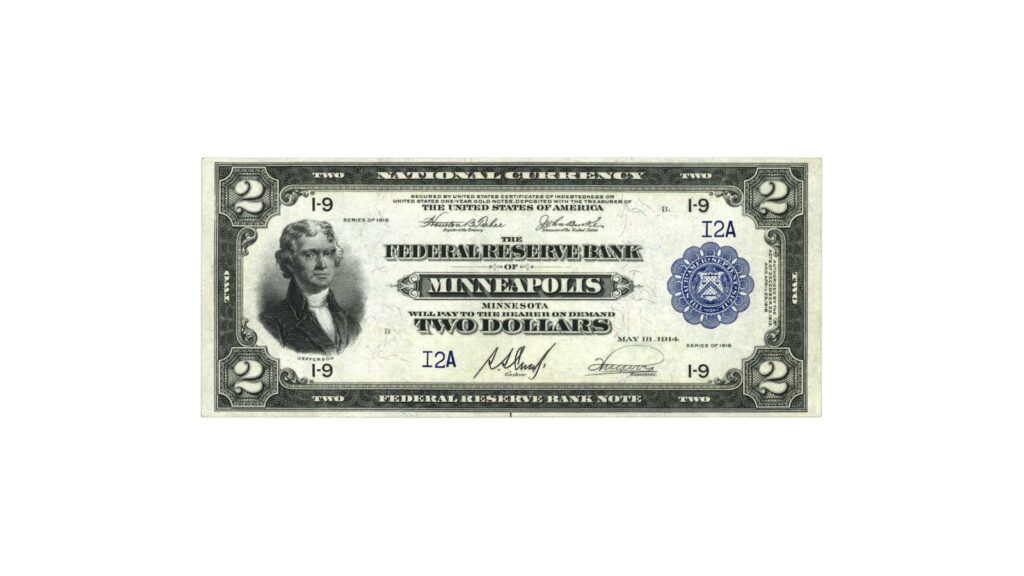
Every bill carries an eight-digit serial number, and most are forgettable strings of random digits. Every so often, though, the digits form a pattern collectors specifically hunt for: a solid run of one digit, a perfect ascending ladder like 12345678, a palindrome that reads the same both directions, or a serial made of only two repeating digits. Because far fewer $2 bills are printed each year than $1s, a fancy serial on a two carries a meaningful premium over the same pattern on a one, often 25 to 50 percent more.
A true solid serial number can bring $500 to $5,000 depending on condition, a complete ladder $200 to $1,500, and even a modest palindrome or repeater can add $20 to $100 to an otherwise ordinary bill. This applies to any series year, so it’s worth glancing at every $2 bill that crosses your path, old or new. Confirm the pattern is genuine and complete before getting excited. A near-miss, like a serial that’s almost a ladder but off by one digit, is worth face value only.
1963 or 1963A red seal $2 bill, uncirculated
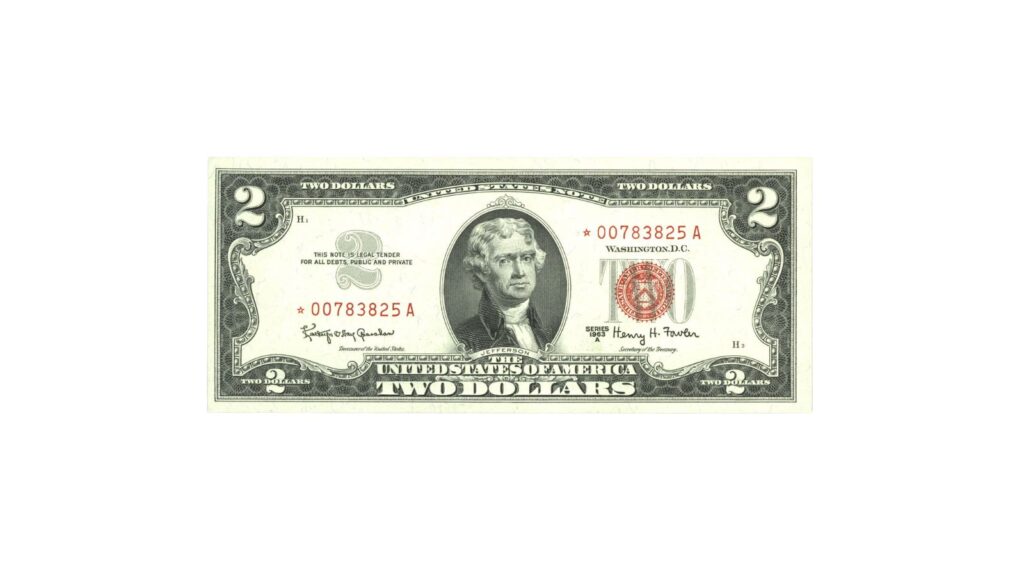
The 1963 series was the last time the $2 bill wore a red Treasury seal before the Bicentennial redesign switched to green, and it was also the first $2 bill to carry “In God We Trust” on the back. These are United States Notes, a Treasury-issued currency type that predates the modern Federal Reserve Note system, which gives them a bit of built-in history even in ordinary condition.
Circulated 1963 and 1963A notes typically bring $3 to $8, which is honest but modest money for a bill that’s over sixty years old. Crisp, never-folded uncirculated examples do better, running $12 to $25, and a star note in similar condition pushes toward $50 to $100. The biggest mistake people make with this series is assuming any red seal automatically means real money. Grade honestly. A single visible fold drops a note out of uncirculated pricing entirely, and most red seals that spent decades in a wallet or envelope will grade Very Fine or lower.
1953 red seal $2 star note
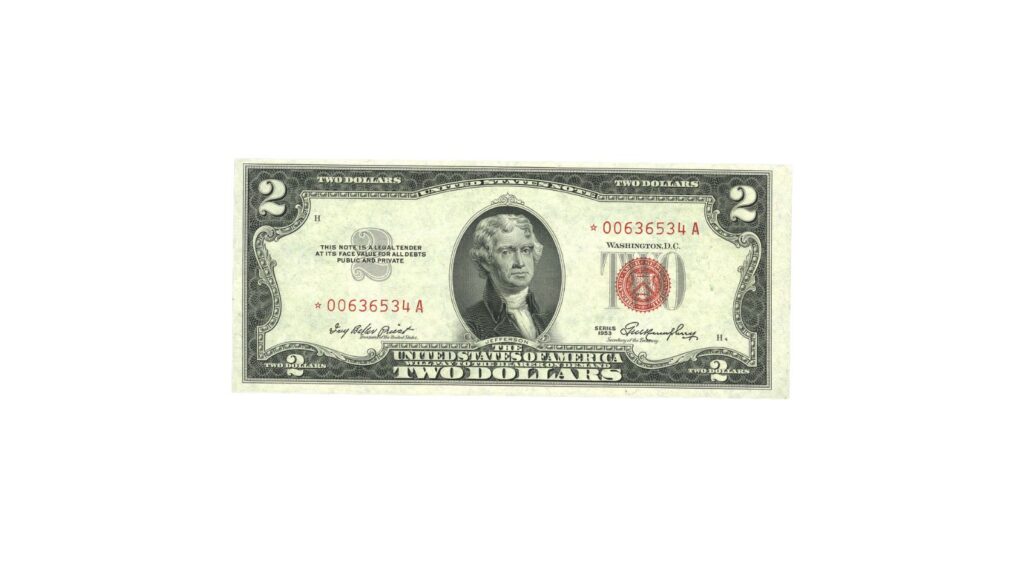
The 1953 series, printed across four nearly identical sub-series (1953, 1953A, 1953B, and 1953C), is the red seal two-dollar bill people find most often, usually tucked into an old wallet or a coin collection someone started decades ago. On their own, regular circulated examples are honestly not exciting, typically worth just a few dollars over face.
Star notes change the math. A star symbol at the front of the serial number marks a replacement note printed in smaller numbers than the regular run, and those bring roughly $15 to $20 circulated and $75 or more in uncirculated condition, sometimes considerably higher when paired with a fancy serial number. A small number of exceptional error and star combination notes from this series have brought serious money at the high end, but those are genuine outliers, not a realistic expectation for the note in your drawer. Check the front for a star before assuming a plain 1953 two is worth spending time on, and don’t clean or press the note, since original surface condition matters more than most people expect.
1928D red seal $2 bill
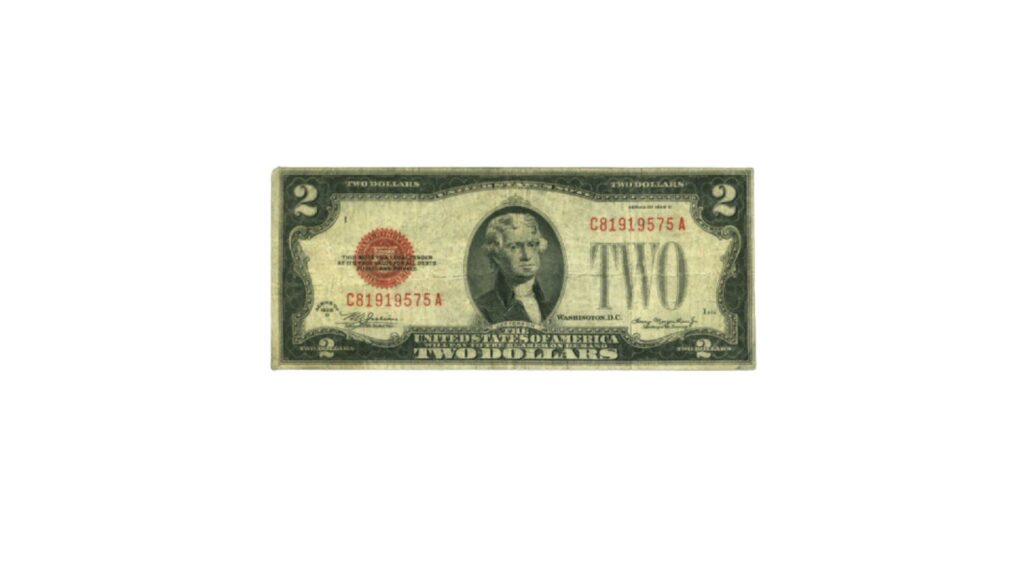
The 1928 series was the first $2 bill printed in the small size still used today, shrinking American currency from the older, larger “horse blanket” format. You’ll recognize it by the red seal sitting on the left side of the face, opposite where later red seals moved to the right. Of the eight sub-series printed between 1928 and 1928G, the 1928D is by far the most common, with more than 146 million printed, which makes it the version you’re statistically most likely to actually own.
That abundance keeps prices modest but real. Circulated 1928D notes bring roughly $3 to $5, and crisp uncirculated examples can reach $40 to $65. It’s a genuinely accessible entry point into pre-Bicentennial $2 collecting, the kind of note that shows up in an inherited cigar box of old bills. Check the small letter after “1928” near the portrait to confirm which sub-series you actually have, since it’s easy to mistake this common variety for a scarcer one at a glance.
1928B red seal $2 bill
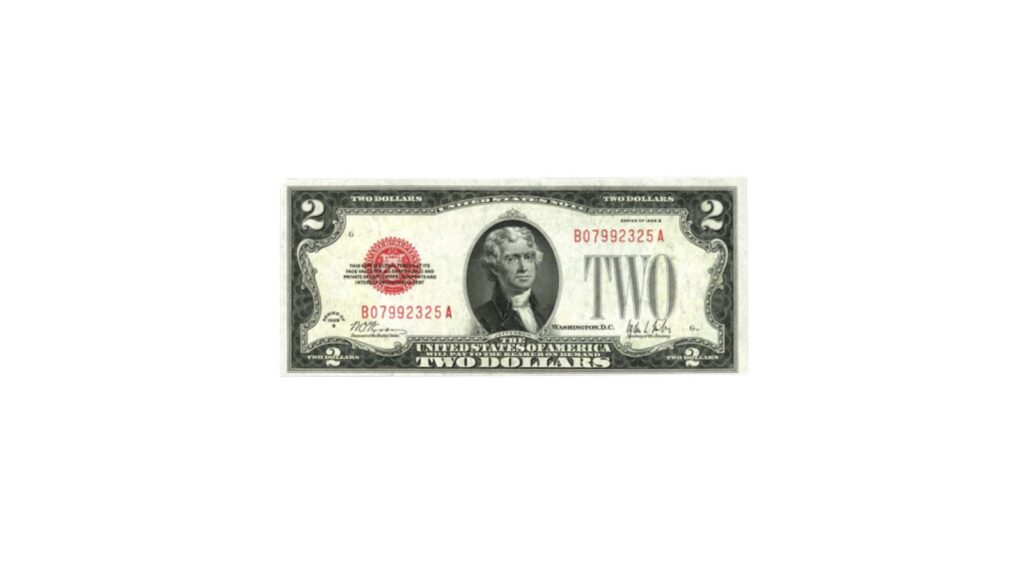
Buried among the eight 1928 sub-series, the 1928B stands apart for one simple reason: only about 9 million were printed, compared to the 1928D’s 146 million. That’s a meaningful difference in surviving population, and collectors treat it accordingly, even though the design looks essentially identical to its more common siblings at a glance.
Circulated 1928B notes typically bring $10 to $20, noticeably more than the common 1928 sub-series in the same condition, and choice uncirculated examples can push toward $80 to $130. The only way to tell it apart from a common 1928D is the small signature-era letter printed near the series date, so it’s worth actually checking rather than assuming any 1928 red seal is the same as the next. This sits comfortably in mid-market territory: genuinely findable in an old collection, but scarce enough to reward the person who bothers to check the fine print.
1899 $2 silver certificate, the “Mini Porthole” note
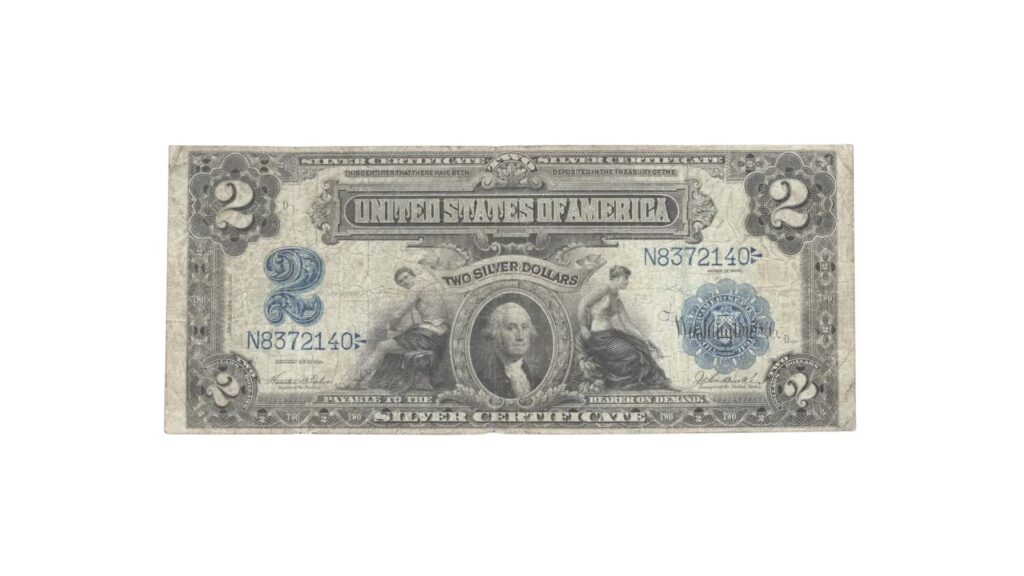
Before the 1928 downsizing, the $2 silver certificate went through several large-size designs, and the 1899 series is the one collectors nicknamed the “Mini Porthole.” A small circular portrait of George Washington sits at the bottom center of the note, framed so it looks like you’re viewing him through a ship’s porthole, flanked by allegorical figures representing agriculture and mechanics. It’s considered one of the most artistically striking $2 notes ever issued, ranked among the 100 greatest American currency notes by longtime collectors and dealers.
This was the last time the $2 denomination appeared as a silver certificate before the government moved to legal tender notes in 1928, and survival estimates across all ten signature combinations run to only a few thousand notes. Worn, complete examples in the lower grades bring a few hundred dollars, while sharp, high-grade notes have been valued at $2,500 to $3,500 or more. This is genuinely aspirational territory, more likely to surface in a great-grandparent’s papers than a thrift store bin, but it’s exactly the kind of note that ends up misidentified as a modern novelty bill if nobody in the family recognizes what a large-size note actually is. Confirm the larger dimensions and blue serial numbers before assuming it’s a reproduction.
1918 $2 Federal Reserve Bank Note, the “Battleship” note
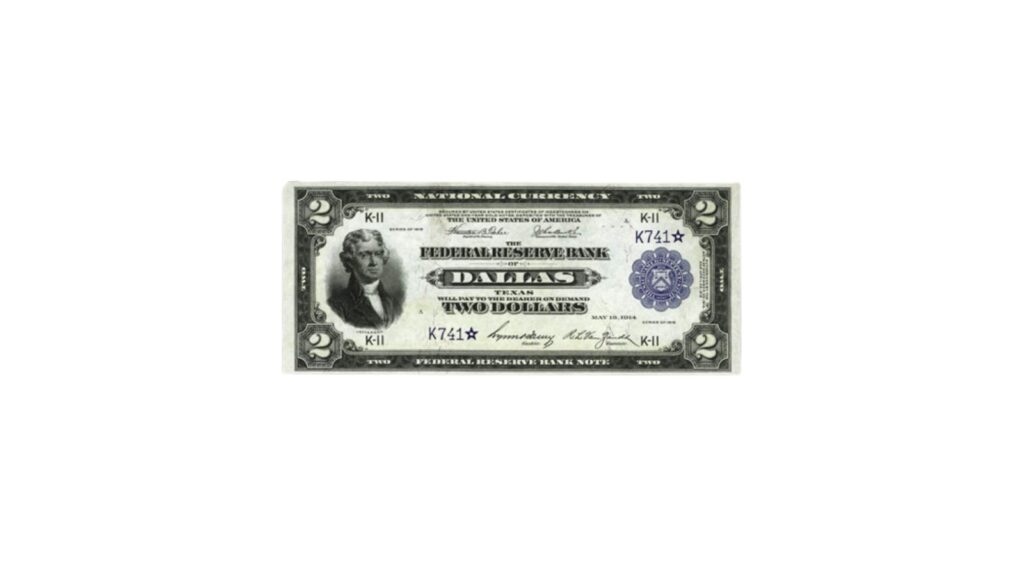
Issued for exactly one year as an emergency response to a silver shortage under the Pittman Act, the 1918 $2 Federal Reserve Bank Note is nicknamed the “Battleship” for the dreadnought-style warship engraved across its back, a striking contrast to the Jefferson portrait and Monticello imagery used on every other $2 series. It’s a large-size note, noticeably bigger than a modern bill, printed on cotton paper because wartime shortages had disrupted the usual linen supply.
Twelve different Federal Reserve Banks issued their own version of this note, each with the same design but a different bank name printed on the face, and some banks, Atlanta in particular, produced far fewer than others. Worn, well-circulated examples bring roughly $700 to $900, while sharp extremely fine notes can reach $1,500 to $2,000, and gem uncirculated examples from scarce banks go considerably higher. Given the values involved and the number of large-size reproductions floating around as decorative pieces, anything that looks like this note deserves professional grading rather than a guess based on photos online.
$2 bill with a genuine printing error
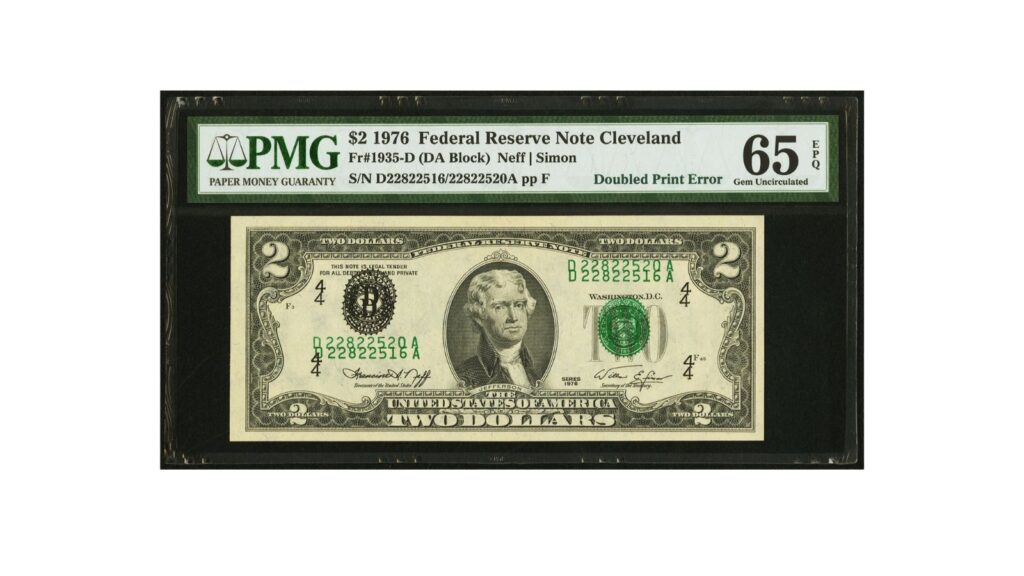
Errors happen across every series, including bills printed this year, and $2 bills are actually a favorite target for error hunters precisely because far fewer are printed than $1s, which means a smaller pool of notes to search but slightly better odds per bill examined. The most common errors are misaligned printing, where the design shifts noticeably off center, and ink smears, where excess ink transfers onto the sheet in a streak or blotch.
Minor misalignment might add $25 to $50, but a dramatic shift that cuts into the portrait can bring $200 to $500, and a strong ink smear across a key design element can reach $1,500. Rarer errors, like a section of the bill missing its printing entirely or an overprint that’s upside down relative to the rest of the note, climb into four figures. The catch is that genuine production errors are frequently imitated by washing, bleaching, or trimming an ordinary note to look damaged. Anything you think is a real error and worth more than a couple hundred dollars is worth sending to a professional grading service before you try to sell it, since authentication is really the whole ballgame here.











