
A flashy job title doesn’t necessarily have a flashy paycheck or real job stability. For most people, a steady pay check, predictability, and good job security beat a fun or exciting job title. The advantage of “boring” jobs is that they are essential and often hard to automate. They require a degree of experience and human judgement that AI can’t match, and that those title chasers just aren’t interested in. If you’re looking for a career change with long-term potential, look at the boring stuff. That’s where some of the very best opportunities are.
A lot of these jobs are built around regulations, maintenance, safety rules, inspections, and repetitive processes. That may not make for an exciting dinner-party story, but it can make for a steady paycheck. Many also involve physical equipment, licensed work, legal responsibility, or decisions that a company cannot simply hand off to a computer program. The work can be routine. The consequences of doing it badly are not.
Table of contents
- 1. Elevator and escalator installer and repairer
- 2. Certified industrial hygienist
- 3. Regulatory affairs specialist
- 4. Nuclear medicine technologist
- 5. Pipeline integrity engineer
- 6. Food safety manager
- 7. Risk control consultant
- 8. Dental hygienist
- 9. Commissioning engineer
- 10. Landfill manager
- 11. Corrosion engineer
- 12. Infection control and prevention manager
- 13. Water quality manager
- 14. Clinical laboratory manager
- 15. Licensed nursing home administrator
- 16. Actuary
- 17. Transportation, storage, and distribution manager
- 18. Facilities manager
1. Elevator and escalator installer and repairer

A surprising amount of elevator work is routine maintenance rather than dramatic rescues between floors. Technicians inspect cables, doors, switches, motors, brakes, hydraulic equipment, and control systems. They lubricate parts, adjust equipment, test safety devices, and document what they found. Experienced workers also troubleshoot failures and replace worn components. Median pay is about $51.24 per hour.
The usual route into the trade is a paid apprenticeship, generally after high school. Licensing is required in many places, and apprentices spend years learning electrical, mechanical, hydraulic, and safety systems. Employment is projected to grow faster than average, with thousands of openings expected each year from growth and replacement needs. Even in buildings where monitoring systems can spot problems early, somebody has to enter the shaft, inspect the machinery, make the repair, and certify that the equipment is safe. Hospitals, office towers, apartment buildings, airports, hotels, and transit systems cannot put elevator maintenance on hold because hiring is inconvenient.
2. Certified industrial hygienist

The name sounds cleaner than the work. Industrial hygienists spend their days measuring things workers probably wish were not in the air, including dust, chemicals, fumes, noise, heat, mold, and other hazards. They collect samples, inspect workplaces, compare results with exposure limits, recommend controls, and produce plenty of reports. Average pay for a certified industrial hygienist is about $45 per hour.
Most professionals come from occupational safety, chemistry, biology, engineering, or environmental science. Certification generally comes after a degree, qualifying work experience, and an exam. The broader workplace-safety field is growing much faster than average as employers deal with tougher safety expectations, heat exposure, new manufacturing processes, and changing equipment. The work also has a strong physical component. A computer can organize sampling results, but it cannot walk through a chemical plant, notice that a ventilation hood is being used incorrectly, interview employees about their exposure, or decide whether actual working conditions match what a procedure says happens on paper.
3. Regulatory affairs specialist

If your idea of a peaceful workday involves technical documents, regulations, submission deadlines, and checking whether somebody used the correct version of a form, regulatory affairs may deliver. Specialists help pharmaceutical, biotechnology, medical-device, and other regulated companies get products approved and keep them compliant afterward. They review labels, technical files, manufacturing changes, testing records, and submissions to regulators. Average pay is about $62 per hour.
A bachelor’s degree in a life science, engineering, chemistry, or another technical field is common. People also move into regulatory work from quality assurance, laboratory operations, manufacturing, and clinical research. The dullness is part of the job’s staying power. Regulated companies cannot simply stop filing required documents because paperwork is tedious. Software can help search rules and prepare routine material, but businesses still need people who understand what a rule means for a specific product and who can defend a submission when regulators start asking questions. Experience becomes especially valuable because small changes in manufacturing, labeling, or testing can trigger surprisingly large regulatory headaches.
4. Nuclear medicine technologist

Nuclear medicine technologists prepare radioactive drugs, administer carefully measured doses, operate imaging equipment, position patients, monitor them during procedures, and maintain detailed radiation records. Much of the day follows set protocols, with the same safety checks performed again and again. Median pay is about $48.74 per hour.
An associate’s degree in nuclear medicine technology is the usual starting point, although certificate and bachelor’s programs also exist. Certification is common, and licensing requirements may apply. Employment is projected to keep growing, with hundreds of openings expected each year as imaging remains important in cancer, cardiac, and other care. This is also a difficult job to turn into a purely automated process. Somebody must receive and handle radioactive materials, verify the patient and dosage, operate the scanner safely, recognize problems during the procedure, and follow radiation-control rules. Hospitals, imaging centers, physician offices, and diagnostic laboratories need trained people physically present whenever these procedures are being performed.
5. Pipeline integrity engineer

Pipeline integrity engineering is largely about preventing steel buried underground from becoming a very expensive problem. Engineers study inspection data, corrosion readings, pressure tests, weld records, repair histories, and maps. They decide where a pipeline needs another inspection, a pressure reduction, excavation, or repair. There can be plenty of spreadsheets, standards, meetings, and reports between field visits. Average pay is about $53 per hour.
A bachelor’s degree in mechanical, materials, civil, chemical, or a related engineering field is common. Experience with pipeline codes, corrosion control, nondestructive testing, and integrity-management programs helps. Energy companies and pipeline operators have a strong reason to keep these positions staffed because the systems are regulated and failures can shut down service, cause environmental damage, and produce enormous liability. Inspection technology may become more sophisticated, but somebody still has to decide what the readings mean, whether an anomaly is serious, what repair is appropriate, and whether a section of pipeline can safely remain in service. Much of the work is methodical rather than glamorous, which is exactly why it is easy to overlook.
6. Food safety manager

A food safety manager can spend an impressive amount of time thinking about handwashing, refrigeration temperatures, sanitation records, allergen controls, pest logs, cleaning chemicals, and whether a production employee followed a written procedure correctly. Managers audit facilities, investigate problems, oversee testing, train employees, and make sure required food-safety systems are actually being followed. Average pay is about $58 per hour.
Food science, microbiology, biology, chemistry, or a related degree is a common route, followed by several years in quality or plant operations. Training in HACCP and other food-safety systems is frequently expected. The work exists anywhere food is made at scale, including meat processors, beverage plants, commercial bakeries, frozen-food operations, ingredient companies, and large distribution businesses. Demand is supported by something very basic: companies cannot sell contaminated food and hope for the best. Sensors and automated production equipment can flag certain problems, but managers still investigate failures, inspect real production lines, question employees, deal with auditors, and decide whether questionable product can leave the building.
7. Risk control consultant

Risk control consultants are the people insurance companies send out to look for everything that could burn, break, collapse, injure somebody, or generate a large claim. A typical assignment might involve inspecting a warehouse, manufacturing plant, apartment complex, contractor, or commercial building. You photograph hazards, review safety procedures, examine fire protection, interview managers, and write recommendations. Average pay is about $47 per hour.
Employers often look for backgrounds in occupational safety, engineering, fire protection, construction, insurance, or industrial operations. Professional safety and risk-management credentials can help after you have experience. This job sits in a useful middle ground between desk work and field work. There are reports and checklists, but you also need to see how a real property operates. Insurance carriers have a financial reason to keep experienced risk people around because avoiding one major loss can matter far more than trimming inspection staff. Automated tools can identify patterns in claims data, but they cannot walk through a plant and notice that pallets are blocking a sprinkler valve or that employees are bypassing a machine guard.
8. Dental hygienist

Dental hygiene is repetitive by design. You examine gums, remove plaque and tartar, take X-rays, measure periodontal pockets, polish teeth, update charts, and remind another person that flossing would be a good idea. Then you clean the room and do a similar set of tasks for the next patient. Median pay is about $47.16 per hour.
Dental hygienists generally complete an associate’s degree program in dental hygiene and must be licensed. Employment is projected to grow much faster than average, with tens of thousands of openings expected each year. Preventive dental care is difficult to move online or automate because somebody still has to put instruments in a patient’s mouth, spot suspicious areas, take images correctly, and adjust treatment when a patient is bleeding, anxious, sensitive, or medically complicated. Many hygienists work part time, which can also create openings across several practices instead of one traditional full-time job. For somebody who likes predictable appointments and doesn’t mind performing the same procedures throughout the day, the routine can be a feature rather than a drawback.
9. Commissioning engineer

Commissioning engineers make sure a new building or industrial system actually works the way the plans say it should. That means testing pumps, fans, electrical equipment, controls, alarms, heating systems, cooling systems, and other equipment, then documenting every problem. There can be days of checklists, test scripts, equipment readings, meetings with contractors, and retesting something that failed the first time. Average pay is about $54 per hour.
Mechanical and electrical engineering are common backgrounds, although experienced technicians and controls specialists can also move toward commissioning work. Buildings have become more complicated as owners add automation, energy controls, backup power, sophisticated ventilation, and tighter performance requirements. That creates more systems that need to be tested before an owner accepts them. Software can collect readings, but the hard part is often figuring out why the air handler, pump, sensor, or control sequence is behaving differently in the real building than it did on a design drawing. Hospitals, laboratories, data centers, government buildings, factories, and large commercial projects have especially strong reasons to get that answer right.
10. Landfill manager

Managing a landfill is mostly operations, regulation, and keeping a mountain of other people’s trash under control. Managers supervise employees and contractors, monitor incoming waste, oversee equipment, handle environmental records, manage landfill gas and leachate systems, track capacity, and make sure daily cover and other operating requirements are met. Average pay is about $56 per hour.
People enter through environmental science, waste operations, construction, heavy equipment, engineering, or general operations management. Depending on the facility, specific operator or environmental credentials may be required. This is one of those businesses that cannot simply disappear during a slow economy. Garbage keeps arriving. Environmental monitoring continues. Regulators still expect records, inspections, and corrective action. Modern landfills use sensors, gas systems, scales, GPS equipment, and automated reporting, but that does not eliminate the need for someone responsible for the physical site. A manager still has to deal with damaged equipment, unusual waste loads, odor complaints, weather problems, employee safety, environmental sampling, and the awkward question of where tomorrow’s trash will go.
11. Corrosion engineer

Corrosion engineers are paid to worry about rust at a much more advanced level than the rest of us. They inspect and protect pipelines, tanks, bridges, chemical equipment, ships, utility systems, and other metal assets. Work can include reviewing test results, selecting coatings, designing cathodic-protection systems, investigating failures, checking specifications, and documenting whether equipment can keep operating. Average pay is about $49 per hour.
Materials, chemical, mechanical, and metallurgical engineering are common educational paths. Specialized corrosion and cathodic-protection credentials can become valuable as you gain experience. The job has staying power because corrosion does not care how advanced the economy becomes. Water, salt, chemicals, heat, soil, and time continue attacking infrastructure. Inspection devices and predictive models can help engineers decide where to look, but physical assets still need field measurements, engineering judgment, and somebody willing to sign off on repairs. Energy companies, utilities, manufacturers, transportation companies, engineering firms, and government agencies employ corrosion specialists because letting a pipe or pressure vessel fail is considerably more expensive than paying someone to obsess over it beforehand.
12. Infection control and prevention manager

Infection prevention managers spend a lot of time tracking things nobody wants spreading through a hospital. They review infection cases, audit hand-hygiene practices, investigate outbreaks, monitor isolation procedures, evaluate cleaning practices, train employees, and prepare reports for hospital leadership and regulators. There is plenty of surveillance data and committee work mixed with walking clinical floors. Average pay is about $60 per hour.
Many managers come from nursing, microbiology, public health, epidemiology, or medical laboratory work. A professional infection-control credential is commonly valued once you have qualifying experience. Healthcare management is one of the faster-growing parts of the labor market, and infection prevention has become a permanent operating responsibility rather than something hospitals think about only during a crisis. Computer systems can flag unusual infection patterns, but somebody has to investigate what actually happened. Was equipment cleaned incorrectly? Did staff ignore an isolation rule? Is the laboratory seeing a real cluster or bad data? Hospitals, nursing facilities, surgery centers, and other healthcare organizations need experienced people who can answer those questions and get staff to change what they are doing.
13. Water quality manager
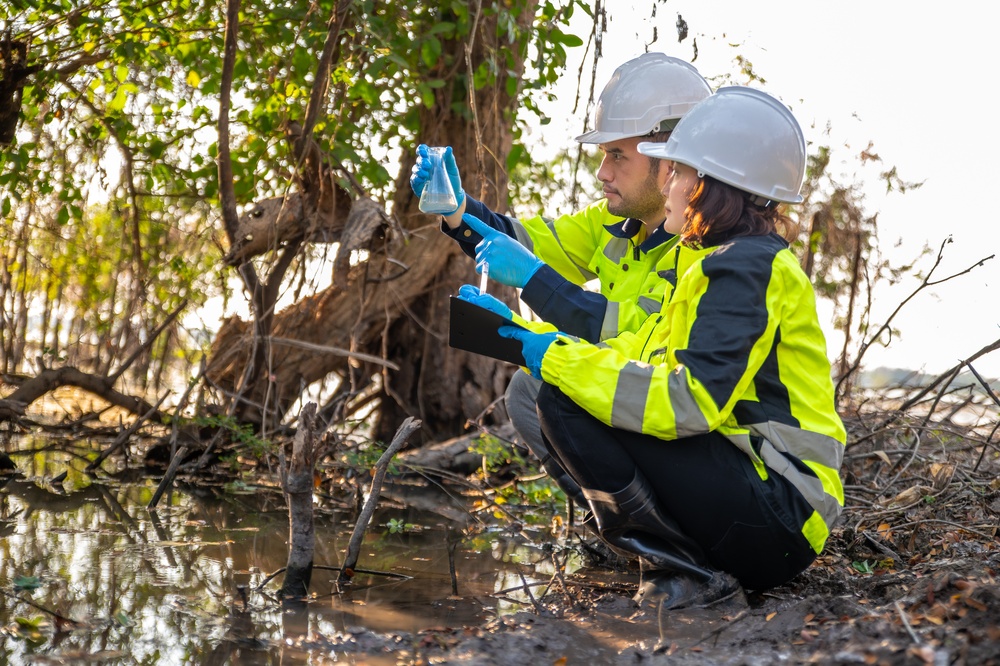
Water quality managers oversee the testing and compliance work that helps keep drinking water, wastewater, or industrial water systems within required limits. A normal week can involve sample results, lab reports, treatment records, permits, inspections, equipment problems, corrective actions, and meetings about why one reading moved a few points in the wrong direction. Average pay is about $63 per hour.
Environmental science, chemistry, biology, engineering, and water-treatment experience are common backgrounds. Depending on the employer, professional engineering credentials or water and wastewater operator certifications can be useful or required. The attraction is not excitement. It is necessity. Cities, utilities, manufacturers, and treatment systems have legal obligations to test water and respond when results fall outside acceptable limits. Much of the equipment can be monitored electronically, but questionable results still need investigation, samples still need to be collected correctly, treatment changes need human approval, and regulators expect an accountable person. Aging pipes, treatment upgrades, contamination concerns, and tighter monitoring requirements give experienced water professionals plenty to keep track of.
14. Clinical laboratory manager

A clinical laboratory manager oversees the people and systems producing blood counts, chemistry panels, cultures, pathology-related tests, and thousands of other results used in patient care. Managers deal with quality-control failures, proficiency testing, staffing, instrument maintenance, supply shortages, documentation, inspections, and the occasional sample that arrived in a condition nobody can explain. Average pay is about $58 per hour.
The usual path starts with a bachelor’s degree in medical laboratory science or a related discipline, professional certification, and several years working in a clinical lab. The manager role comes after you understand the bench work well enough to recognize when something is wrong. Laboratories already use enormous amounts of automation, yet managers remain necessary precisely because automated equipment needs quality checks, calibration, maintenance, validation, and human review when results do not make sense. Hospitals and diagnostic laboratories also operate under strict standards that require documented supervision and quality systems. As testing volume grows and experienced laboratory workers retire, people who understand both the science and the unglamorous operational side of the lab remain valuable.
15. Licensed nursing home administrator

A nursing home administrator runs the place nobody notices until something goes wrong. The work includes staffing, budgets, inspections, resident complaints, food service, maintenance, contracts, safety, documentation, quality measures, and making sure dozens of healthcare rules are followed every day. It is heavy on meetings and paperwork, with occasional emergencies dropped into the middle. Average pay is about $65 per hour.
Administrators commonly have a degree in healthcare administration, business, or a related field, then complete required training and licensing. The exact licensing path varies, but this is not a job where a facility can simply decide it no longer needs a qualified person in charge. Long-term care also has a powerful demand driver: a large and growing older population that needs residential and skilled nursing services. Software can schedule workers and generate reports, but it cannot take responsibility for an understaffed floor, respond to an inspection finding, negotiate with families, manage a serious incident, or decide how to keep a facility functioning when several problems hit at once.
16. Actuary

Actuaries spend their careers estimating the financial cost of events that may or may not happen. Insurance pricing, pension obligations, healthcare costs, mortality assumptions, catastrophe risk, and corporate reserves all generate piles of statistical work. Much of the job involves models, assumptions, tables, documentation, and explaining why a number changed. Median pay is about $62.50 per hour.
You generally need a bachelor’s degree with strong math and statistics coursework, followed by a long series of professional exams. Those exams are a major barrier to entry, which helps keep qualified workers scarce. Employment is projected to grow much faster than average as insurers and other companies deal with increasingly complicated risks. Routine calculations are already handled by software, so the valuable part of the job has shifted toward setting assumptions, checking models, interpreting results, dealing with regulators, and deciding whether a model’s output makes sense. Insurance companies cannot simply accept whatever number a program produces when billions of dollars of premiums, reserves, and future claims depend on the answer.
17. Transportation, storage, and distribution manager

Transportation managers coordinate the unexciting machinery of getting things from one place to another. They monitor shipments, schedules, warehouse capacity, drivers, loading, inventory, safety rules, costs, and missed deliveries. When everything works, almost nobody notices. When a truck, warehouse, route, or supplier fails, the manager hears about it quickly. Median pay is about $51.55 per hour.
A four-year degree is not always required. Many employers value years of experience in warehousing, trucking, distribution, fleet operations, or logistics, and experienced supervisors can work their way up. Employment is projected to grow faster than average, with many thousands of openings expected each year. Tracking systems and routing software have automated parts of logistics for years, but physical freight still gets delayed, damaged, misrouted, rejected, or stranded. Somebody has to reshuffle labor, equipment, dock space, carriers, and schedules when that happens. Manufacturers, wholesalers, retailers, trucking companies, warehouses, ports, and distribution centers all depend on managers who understand how the real operation works rather than just what the tracking screen says.
18. Facilities manager

Facilities managers deal with the endless list of things required to keep a building usable. Air conditioning, plumbing, cleaning, elevators, landscaping, security, fire systems, generators, roofs, electrical work, vendor contracts, office moves, inspections, and maintenance schedules can all land on the same desk. Average pay is about $51 per hour.
Some managers have bachelor’s degrees in facilities management, engineering, construction, or business. Others come up through building maintenance, the skilled trades, property operations, or project supervision. Experience matters because the job involves knowing which problems can wait until Monday and which ones will become disasters by midnight. Demand is expected to remain steady as organizations focus on building maintenance, energy use, safety, and aging equipment. Building-management software can monitor temperatures and generate work orders, but someone still has to decide which contractor to call, inspect the repair, handle a failed boiler, prepare for a fire inspection, and keep hundreds of people working when part of the building suddenly stops cooperating.











