
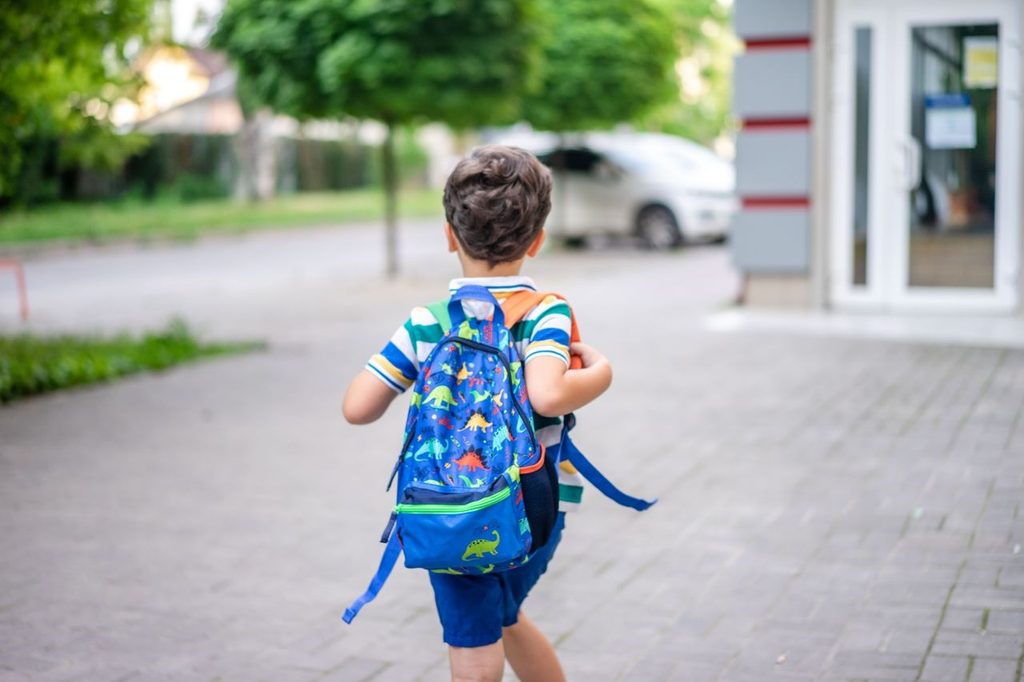
Thinking of letting your kid walk to school alone for the first time? It’s a big milestone, for sure. It’s also one of those parenting decisions that can make you stare out the window five minutes after they leave and wonder whether you’ve completely lost your mind.
Well, first off, you haven’t; it’s only natural to worry, but all kids have to go through this at some point. What’s important to understand is this: a child who knows the route, has a backup plan, and understands what to do when something goes wrong has a much better starting point than one who simply knows where school is.
After all, pedestrian crashes still cause thousands of deaths and many injuries in the U.S. each year, with speed and road design among the factors that raise the risk. We’re not sharing this to make you or your child afraid of the walk. We’re sharing it because having a solid family safety plan that covers more than “look both ways” is essential. Here’s how to build one.
Table of contents
Walk the route before you hand over the responsibility
Take the actual route with your child several times, preferably around the same time they will walk to school. Morning traffic behaves very differently at 7:45 a.m. than it does on a quiet Sunday afternoon.
Choose the route based on safety, not just distance. The NHTSA recommends looking for well-defined walking paths and routes separated from traffic where possible (preferably sidewalks), and its walkability guidance also flags poor lighting, damaged sidewalks, and other hazards worth noticing.
Point out exactly where your child should cross, which driveways require extra attention, and where they should never cut through to save two minutes. Have them lead you through the route after a few practice walks, as well.
Make traffic rules specific
“Be careful” is not a useful instruction for an eight-year-old standing near a busy intersection. Give your child clear rules they can actually follow:
- Use sidewalks and designated crossings where available
- Stop fully at the curb and look left-right-left before crossing
- Keep phones and headphones away at the crossing
- Never assume a driver has seen them, even if the vehicle appears to stop
- Follow the planned route unless you have discussed a change beforehand
NHTSA also advises that children under 10 should generally walk with an adult or someone responsible for helping them walk safely. Age matters, but so does the child’s judgment, ability to focus, and the route itself.
Teach kids what to do after an injury or crash
What happens if your child is injured? Nobody wants to picture worst-case scenarios, but having a clear protocol reduces panic if something does happen.
If your child is injured, teach them to move to a safer location only if they can do so safely, call 911 or ask a trusted adult to call, and contact you as soon as possible. They should not worry about figuring out who was at fault, arguing with a driver, or handling the situation themselves.
Securing immediate medical care is always step one. Once your child is safe, you may need legal help for injured pedestrians to navigate insurance claims, understand your rights, and cover medical expenses so you can focus entirely on your family’s recovery.
What if your kid witnesses someone else get hit? Their job is not to play hero. They should call 911 or find a responsible adult, stay nearby only if it is safe, and avoid moving an injured person unless there is immediate danger.
Create a reliable communication plan
Your plan can include a quick “leaving now” and “arrived” message if your child has a phone. But avoid making the phone the entire safety system.
Instead, agree on what happens if your child is late. For example, after a set number of minutes, you call them. If you cannot reach them, you contact the school and then follow the next steps you’ve already decided on.
Your child should also memorize your phone number and at least one other trusted adult’s number. Put emergency contacts in their backpack, but don’t assume a written list replaces memorization.
Build confidence without creating fear
The goal is confidence, not paranoia. You don’t need to invent every terrible thing that could happen on the walk to school.
Practice the plan, answer questions honestly, and revisit it when the route changes, daylight hours shift, or your child shows more independence. A good safety plan should become familiar enough that your child knows what to do without feeling like danger waits behind every parked car.










