
It’s 2:40 in the afternoon and you haven’t left your chair since lunch, except to sign for a package you don’t remember ordering. Your neck aches, your eyes feel sandy, and you’d be hard pressed to say what you’ve actually gotten done since 9 a.m. Working from home was supposed to give you more control over your day. Instead it just moved the chaos indoors.
You’re not imagining the shift, either. 35 percent of employed people did some or all of their work at home last year, and most of them never got a manual for it. There’s no commute to bookend the day, no coworker walking past to remind you to stand up, and no conference room to escape to when the kitchen table starts to feel like a cage.
Most of what wrecks a work-from-home day has a fix that takes a few minutes, not a life overhaul. Some of these you already know and just haven’t done yet. Do them anyway.
Table of contents
- Time-block your calendar before your inbox fills it for you
- Sit near a real window, not just under a bright bulb
- Get up and move for a few minutes every half hour
- Give your eyes an actual break from the screen
- Take a real nap when the afternoon wall hits
- Give your household a clear signal for do-not-disturb
- Set a hard stop time and mean it
- Schedule real human contact into your week
- Build a dedicated workspace, even a small one
- Fix your chair before your back fixes it for you
- Keep a full glass of water within reach
- Take a lunch break away from your screen
- Walk before and after work like you’re commuting
- Add a plant or two to your desk
- Clear your desk before you clear your inbox
- Batch your errands into one window, not all day
- Cut blue light after dark
- Bottom line
Time-block your calendar before your inbox fills it for you
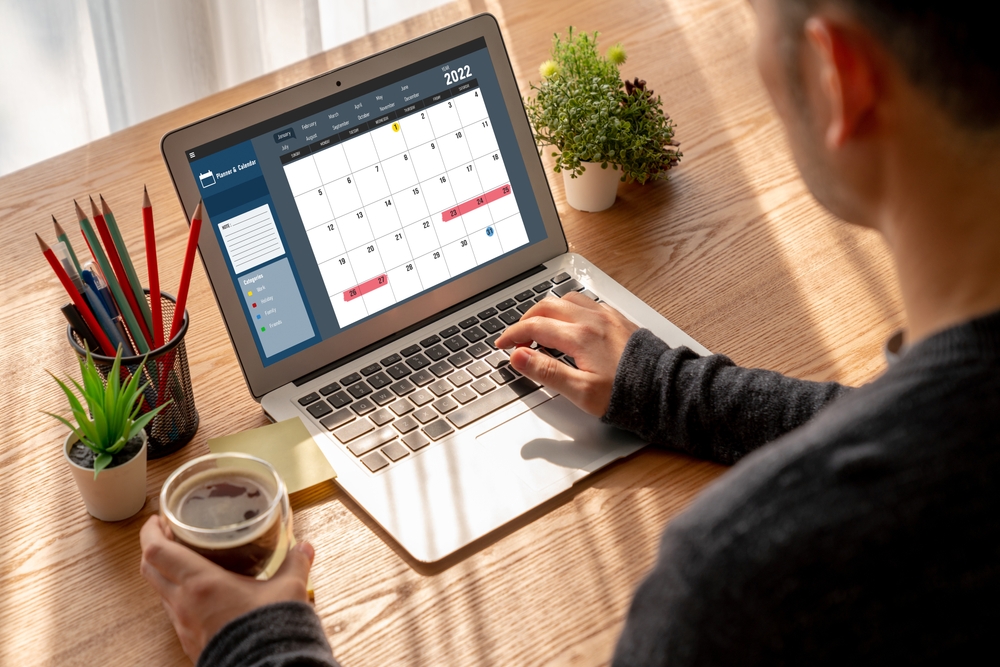
If you don’t put your real work on the calendar first, meetings and messages will eat every open hour without you noticing. Block out two or three chunks a day, ideally 60 to 90 minutes each, for the tasks that actually move your job forward, and treat those blocks the same way you’d treat a meeting with your boss. Nobody else can see an empty afternoon on your calendar and know it’s already spoken for.
This matters more than it sounds like it should. Getting pulled off a task and back onto it costs real time, about 25 minutes on average to fully return to what you were doing before the interruption, and most people naturally drift between projects every 10 or 11 minutes even with nobody interrupting them. A wide-open calendar invites exactly that kind of scattering. A blocked calendar gives you something to point to when someone tries to book over it, and it gives you permission to say no.
Sit near a real window, not just under a bright bulb
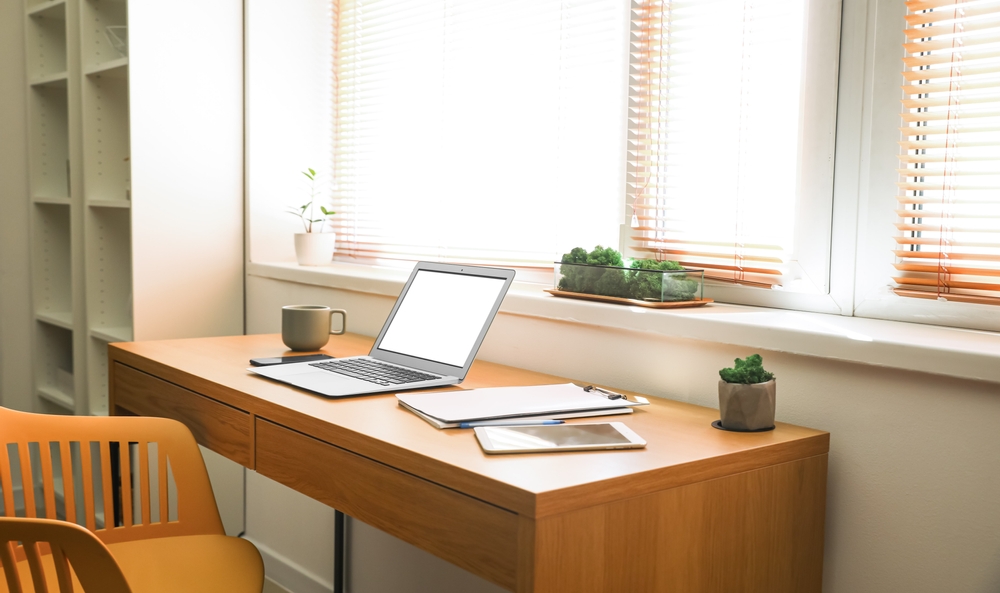
A windowless corner or a basement is one of the worst spots you can put a desk in, so move it if you possibly can, even if that just means turning your chair to face the nearest window instead of a wall. Daylight does something artificial light can’t fully replace: it keeps your internal clock synced, which affects how well you sleep that night and how sharp you feel the next day.
In one controlled study, office workers exposed to real daylight and outdoor views slept 37 minutes longer per night and scored 42 percent higher on cognitive tests than workers in an identical office with the blinds down. The effect showed up after a single day and got stronger over the course of a week. Face the window rather than sitting with your back to it, since that cuts down on screen glare and gets more light directly on your face instead of just lighting the room behind you. If you can’t relocate your desk, at least take your coffee break by a window instead of scrolling your phone in the same dim spot you’ve been sitting in all morning.
Get up and move for a few minutes every half hour
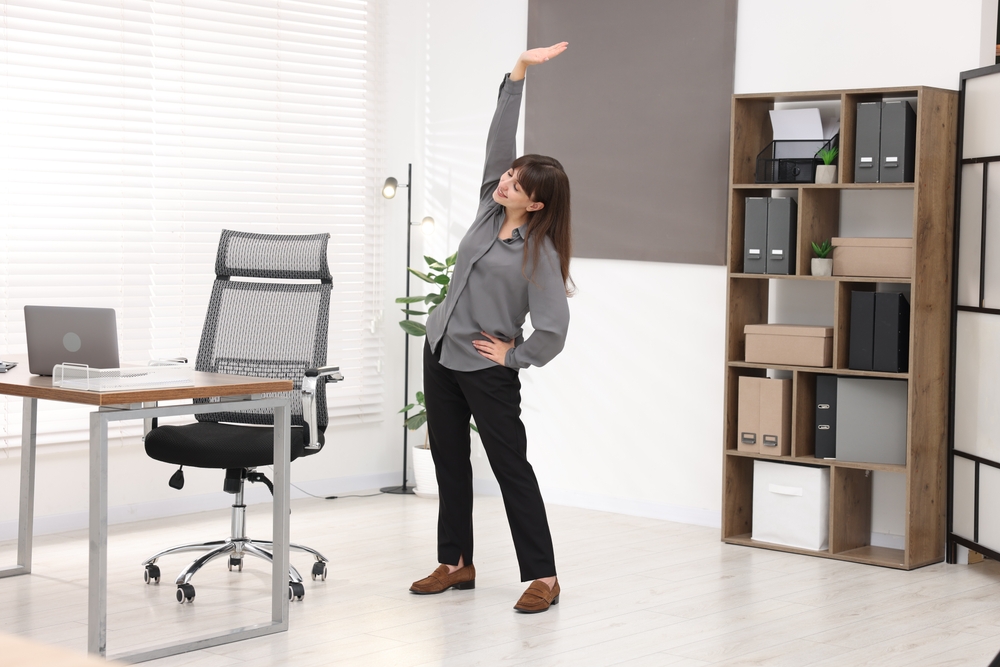
Sitting at a desk from 9 to 5 with no real breaks is worse for your body than most people realize. Researchers who pooled data on more than a million people found that sitting more than eight hours a day with no physical activity carries a risk of death similar to obesity and smoking, though 60 to 75 minutes of moderate activity spread across the day can offset a lot of that damage.
You don’t need a gym session mid-morning to get the benefit. Stand up, stretch, walk to the mailbox, climb a flight of stairs, or do a lap around the house every 30 minutes. Set a recurring timer if you have to, since it’s easy to lose two hours to a spreadsheet without moving a muscle, and by the time your neck reminds you, the damage is already done for the day. Standing while you’re on a phone call, or during a video meeting where your camera is off, works just as well and costs you nothing but the habit of remembering to do it.
Give your eyes an actual break from the screen

The average American worker now spends seven hours a day looking at a computer screen, and that adds up to real strain: headaches, blurred vision, dry eyes, and neck pain from leaning toward a monitor. Working from home usually makes this worse, not better, since there’s no walk to a colleague’s desk to break up the staring.
Every 20 minutes, look at something at least 20 feet away for 20 seconds. It sounds too small to matter, but it gives your eye muscles an actual chance to relax instead of staying locked at the same focal distance for hours on end. Pair it with blinking more deliberately, since staring at a screen tends to cut how often you blink, and that’s most of what’s behind the dryness by 4 p.m. Position your monitor about an arm’s length away with the top of the screen at or just below eye level, so you’re looking slightly down rather than craning your neck up or forward to see it clearly.
Take a real nap when the afternoon wall hits

Hitting a wall around 1 or 2 p.m. is normal, and if your job lets you close the door for 20 minutes, take the nap instead of powering through on caffeine alone. This isn’t slacking off. Pilots given a planned rest break during long flights performed 34 percent better and felt 54 percent more alert after a 26-minute nap, compared to colleagues who didn’t rest at all.
Keep it short and keep it early. Anything past 30 minutes, or anything after about 3 p.m., and you risk waking up groggier than when you started or having trouble falling asleep that night, because you’ve either dropped into deeper sleep stages your body doesn’t want to be pulled out of or eaten into the sleep pressure you need come bedtime. Set an alarm, lie down somewhere dark and quiet if you can manage it, and treat the 20 minutes you lose as an investment in the two hours of actual focus you’ll get back that afternoon instead of pushing through on a fourth cup of coffee.
Give your household a clear signal for do-not-disturb

If you share your home with a partner, kids, or roommates, the biggest daily disruption usually isn’t your inbox, it’s a knock on the door mid-call. Set up something visual that doesn’t require a conversation every single time: a closed door, a small sign, a colored light, or even just headphones on as a rule everyone in the house already understands.
Talk it through once, out loud, rather than assuming people will figure out your schedule by osmosis. Tell your household when your hard-focus hours are and what actually counts as an emergency versus something that can wait 20 minutes, whether that’s a bleeding knee versus a snack request. Kids especially do better with a concrete rule than a vague one, so something like a red sock on the doorknob during calls tends to stick better than just asking everyone to be quiet. This one conversation, uncomfortable as it might feel to have, saves you from repeating the same interruption argument on a loop for the next five years.
Set a hard stop time and mean it
Pick an end time for your workday and treat it as a real boundary, not a suggestion. Close the laptop, log out of Slack, and physically leave the room you work in if you can. Without a commute to signal the day is over, work will happily expand to fill every evening hour you let it have.
This isn’t just a personal preference. Several countries have passed laws giving workers the right to ignore work communications outside their scheduled hours without being penalized for it, including France, Ireland, and the Canadian province of Ontario. The U.S. doesn’t have anything like that on the books yet, so the boundary has to come from you. Turn off notifications after your stop time, or better, move your phone into another room entirely. Build a two-minute shutdown ritual to signal you’re actually done, writing tomorrow’s top three tasks on a sticky note, closing every open tab, and shutting the laptop lid, so your brain gets a clear cue instead of just quietly drifting back to email at 8 p.m.
Schedule real human contact into your week

Working from home can quietly erase all the small, unplanned interactions that used to fill an office day, the elevator chat, the hallway wave, the coworker who stops by your desk to ask a question. A recent study found remote workers spend 58 percent more time alone and are 72 percent more likely to go an entire day without any human contact than people who work alongside others.
The fix isn’t complicated, but it does have to be deliberate, since none of it happens by accident the way it used to in a break room. Put a coffee with a friend, a workout class, or a coworking day at a café on your calendar the same way you’d schedule a client call. Even taking an afternoon phone call on a walk through your neighborhood, rather than at your desk, counts. If you live alone, this matters even more, since researchers found the mental health toll was worse for people without others in the house.
Build a dedicated workspace, even a small one
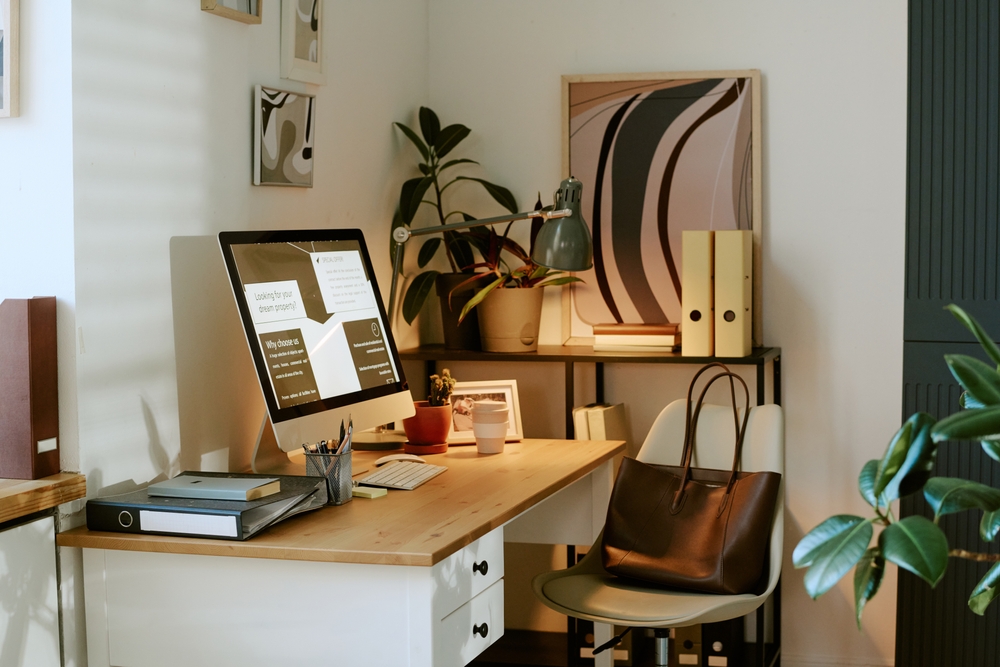
Your brain learns to associate a physical space with a mode of being, and working from your bed or the couch you also relax on blurs that line fast. You don’t need a spare room. A corner of the kitchen table that’s used only for work during work hours, with your laptop and nothing else on it once you’re done for the day, does the job just fine.
Set it up so you’re not rebuilding your workstation from scratch every morning. Keep your charger, notebook, and headphones in that spot, so sitting down there is a signal to your brain that it’s time to focus, and packing them away is a signal that you’re done. If space is tight, a rolling cart you can tuck into a closet at 5 p.m. works almost as well as a whole room would. Pay attention to what’s behind you on video calls too, since a consistent, tidy background is one less small decision to make every morning before your first meeting.
Fix your chair before your back fixes it for you

A dining chair or a couch cushion might feel fine for an hour, but eight hours a day, five days a week, adds up to real damage in your lower back, hips, and neck. Your feet should rest flat on the floor, your knees at roughly a right angle, and your screen at eye level so you’re not tilting your head down or craning it up for hours at a time.
You don’t need to spend a fortune to fix most of this. A rolled towel behind your lower back, a stack of books under your monitor, and a cheap footrest solve the worst offenders for under $20 combined. Your elbows should sit close to your body at roughly a 90-degree angle when you type, not reaching forward or propped up on armrests that are too high. If you can afford one real upgrade, make it lumbar support, since that’s the piece that’s hardest to improvise well and the one most people go without entirely.
Keep a full glass of water within reach

It’s easy to go four or five hours without drinking anything when you’re heads-down at a desk, and mild dehydration hits your brain before it hits your body in any way you’d notice. Even a small water deficit, around 2 percent of your body weight, is enough to measurably worsen concentration, slow your reaction time, and sour your mood.
Fill a large bottle or glass at the start of your day and keep it on your desk instead of relying on remembering to walk to the kitchen. A simple visual trick works better than tracking ounces: refill a marked bottle a set number of times before you shut down for the day, so drinking enough becomes a matter of counting refills, not doing math mid-meeting. If plain water bores you, add fruit slices or switch to sparkling water rather than reaching for another cup of coffee, since caffeine layered on top of dehydration usually makes the afternoon crash worse, not better, even though it feels like the fix in the moment.
Take a lunch break away from your screen

Eating a sandwich one-handed while you answer emails isn’t a lunch break, it’s just working with extra crumbs on your keyboard. Step away from your desk entirely, even if that just means eating at the kitchen table or on the porch for 20 minutes instead of at your laptop. Your brain needs a real stopping point in the middle of the day, not just a change of task.
If you can get outside during that break, even better. A short walk after lunch does double duty: it helps digestion and gives you a second dose of the daylight exposure your body needs to regulate energy through the afternoon slump. Put it on your actual calendar as a recurring block, the same way your meetings are, since an unscheduled break is the first thing that gets skipped when the day runs long. Treat this break as non-negotiable the same way you would if a coworker had asked you to lunch in an actual office.
Walk before and after work like you’re commuting

People who work from home lose one of the most useful parts of a commute: the built-in transition between home mode and work mode. Recreate it on purpose. Take a 10 or 15 minute walk before you sit down to work, and another one when you close the laptop for the day, even if it’s just a loop around the block.
It sounds almost too simple to matter, but the walk gives your brain a clear before and after. You show up to your desk already awake instead of rolling out of bed straight into a video call, and you leave work with a clean break instead of just closing a browser tab and drifting into your kitchen still thinking about tomorrow’s deadline. Use the time the way you’d use an actual commute, listening to a podcast, calling a friend, or just letting your mind wander without a screen in front of it, rather than treating it as one more task to check off.
Add a plant or two to your desk
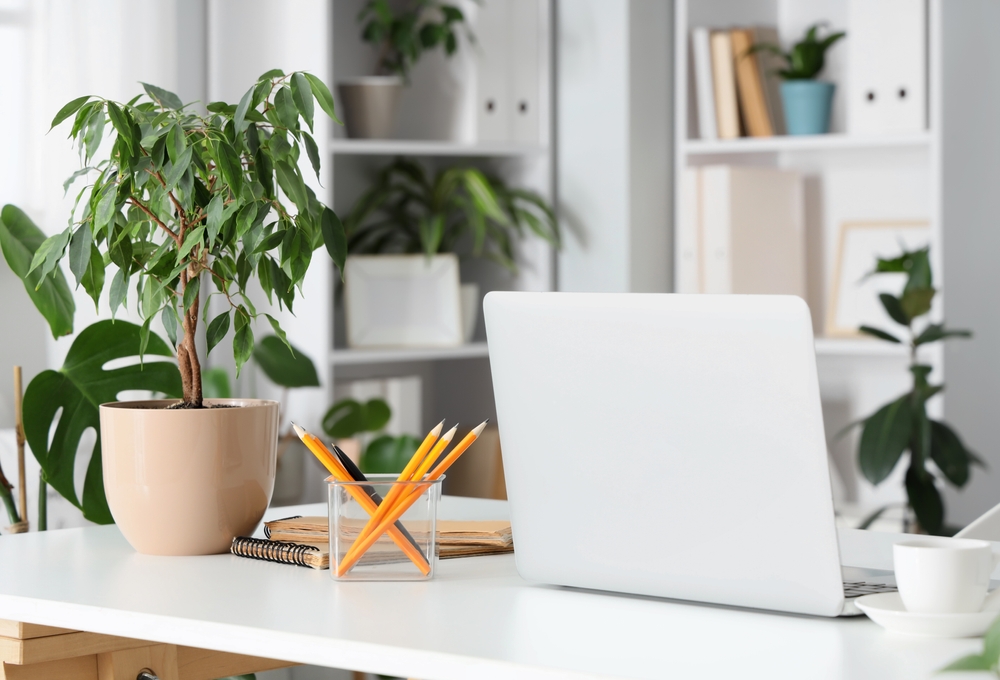
A living plant on your desk does more than look nice. Greenery in a workspace is widely linked to lower stress and a calmer mood, and it gives your eyes something soft to land on between stretches of staring at a screen. It doesn’t need to be complicated, expensive, or high-maintenance to work.
Pick something close to impossible to kill if you don’t trust yourself with a watering schedule: a pothos, a snake plant, or a small succulent all tolerate neglect and low light just fine, and most only need water every one to two weeks. If you don’t have a green thumb at all, even a small vase of fresh flowers refreshed once a week gives you a similar lift without the pressure of keeping something alive. Position it somewhere you’ll actually see it while you work, not on a shelf behind you, so it’s doing its job instead of just decorating a room you’re facing away from.
Clear your desk before you clear your inbox
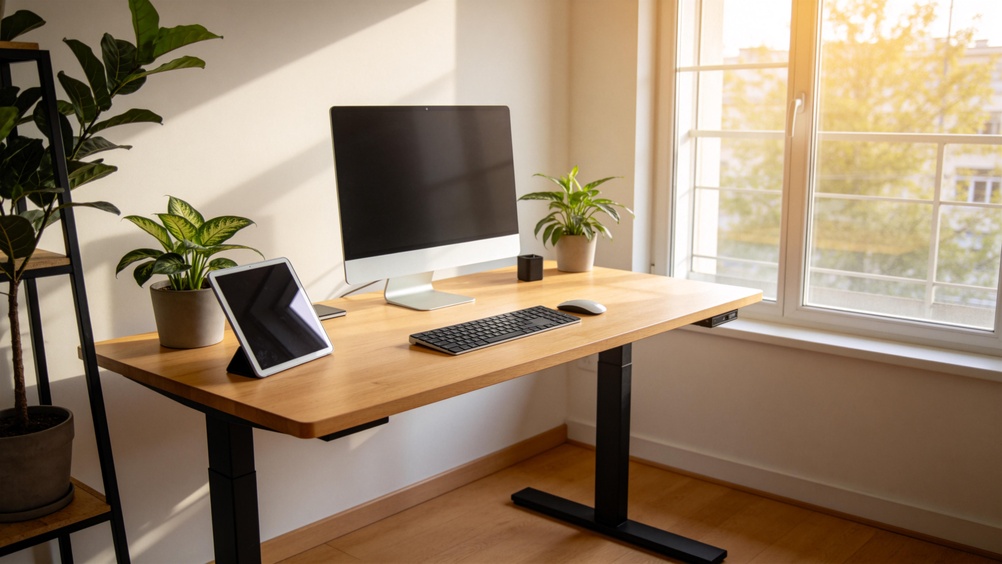
A pile of mail, dishes, and tangled cables on your desk is a constant low-grade distraction, even when you’re not consciously looking at it. Spend five minutes at the end of each day clearing your workspace down to just what you need for tomorrow morning, the same way a restaurant kitchen resets before the next shift starts.
This is a five-minute habit, not a deep clean, so don’t let it turn into another task you avoid. Put the mail in a tray instead of a stack, coil your charging cables instead of letting them tangle, and take your coffee mug back to the kitchen. Give yourself one small catch-all drawer or basket for the odds and ends you don’t want to deal with right that second, so tidying up doesn’t turn into a decision about where twelve different objects belong. Starting the next morning at a clear desk instead of yesterday’s mess removes one more reason to stall before you even open your laptop.
Batch your errands into one window, not all day
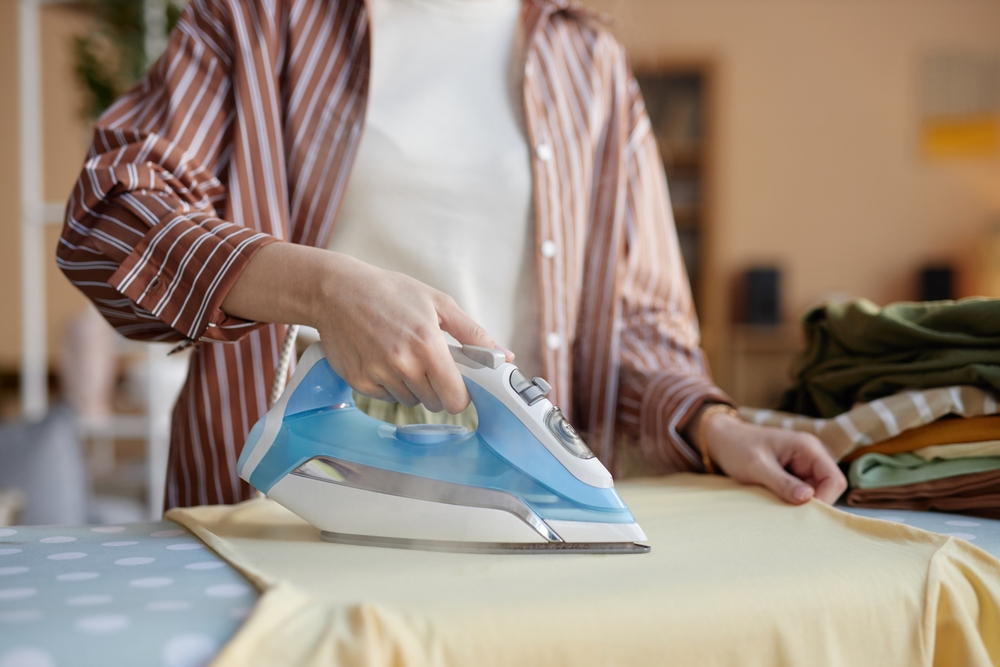
One of the traps of working from home is that chores are always within reach, so you end up doing laundry between emails, then unloading the dishwasher during a meeting you’re only half listening to. That scattered approach costs you more focus than it actually saves you in time.
Pick one window, maybe first thing in the morning or right after lunch, and handle your household tasks then instead of letting them interrupt you all day long. Start a running list on your phone or a sticky note by the door, so when you notice you’re low on milk or the trash needs to go out mid-morning, you jot it down and keep working instead of stopping to deal with it on the spot. Outside your errand window, treat chores the way you’d treat them if you worked in an office: they wait until you’re off the clock. This one change alone can reclaim hours of scattered attention over the course of a week.
Cut blue light after dark

If your workday runs late or you’re still scrolling on your laptop after dinner, the blue-heavy light from your screen is telling your brain it’s still daytime. That delays the release of the hormone that makes you feel sleepy, which makes it harder to fall asleep even after you’ve finally logged off for the night.
Switch your devices to night mode or a warmer color setting once the sun goes down, and dim your overhead lights in the evening instead of leaving them at full daytime brightness. Most phones and laptops have this built in now, so it’s a one-time setting rather than something you have to remember to toggle every night. Working from home makes it tempting to let the workday blur straight into the evening under the exact same lighting, since there’s no office you’re leaving behind to mark the change. Give your evening its own, dimmer atmosphere so your body actually gets the signal that work is over for the day.
Bottom line

Full-time remote work skews heavily toward people with more education, and 51 percent of workers with a bachelor’s degree or higher did some work from home last year, compared with 19 percent of those with only a high school diploma. Pick two or three of these, actually do them for two weeks, and check back in on how the rest of your day feels.











