
The rack of women’s blazers looked unremarkable, same as always. But the woman next to me reached past all of them, flipped a collar up to check the label, and kept moving. Twenty minutes later I saw her at the register with a cashmere coat and a cast iron skillet. She’d been in the store maybe half an hour. I’d been there for 90 minutes and had a single candle holder to show for it.
The difference wasn’t luck. It was method. Experienced thrifters work with a set of habits they’ve built up over time, and most of them aren’t complicated. They just require knowing what to look for and where to look for it.
Here are 15 of those habits, in no particular order.
Table of contents
- Go on a weekday morning, not the weekend
- Learn how your specific store’s color tag system works
- Shop in January
- Check eBay sold listings, not listed prices
- Read clothing labels for fabric content before you look at anything else
- Pay special attention to the housewares section
- Shop sections of the store that aren’t “for you”
- Bring your measurements, not your size
- Test everything before you get to the register
- Know the short list of things not to buy secondhand
- Look inside everything
- Check furniture carefully for solid wood
- Smell upholstered furniture before you commit
- Try the Goodwill outlet if there’s one near you
- Shop in neighborhoods where people have money
Go on a weekday morning, not the weekend

Most people go thrifting on Saturdays and Sundays when they have free time. That’s also when the competition is thickest and the shelves have been picked over. The better move is to go on a Tuesday or Wednesday morning, before other shoppers get there. Thrift stores tend to receive the bulk of their donations over the weekend, and staff typically spend Monday sorting, tagging, and processing. By Tuesday morning, fresh inventory starts appearing on the floor.
Goodwill locations typically do their heaviest restocking from Monday through Wednesday, with Tuesday being especially consistent for new arrivals. Salvation Army follows a similar pattern. The practical upside is that you’re seeing items before anyone else has touched them, which matters most if you’re looking for clothing, housewares, or anything collectible. Mid-morning is better than first thing, since it gives staff time to actually get items onto the floor before you arrive.
The other advantage of weekday thrifting is pure space. Fewer shoppers means you can actually move through the aisles at your own pace, pull things off the rack without body-checking someone, and spend time with items you’re genuinely considering.
Learn how your specific store’s color tag system works

Most thrift chains use a rotating color tag system to track how long items have been on the floor. When new items come in, they get tagged with the current week or month’s color. As time passes and the color rotates, older tags go on sale. At many Goodwill locations, one color is designated the daily sale color and carries a 50% discount. At others, tags cycle through a sequence of discounts over several weeks before the item gets pulled.
The practical implication is significant. If you find something priced at $12 and the tag color is one rotation away from going on sale, you could wait a week and pay $6. The system varies by location, so it’s worth asking a staff member how the rotation works at your specific store. Some post the sale color at the entrance each day. Some have a weekly schedule they’ll share if you ask. Five minutes of conversation can save you real money over dozens of visits.
Once you understand the schedule, you can also use it offensively. If you know Saturday is the day a particular color drops to 75% off, you can scout items earlier in the week, remember where they are, and check back before the final markdown happens. Regulars do this routinely.
Shop in January

Post-holiday January is one of the best months of the year to be inside a thrift store. People clean out closets after Christmas, donate gifts they didn’t want, and follow through on New Year’s resolutions to get organized. The result is a flood of donations, including clothes that still have their original retail tags attached. January foot traffic at thrift stores is also lighter than spring or fall, since general retail shopping is typically slow that month.
The surge is consistent enough that stores plan for it. Goodwill locations around the country reliably see a meaningful jump in donation volume in the first two weeks of January compared to other months. Not just clothing, either. Kitchen items, home goods, exercise equipment, books, and electronics all arrive in volume as people clear out what they received and don’t need alongside what they’ve been meaning to get rid of for months.
Spring is the other strong window. Once warmer weather hits, people clean out garages and storage spaces, and larger items show up more frequently. But for clothing, January has the edge because of how much of it arrives barely worn or unworn entirely.
Check eBay sold listings, not listed prices

When you want to know what something is worth, pulling up eBay and looking at current listings is the wrong move. What sellers list items for and what buyers actually pay are often very different numbers. A quick search might show a vintage pitcher listed at $95. That doesn’t mean anyone has paid $95 for it recently. The number that matters is the sold price, and eBay makes it accessible.
On the eBay app, search for the item, tap Filter, then scroll down to find “Sold Items” and toggle it on. You’ll see only completed sales with the prices buyers actually paid in the last 90 days. On desktop, you can check “Sold listings” in the left-side filter panel after running a search. Either way, the result is real market data rather than aspirational pricing. Google Lens can help if you don’t know what you’re holding. Point your phone camera at the item, let it identify the pattern or model, then comp it on eBay sold listings.
The difference between listed and sold prices can be dramatic, especially for vintage ceramics, cookware, electronics, and clothing. An item priced at $8 in a thrift store that’s selling for $40 on eBay is a genuinely good find. The same item selling for $9 is not. You need the sold data to know which situation you’re in.
Read clothing labels for fabric content before you look at anything else
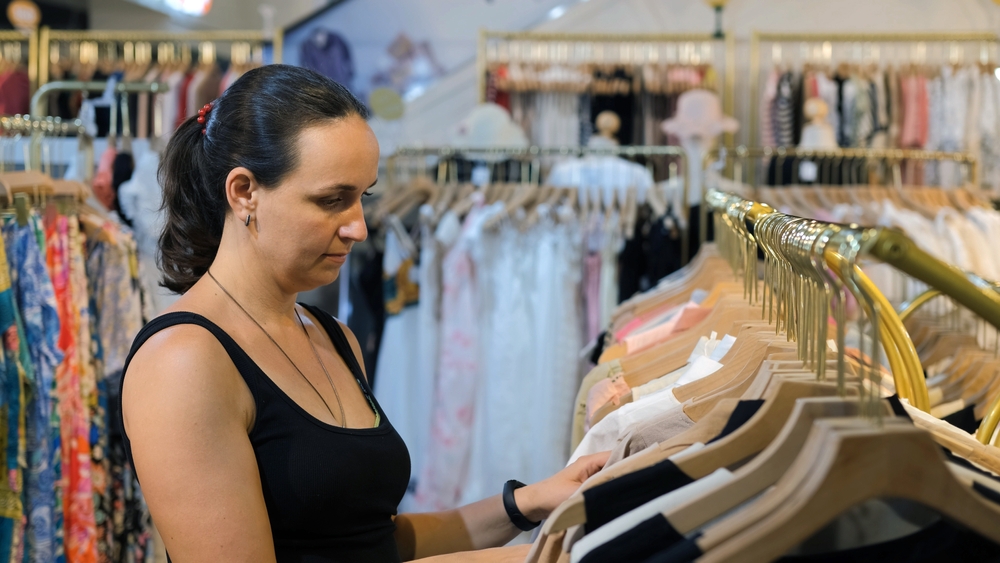
Most thrift shoppers look at style, size, and price first. Experienced ones flip to the fabric content label before they look at anything else. Wool, silk, cashmere, and linen are frequently underpriced because the person tagging the item didn’t know what they were looking at. A pure wool blazer will often sit on the rack at the same price as a polyester one next to it.
Natural fibers hold their shape better, last longer, age better, and are harder to find at any price point in fast fashion. They’re also harder for thrift store staff to spot unless the brand name is obvious. A plain-looking merino wool cardigan from a smaller label might look nearly identical to an acrylic one until you check the tag. The same logic applies to silk blouses, cashmere sweaters, and linen shirts. Run your fingers along the fabric, too. Natural fibers have a different weight and drape. You’ll start to recognize the difference quickly.
Vintage and older clothing is especially likely to be made of higher-quality materials, since fabric content standards were different before synthetic blends dominated fast fashion. A 1970s blazer in pure wool is not unusual. Pay attention to where it was made as well. Garments made in the U.S., U.K., Italy, or France before the 1990s often indicate better construction and materials than their price suggests.
Pay special attention to the housewares section

Clothing gets the most attention from casual thrifters. The housewares section is where gaps in the staff’s knowledge are most exploitable. Thrift store employees see hundreds of items per day and can’t be expected to identify every piece of cookware, pottery, or kitchenware that comes through. That gap works in your favor.
Cast iron skillets are consistently mispriced. A grimy Lodge or Griswold skillet priced at $4 because it looks dirty can be restored with a wire brush and an oven cycle. Le Creuset Dutch ovens show up regularly, often priced by weight rather than brand. Pyrex patterns like Butterprint or Gooseberry have real collector markets on eBay, and staff usually just see a mixing bowl. Corning Ware with certain patterns follows similar logic. Check the bottoms of cookware, ceramics, and serving pieces for maker’s marks, country of origin stamps, and pattern names.
Crystal and glassware are worth checking too. Waterford, Baccarat, and Lenox crystal often land in the dollar bin alongside mass-produced glassware, because they look similar to an untrained eye. Flick the rim with your finger. Good crystal rings with a clear tone and takes a moment to fade. The thicker the glass and the flatter the sound, the less likely it’s worth anything.
Shop sections of the store that aren’t “for you”
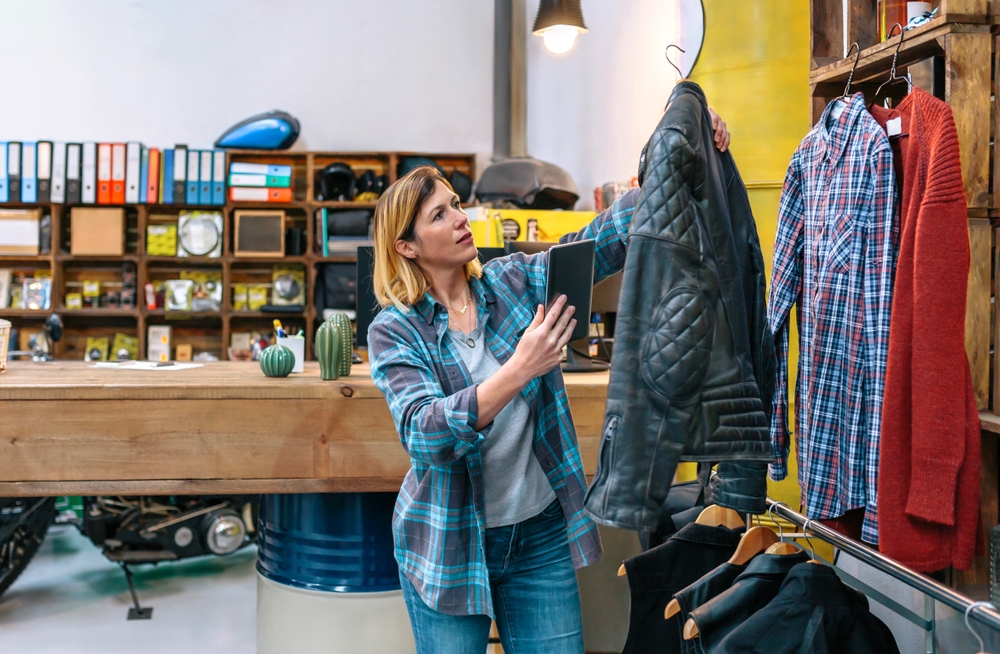
Women shopping for themselves tend to skip the men’s section. That’s a mistake. Men’s outerwear, flannels, chambrays, and workwear are frequently unisex in fit and often priced lower because fewer people are competing for them. A men’s large flannel shirt often works as an oversized layer. Men’s canvas jackets and wool overcoats frequently translate directly. The same principle applies for shoe sizes that overlap, accessories, and hats.
The plus-size section is also frequently underworked by shoppers, which means it often has more inventory sitting untouched. If you’re shopping for home goods or gifts rather than yourself, it’s worth looking at sections you’d normally skip entirely. Children’s books, for instance, are almost always cheap and often in excellent condition. Board games and puzzles vary but are worth a quick check for complete sets.
Browsing by category rather than by your usual shopping habits means you see more of the store. Over time, you develop a better sense of where good things tend to cluster in any given location. That institutional knowledge adds up.
Bring your measurements, not your size

Clothing sizes are not standardized. They never have been, but the inconsistency is especially sharp in thrift stores, where you’re pulling from multiple decades and multiple countries of manufacture. A vintage size 12 from the 1960s is closer to a modern size 8. A European 40 is not the same as an American 10. Plus sizes, petite sizing, and athletic cuts all vary further.
If you shop for clothes at thrift stores with any regularity, take your chest, waist, hip, and inseam measurements and save them in your phone. When you find something promising, you can pull the garment measurements off the tag or measure the item against your body without the guesswork. Many experienced thrifters carry a small tape measure for exactly this purpose.
The payoff is that you stop dismissing items based on the size label and start evaluating the actual garment. A blazer labeled XL but cut narrow might fit you perfectly. A medium dress with a fitted bodice might run large. The tag number is almost irrelevant. What matters is whether the item fits.
Test everything before you get to the register

Most thrift stores have an outlet somewhere in the store where you can plug in electronics before buying. Use it. A lamp that turns on when you test it is worth buying. A lamp that doesn’t is not, regardless of how it looks. The same applies to anything with a power cord: blenders, toasters, fans, electric kettles, record players, speakers. If it doesn’t work in the store, it’s almost certainly not going to work at home.
For items without plugs, check moving parts. Zippers should glide smoothly. Clasps should clasp. Drawers should open and close without sticking. Lids should fit. Seams on bags should be intact. The goal is to catch problems before you pay for them, not after. Thrift stores rarely accept returns, and even when they do, the effort isn’t worth it for a $6 purchase.
For clothing, check under the arms, at the collar, at button holes, and along hems. These are the places that show wear first. A minor hem repair is worth the discount. A disintegrating collar is not.
Know the short list of things not to buy secondhand

Car seats are the clearest example. You can’t know whether a thrifted car seat was in a collision. Car seats should be replaced after any accident, including minor ones, because the structural integrity can be compromised without any visible damage. They also have expiration dates, and older models may not meet current safety standards. The same applies to bike and sports helmets, which are designed to absorb impact exactly once. Internal foam compresses during a crash in ways that aren’t visible from the outside.
Mattresses and pillows carry hygiene risks that are difficult to fully address. Mattresses can harbor bed bugs, dust mites, mold, and allergens even when they appear clean. Pillows absorb years of oils and bacteria that survive washing. Neither is worth the savings. Makeup and skincare products are another hard pass. Expiration dates matter, contamination is invisible, and the risk of skin infection or eye irritation is real.
None of this means thrift stores aren’t excellent places to shop. It means specific categories warrant skipping regardless of price, and knowing them in advance saves you the cost of finding out the hard way.
Look inside everything
This is one of the simplest habits and one of the most overlooked. Check the pockets of every garment you consider buying. People donate clothes without emptying them. Cash, gift cards, earrings, keys, and folded notes show up regularly. It happens often enough that experienced thrifters check pockets as a reflex, not a hope.
The same applies to bags, purses, and backpacks. Check every pocket and compartment. Wallets sometimes turn up inside donated bags. So do chargers, small electronics, and jewelry. For furniture, pull out every drawer and check inside and underneath. People forget what they’ve stashed. A nightstand donated in a hurry might still have something in it. A jewelry box almost certainly deserves a look.
Books are also worth fanning through before you buy them. People use books as long-term storage for notes, cards, pressed flowers, and occasionally cash. A used cookbook from an estate sale might have a handwritten note tucked in chapter three that makes it worth something to the right buyer, or just to you.
Check furniture carefully for solid wood

Julian Hochgesang via Unsplash
Particle board furniture falls apart with humidity, heavy use, or a single move. Solid wood furniture lasts decades and often improves with refinishing. The two can look almost identical from the front, especially once laminate or veneer is applied. Knowing how to tell the difference quickly is worth developing.
Pull out a drawer and look at the bottom and sides. Solid wood drawers have visible grain running through the material. Particle board will show a compressed, uniform texture or raw chipboard at the edges. Flip a small piece over and look at the underside. Unfinished solid wood has grain. Particle board has a rough, pressed surface. Knock on different areas of a large piece. Solid wood produces a dull, resonant thud. Hollow veneer over compressed material sounds thinner and lighter.
Dovetail joints at the corners of drawers are a sign of quality construction. Staples or simple nails at the corners are not. Older furniture, especially anything made before the 1980s, is substantially more likely to be solid wood simply because the manufacturing norms were different. A beat-up but solid dresser that needs paint is almost always a better buy than a pristine particleboard unit at the same price.
Smell upholstered furniture before you commit
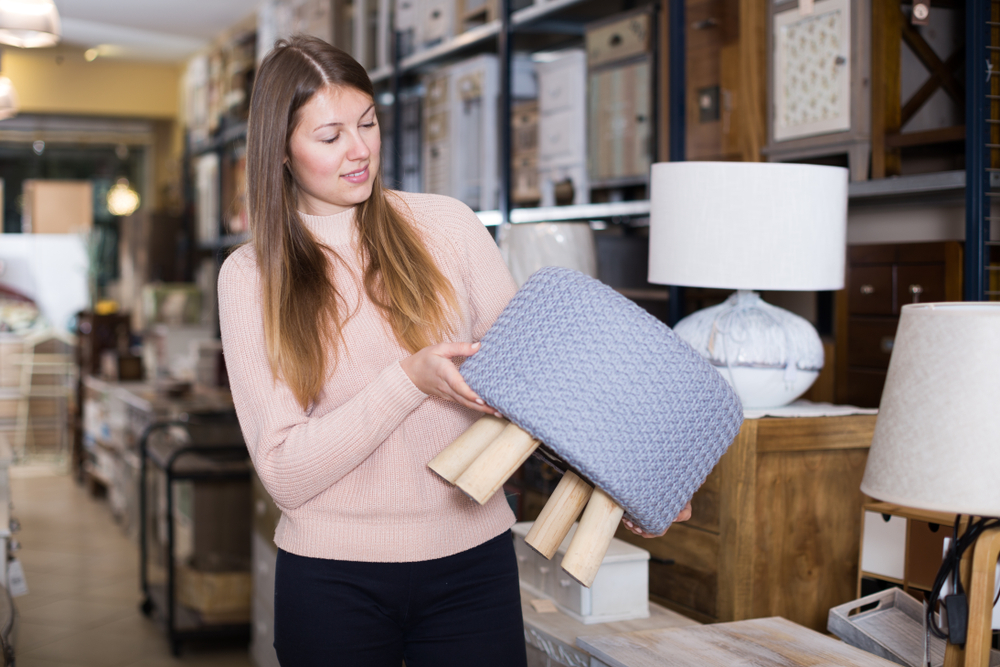
A couch that looks perfect can be a nightmare if it smells like cigarette smoke or pet urine. Both odors penetrate deep into foam and fabric and are extremely difficult to fully remove. You can try baking soda, enzyme cleaners, and ozone treatments, and still be left with something that smells in humid weather or when the room gets warm. The safest approach is to walk away.
Get close to upholstered items and smell them directly, including the cushions, the seams, and the back of the piece. Musty smells indicate mildew, which has its own set of problems. A faint pet smell might be manageable with professional cleaning. A strong, settled smell is a sign the odor is in the foam itself, which means it’s not going away without replacing the cushions entirely.
Fabric furniture that smells clean and looks clean is usually fine, especially if there’s visible wear that suggests normal use. The concern is items that have been stored in a smoker’s home, a damp basement, or with an incontinent pet. Smell before you buy, and save yourself the frustration of getting something home and realizing the problem immediately.
Try the Goodwill outlet if there’s one near you

The Goodwill outlet, also called the bins, is a completely different experience from a regular thrift store. Items that didn’t sell on the regular retail floor get sent to the outlet, where they’re dumped into large blue rolling bins and sold by the pound rather than by item. Clothing and soft goods typically run around $1.29 to $2.19 per pound at most locations. You dig through unsorted bins, take what you want, load it in a cart, and pay by weight at checkout.
It’s chaotic and not everyone’s thing. The inventory is unsorted, the store is usually crowded, and bins get swapped out every 15 to 30 minutes, which creates a specific rhythm that regulars understand well. First thing in the morning tends to be competitive. Two hours before closing often sees bins rolled out faster as staff tries to clear the back. All sales are final, so inspect items carefully before committing.
The prices are genuinely low. A heavy cashmere sweater might cost $3. A pile of books might cost $1. If there’s a Goodwill outlet near you, it’s worth one visit to understand whether the format works for how you shop.
Shop in neighborhoods where people have money

Thrift stores in higher-income zip codes receive better donations. This is not a secret among experienced thrifters, and it’s not snobbery. It’s supply chain logic. People donate what they own, and what they own reflects their spending habits. A store in an affluent neighborhood will see more designer labels, well-made basics, quality housewares, and barely-used items than a store in an area where people hold onto things until they’re worn out.
The pricing at upscale-area thrift stores is sometimes higher to reflect this, but not always. Staff can only research and price items up to a point, and even well-run stores miss things regularly. The calculus usually still works in your favor, especially for clothing, shoes, and home goods. If you have two stores within driving distance and limited time, it’s worth thinking about which catchment area is more likely to produce what you’re looking for.
This also applies to timing. Estate sales from high-income areas produce stronger donations shortly afterward. If you know a local estate sale happened in a particular neighborhood recently, the thrift stores in that area are worth checking in the following weeks.











