
A thrift store bear with a small metal button sewn into its left ear just sold on eBay for $3,700. The seller paid $4 for it. That is not a fluke or a lucky outlier. Certain vintage teddy bears have a genuine collector market, and prices for the right bear in the right condition have held up solidly over the past several years.
Most bears are worth exactly what you paid: a dollar at a garage sale, nothing at all in a landfill. But a meaningful number of them are worth real money, and the difference usually comes down to three things: who made it, what it is made of, and whether the original tags are still attached. None of those things require an expert to assess.
Table of contents
The maker is the first thing to check

German manufacturers dominate the high end of the vintage teddy bear market, and Steiff sits at the top. Founded in 1880, Steiff introduced the “button in ear” trademark in the early 1900s, a small metal button pressed into the bear’s left ear. Early buttons featured an elephant logo; later ones say “Steiff” or include a serial number. If your bear has one, it is worth serious attention. A rare blue Steiff sample bear from 1908 sold at auction for over $158,000 in today’s dollars. A Steiff Titanic Mourning Bear, one of 665 all-black commemorative bears released after the 1912 disaster, sold in summer 2023 for $250,505.
Other German makers worth knowing: Gebruder Hermann and Schuco (also spelled Schreyer) produced high-quality mohair bears from the early 1900s through mid-century, and their bears regularly sell for $1,000 to $6,500 depending on age and condition. British manufacturers Merrythought, Chad Valley, and J.K. Farnell built strong collector followings too. A rare Chiltern Homeguard bear from the 1940s sold for £6,500 at auction in December 2024.
American bears from Ideal Novelty and Toy Company (the original U.S. teddy bear manufacturer, operating from around 1903) and early Gund bears from the same era also carry collector interest, though they rarely reach the prices that top German bears command. The U.S. market is thinner. If you have a Gund, look for a label reading “Gund Creation” to date it.
What the materials tell you
The fabric alone can tell you roughly when a bear was made, which matters a lot for value. Bears made before the mid-20th century were typically covered in mohair, a fabric woven from Angora goat hair. It has a distinctive silky, slightly coarse texture that looks and feels different from modern synthetic plush. Alpaca fur was also used, though less commonly. If your bear’s fur feels like soft fake fur from a craft store, it is almost certainly post-1960 and unlikely to carry serious collector value.
Eyes are another dating tool. Pre-1950s bears typically have glass eyes, often slightly mismatched because they were placed by hand. Plastic safety eyes became standard after that, partly driven by toy safety regulations. Look inside the eyes if you can: glass eyes have depth and a slight unevenness that plastic cannot replicate. Hand-stitched noses, usually in black or brown thread with a distinctive horizontal or vertical stitch pattern, are another marker of age. Machine-stitched noses are uniform in a way that hand work is not.
Stuffing also helps. Early bears were packed with wood wool (excelsior, essentially fine wood shavings), kapok, or cotton. If you squeeze the bear and it feels dense and slightly scratchy rather than soft and springy, it may have original stuffing. Bears with “yes/no” mechanisms inside, where the head and tail move when you tilt the bear, were a Schuco specialty and are particularly sought after. Jointed limbs, where the head, arms, and legs all move independently, are standard in any bear worth collecting. Fixed-limb bears were typically made for the mass market.
Tags and condition matter more than you might expect
A bear with its original tags intact is categorically more valuable than the same bear without them. This is especially true for Beanie Babies (see below), but it applies to vintage bears too. Steiff bears with their original ear button and accompanying yellow fabric tag are worth significantly more than bears where the button was removed, which happened often because parents worried about choking hazards. If the button is still there, do not remove it and do not attempt to clean or polish it.
Condition affects price at every level, but not in a simple way. Collectors expect wear on very old bears. A 1920s bear showing 100 years of love is not disqualified. What they are looking for is original condition: no replaced eyes, no amateur repairs, no re-stuffing, and ideally no washing. Washing compresses mohair and ruins the texture permanently. A professionally restored bear is worth less than an unrestored one with honest wear. Bears that have been repaired with mismatched thread, replacement paw pads in the wrong color, or new eyes are worth considerably less than comparable unrestored examples.
Provenance, meaning a documented history of previous ownership, can add meaningful value. A bear that came with a photograph of its original owner, a purchase receipt, or verifiable connection to a notable person or event can command a significant premium at auction. This is not just collector mythology: a Steiff bear from around 1908 dressed in a World War I British uniform sold for £3,800 in November 2024, partly because of its documented history.
Beanie Babies, honestly
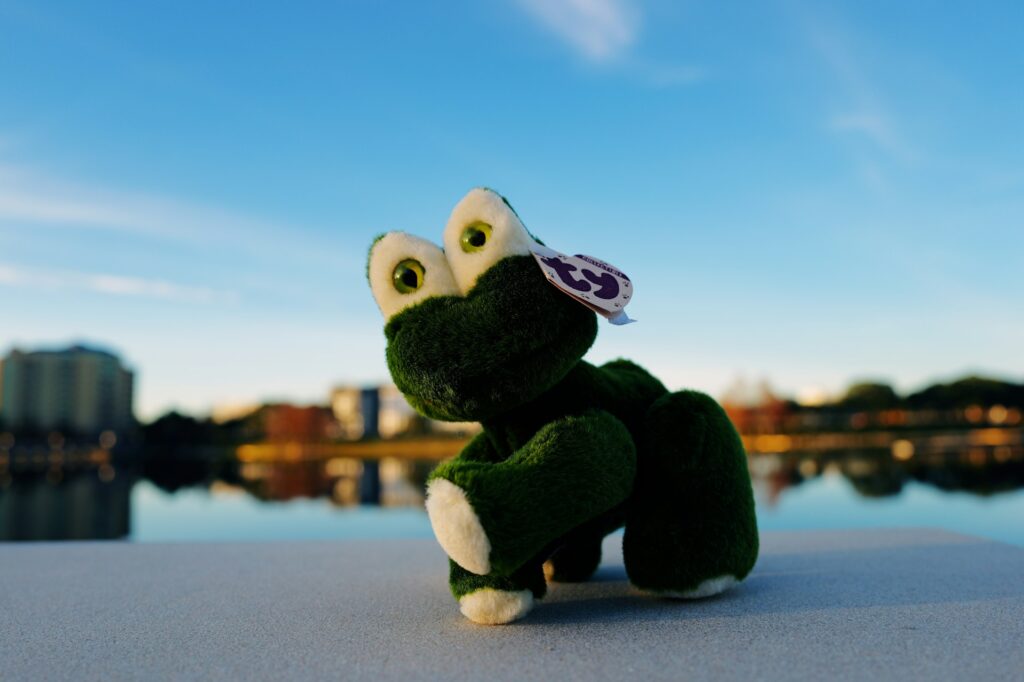
The internet is full of wildly inflated Beanie Baby valuations, most of them fake eBay listings designed to drive up perceived prices. The reality is more nuanced. The vast majority of Beanie Babies from the 1990s are worth $5 to $20 today, and common ones are essentially impossible to sell at any price. But a small number of specific Beanies from the early years are genuinely valuable, and the market for them has been active into 2025 and 2026.
What actually matters is generation. The swing tag (the heart-shaped hang tag) and the tush tag (the fabric tag sewn into the seam) changed across generations, and first and second generation tags are the primary driver of value. A bear missing its swing tag loses 80 to 95% of its collector value regardless of rarity. Early Beanies were also filled with PVC pellets rather than the PE pellets Ty switched to around 1998, and serious collectors look for that distinction. The most reliably valuable Beanies include Peanut the Royal Blue Elephant, a production error that was quickly corrected, worth $1,500 to $7,000 in mint condition with first-generation tags. The Original Nine Beanies, introduced in January 1994, are worth researching individually if you have them. Princess the Bear, the 1997 Princess Diana tribute bear, has genuine value in early editions with PVC pellets, but many common versions with PE pellets sell for very little.
Check eBay’s completed and sold listings, not active ones. Active listings show what sellers are asking. Completed listings show what buyers actually paid. The gap is often enormous, and the sold-listing data is the only number that matters.
Where to find out what your bear is worth

Start with eBay’s sold listings for antique teddy bears, filtering by “sold” to see real transaction prices. Search by manufacturer name, approximate decade, and materials if you know them. WorthPoint aggregates sales data from eBay and major auction houses going back years, and a subscription gives you access to historical pricing for specific bears, which is useful if you think you have something genuinely old.
For bears that might be worth $500 or more, auction houses are worth approaching. Invaluable and LiveAuctioneers both list upcoming specialist toy and teddy bear auctions where you can see current market demand. For high-value Steiff or pre-war German bears, specialist dealers and auction houses are where the serious buyers are, not Facebook Marketplace.
If you want a professional opinion before committing to a sale, an antique toy appraiser or a specialist auction house will typically assess a bear for free if they think it might be consignment-worthy. That is a better starting point than paying for an appraisal on something that turns out to be worth $30.
Most old bears are not worth much. But the ones that are worth something tend to be sitting in exactly the kinds of places you might think to look: estate sales, attics, and boxes of childhood things that nobody has opened in thirty years.











