
There’s a good chance you’ve pocketed a casino chip at some point and forgotten about it. Maybe it’s sitting in a junk drawer with old keys and takeout menus. Maybe you found a small stack in a relative’s belongings after they passed. Most of those chips are worth exactly their face value, which is nothing because they’re from casinos that no longer honor them, or just a few dollars to a casual collector. But some of them are worth considerably more, and most people have no idea the market exists.
Casino chip collecting is a genuine hobby with an established collector community, standardized grading, and published price guides. The category has a name in the numismatic world: exonumia. Five things determine whether a chip has any collector value: rarity, the casino it came from, visual appeal (a chip with a picture inlay beats a simple text stamp every time), the mold pattern pressed into the chip’s edge, and condition. Las Vegas chips command the highest prices. Nevada chips are second. Everything else is lower, with some notable exceptions.
One warning before you start getting excited: when casinos close, commemorative replica chips are often produced afterward and sold as souvenirs at conventions and dealer shops. These have the right casino name on them but were never on a gaming floor. They’re worth almost nothing to serious collectors. The chips with real value are the original house chips that actually circulated at the tables. Wear patterns, specific mold marks, and manufacturing details help identify genuine floor chips from later tributes.
Table of contents
- Newport, Kentucky illegal gambling club chips
- Binion’s Horseshoe $1 chip with the million-dollar display
- Hard Rock Las Vegas musician commemorative $5 chips
- Riviera Hotel early-era chips (1955 to 1960s)
- Cal-Neva Lodge chips (1960 to 1963)
- Desert Inn 1960s house chips
- Stardust Hotel early-issue $5 chips
- MGM Grand $5 chip from before the 1980 fire
- Frontier Hotel $5 chip
- Flamingo Hotel 1946 “Bugsy Siegel” era $5 chip
- Sands Hotel first-issue $5 chip with the hourglass design
Newport, Kentucky illegal gambling club chips
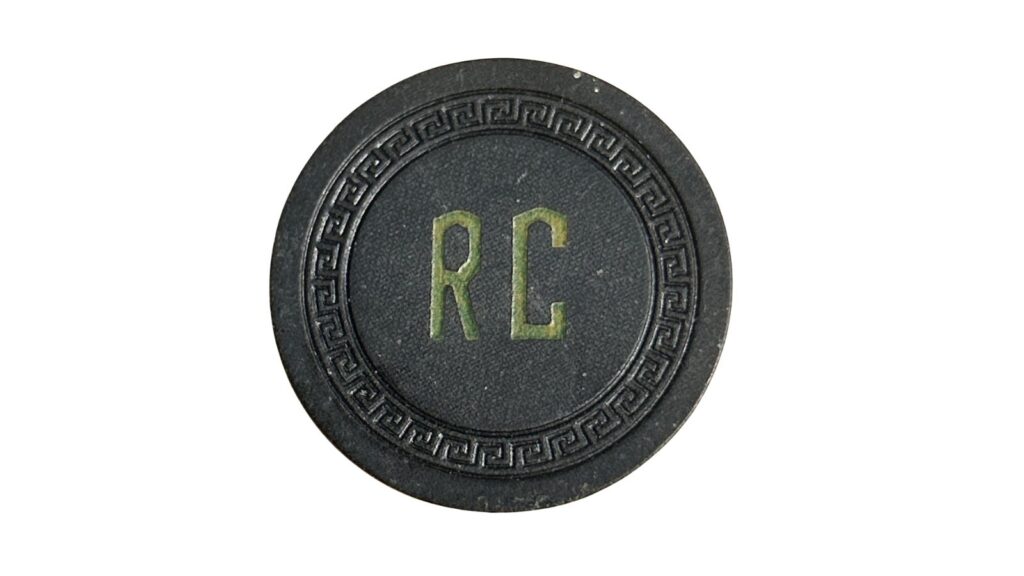
From the 1930s through the early 1960s, the Cincinnati suburb of Newport, Kentucky was one of the most openly lawless gambling towns in America. The Merchants Club, Yorkshire Club, Copa Club, Primrose Country Club, and dozens of other establishments ran full-service casino floors under political protection, complete with custom-manufactured chips made by the same suppliers that served legitimate Nevada casinos. When Senator Kefauver’s organized crime hearings broke up the scene in the early 1950s, most clubs eventually shut down and their chips became orphaned artifacts.
Individual chips from Newport’s illegal clubs sell in a wide range: worn no-denomination chips bring as little as $8, while clean chips from well-documented clubs with a denomination and legible name hot-stamped on them sell for $25 to $50 each. Chips from clubs with confirmed mob connections and specific distinguishing features push higher. The molds are characteristic of the 1940s and 1950s, small Greek key borders, flower patterns, hourglass designs, with the club’s initials or name pressed into the surface.
These show up regularly in Ohio, Kentucky, and Indiana antique shops and estate sales, because the chips were manufactured in quantity and many never made it back to the casino floor before the raids. The hobby of collecting illegal gambling chips has its own reference guides and an active subcommunity within the broader casino chip world. If you find a clay chip with initials or a club name and a dollar amount on an hourglass mold, look it up before assuming it’s worthless.
Binion’s Horseshoe $1 chip with the million-dollar display
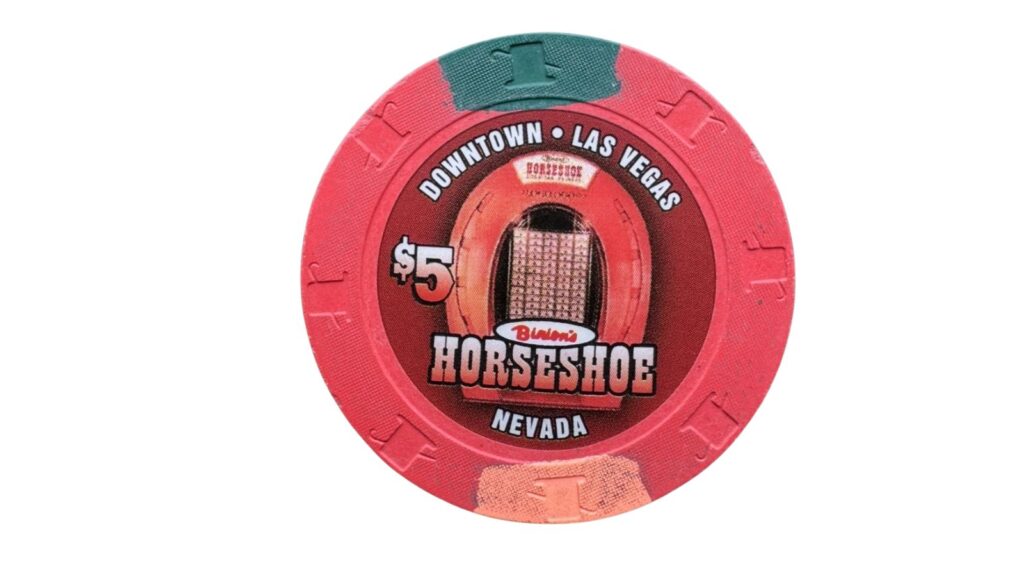
Binion’s Horseshoe Club on Fremont Street in downtown Las Vegas hosted the World Series of Poker starting in 1970 and kept a famous permanent display of one million dollars in cash mounted behind glass on the casino floor. At least one era of their $1 chip featured that image on both sides, with the cash arranged in a horseshoe of hundred-dollar bills. When Harrah’s Entertainment bought the property in 2004 and rebranded it as Binion’s, those original Horseshoe Club chips were retired from play.
Standard $1 chips from the 1990s-era Horseshoe Club bring $20 to $30 in clean circulated condition. Earlier issues made by Paulson in the 1980s carry somewhat more. These are among the chips most likely to show up at a midwestern estate sale or in a box of a Vegas-visiting relative’s souvenirs, because the Horseshoe was a destination for serious gamblers for decades and the million-dollar display made the chip instantly recognizable as a souvenir. Tournament buy-in chips specifically marked for individual World Series of Poker years are a separate and often higher-value category.
Condition is the primary variable here. The Paulson chips made during the Horseshoe’s ownership era are clay composite and hold up reasonably well, but edge nicks, surface scratches, and faded hot stamps all reduce value. A chip in slightly used condition, with clean markings and no obvious damage, is what collectors want. The Casino Collectibles Association’s ChipGuide has full photographs and documentation of every Binion’s Horseshoe issue if you want to identify what you have.
Hard Rock Las Vegas musician commemorative $5 chips
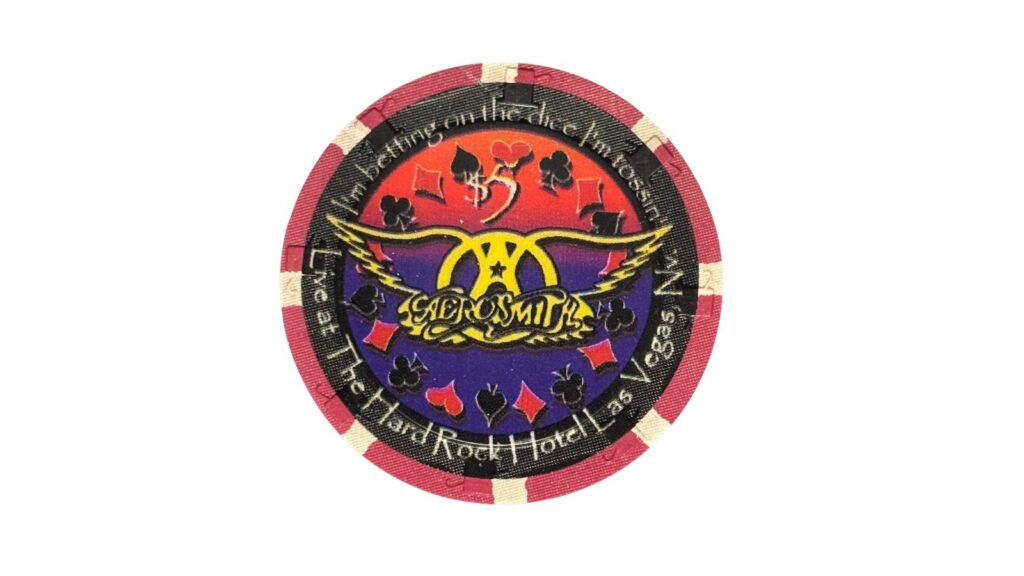
The Hard Rock Hotel and Casino in Las Vegas built a business model around it: issue limited-run $5 chips featuring photographs of musicians, watch them walk out of the casino in gamblers’ pockets, and book the retained face value as pure profit. The casino issued roughly one new design per month from 1995 onward, covering rock legends, specific concerts, movie premieres, and sporting events. Now that the Hard Rock’s original gaming license has changed hands and those specific designs are gone, early runs have real collector value.
Common designs in average condition sell for $15 to $25. Chips featuring recognizable legends, artists with cult followings, specific one-night events with small production runs, or concert commemoratives from acts that have since broken up or lost members bring $40 to $60 and above. The more distinctive the photography and the smaller the production run, the more a chip is worth. Event chips, issued for specific performances or movie openings at the Hard Rock, often had very limited quantities and are now harder to find.
Condition matters more here than with most chips because the photograph is the point. A chip with a scratched or faded image loses most of its appeal regardless of which artist is pictured. A clean face, crisp edge, and no warping is what collectors pay for. These are among the more accessible entry points into casino chip collecting and a natural starting point if you want to know whether the hobby is worth pursuing.
Riviera Hotel early-era chips (1955 to 1960s)
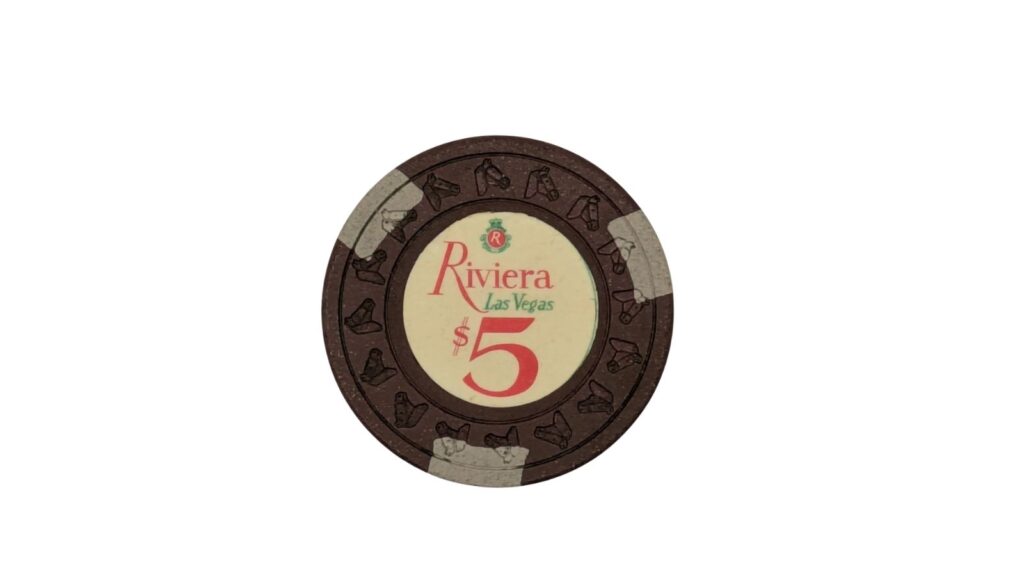
The Riviera opened on April 20, 1955, as the first high-rise hotel on the Las Vegas Strip, with Liberace as its opening night headliner. Mob money was involved in the early days, Dean Martin took an ownership stake in the 1960s, and the casino’s Crazy Girls burlesque show became the longest-running adult show in Vegas history. The Riviera closed on May 4, 2015, and was demolished the following year to make way for a convention center expansion.
Standard chips from the Riviera’s last decade of operation are worth $5 to $15, face value territory. The chips that matter are from the first fifteen years of the casino’s history. Early-issue Riviera chips from the late 1950s and 1960s, particularly those made by Paulson on the classic crest and seal mold, bring $40 to $75 in solid condition. They were produced in smaller quantities during an era when the Riviera was competing for the same high-rolling clientele as the Sands and the Desert Inn.
Anyone who visited the Riviera in its last years, or whose relatives did, may have chips from the modern era that are worth face value at best. But if you’re going through an older relative’s belongings and find chips that look noticeably different in construction and design from anything you’d see in a contemporary casino, with heavier clay composition and simpler hot-stamped lettering, the ChipGuide can help you date them quickly.
Cal-Neva Lodge chips (1960 to 1963)
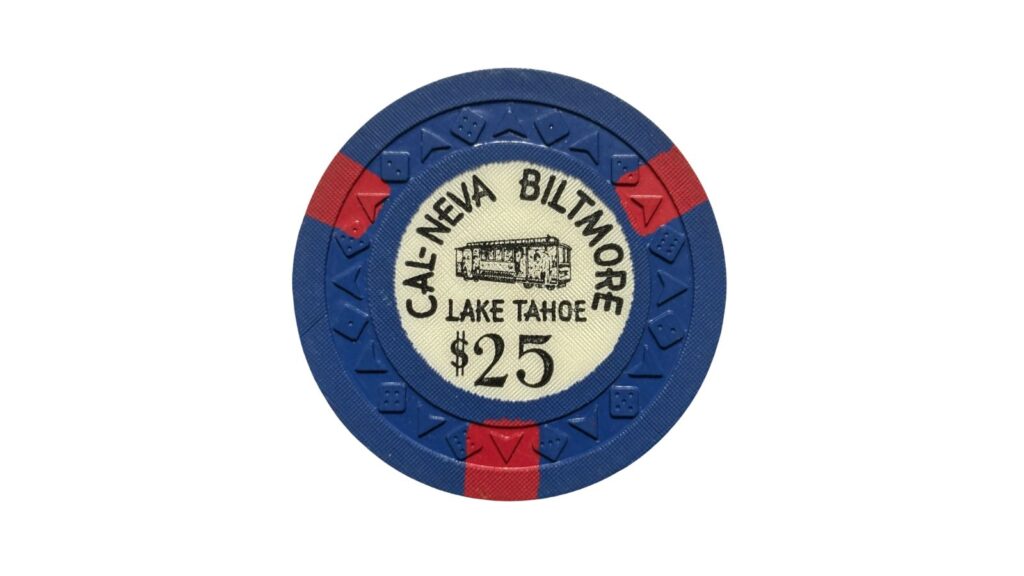
Frank Sinatra bought into the Cal-Neva Lodge in 1960, a resort on the Nevada-California border at Lake Tahoe where he had been a regular visitor since the early 1950s. He owned the place for three years before the Nevada Gaming Commission suspended his license for allowing Sam Giancana, a Chicago mob figure, on the premises. The lodge during those three years was headquarters for the Rat Pack in the mountains: Kennedy, Monroe, DiMaggio, Garland, and Davis Jr. all passed through.
$1 chips from the Cal-Neva’s Sinatra era bring $60 to $75 in solid, unpunched condition. Higher denominations go for more, and the $100 chip from this period is genuinely scarce. The story drives the price as much as anything: this was the only casino Sinatra personally owned, and the condensed mythology of the period makes even an entry-level chip feel like a real artifact. Most chips from the Cal-Neva that survive have hole punches through the center, which is how the casino retired chips from circulation. A hole punch significantly lowers the value.
These turn up occasionally in Lake Tahoe and Northern California estate sales and antique markets. The Cal-Neva chips from the Sinatra period have a specific construction that collectors have thoroughly documented. If you find what appears to be a very old chip with “Cal-Neva Lodge” or “Cal-Neva” on it, check whether it has a hole punch and which issue number it corresponds to before assuming you know what you have.
Desert Inn 1960s house chips
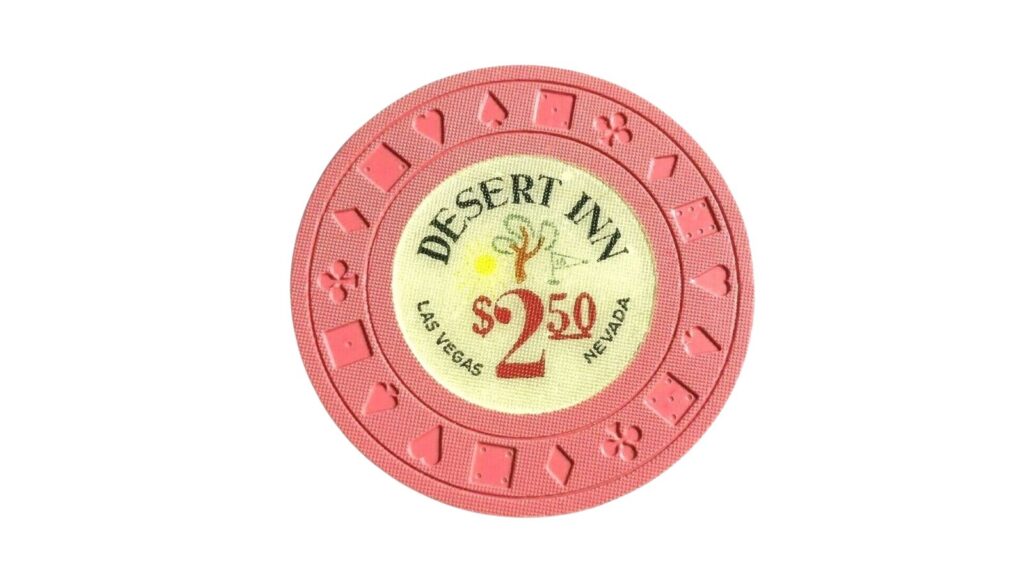
The Desert Inn opened in 1950 with Moe Dalitz and the Cleveland mob providing the money behind a front man named Wilbur Clark. In 1967, Howard Hughes arrived, refused to check out after his initial reservation expired, and simply bought the hotel rather than leave. He proceeded to buy six more Las Vegas casinos without ever leaving his penthouse suite. Hughes owned the Desert Inn until his death in 1976. Steve Wynn bought it in 2000, closed it, and demolished it the following year. Wynn Las Vegas opened on the site in 2005.
House chips from the Desert Inn’s 1960s era bring $40 to $80 for common denominations in solid condition. The Hughes connection and the hotel’s reputation as one of the most elegant addresses on the pre-corporate Strip attract collectors who care about what happened at a table as much as what the chip looks like. Chips specifically marked “Wilbur Clark’s Desert Inn,” referencing the casino’s founding era, are from the earliest period and worth looking up carefully.
Any Desert Inn chip from the late 1990s, after the hotel had become a standard corporate property and was heading toward closure, is worth face value or close to it. What you want are chips from the Dalitz and Hughes eras, which have a completely different construction and appearance from the 1990s chips. The molds, insert colors, and typography changed substantially over the hotel’s fifty-year run. A chip that looks noticeably old, with heavy clay composition and hot-stamped lettering, deserves a closer look.
Stardust Hotel early-issue $5 chips
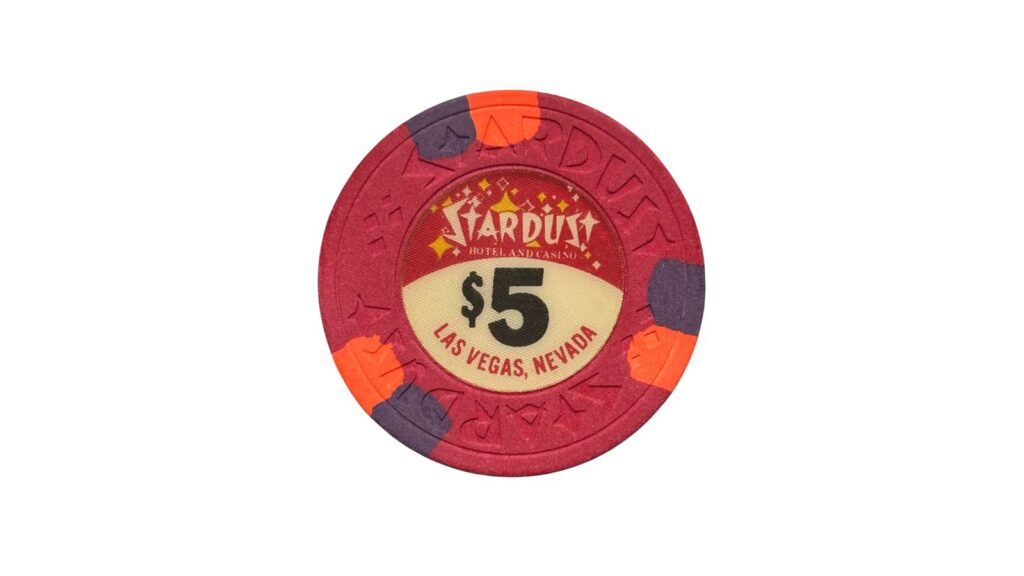
The Stardust opened in 1958 and was mob-controlled through most of its history, a fact the casino tried to obscure for decades before the FBI investigations and eventual indictments of the 1980s made it impossible. The events were fictionalized in the 1995 film Casino. MGM Mirage demolished the Stardust in 2007. The distinctive logo, hotel name spelled out in stylized planets and stars, is one of the most recognizable designs in chip collecting.
Early-issue Stardust $5 chips from the 1960s and 1970s bring $50 to $150 depending on issue number and condition. The earliest issues, from the casino’s first years of operation, are the most sought-after and increasingly hard to find. Later issues from the 1990s carry the same name and logo but are far more common and bring much less. Issue number, which correlates to when the casino placed a specific order with the chip manufacturer, is the key variable here.
Collectors track Stardust chips by issue because each manufacturing run had subtle variations in the insert colors, mold design, and specific typography. A chip listed as a first or second issue from the early 1960s is a genuinely different find from a mid-1990s chip with the same casino name. Condition matters more than with recently closed casinos because surviving first-issue chips have had sixty-plus years to accumulate edge nicks and surface wear. A clean, slightly-used first issue in solid shape is worth real money to the right buyer.
MGM Grand $5 chip from before the 1980 fire
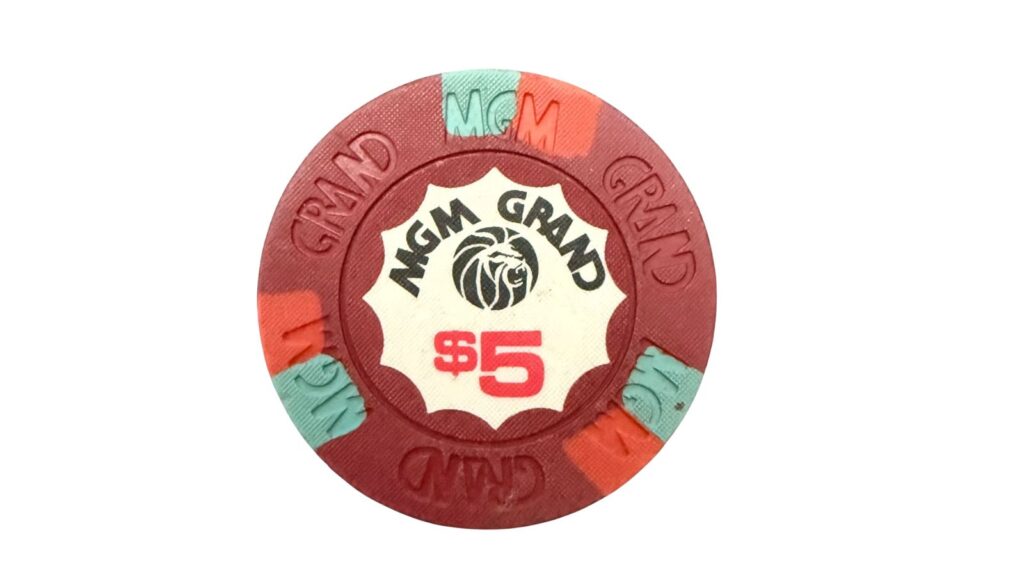
The original MGM Grand Las Vegas opened in December 1973 as the largest hotel in the world. On November 21, 1980, a fire broke out in the casino’s Deli restaurant, killed 85 people, and destroyed much of the casino’s chip inventory when the building was evacuated and locked down. The chips that were in play when the fire broke out, or that guests and employees managed to remove from the premises, became a specific and emotionally resonant category in casino chip collecting.
A $5 chip from the MGM Grand predating the fire sells for around $95 in clean condition. The fire destroyed the majority of the casino’s chip stock in a way that a simple closure never does, which limits supply. The $1 chip from the same era is more common because gamblers were more likely to walk away from the tables with a low-denomination chip as a souvenir. The $100 chip from before the fire is extremely rare and commands a substantial premium.
The MGM Grand name continued at the same property through several ownership changes before the building became Bally’s Las Vegas in 1989. A new MGM Grand opened on a different part of the Strip in 1993 and operates today. Chips clearly marked “MGM Grand” with the original 1970s design, made before the fire and its aftermath, are what collectors want. Later chips from the same address or from the newer property are a completely different and far more common category.
Frontier Hotel $5 chip
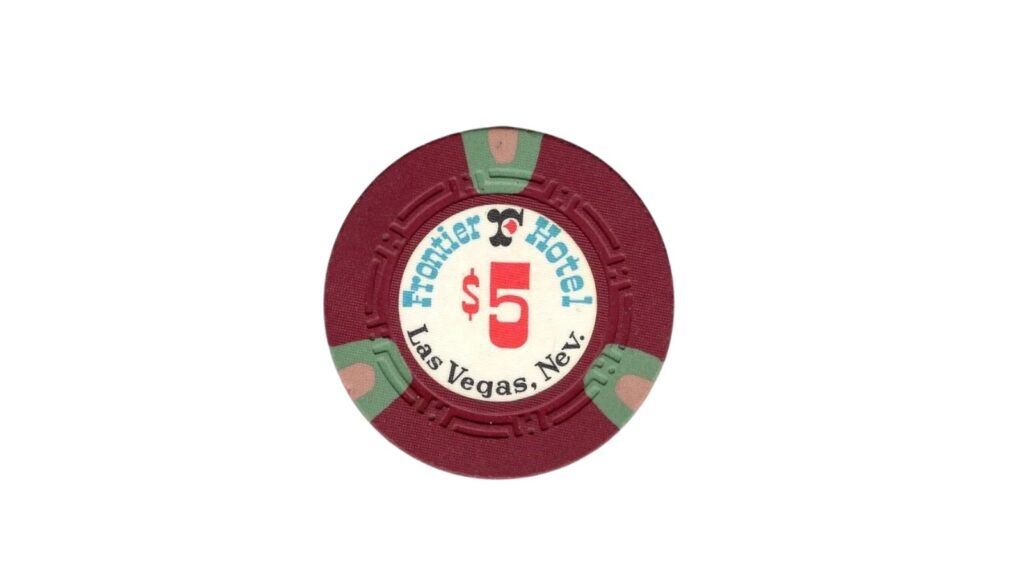
The Frontier, under various names including Hotel Last Frontier, New Frontier, and Frontier, operated on the Las Vegas Strip from 1942 until 2007, making it one of the longest-running addresses in Strip history. Elvis Presley made his first Las Vegas appearance there in 1956. Howard Hughes bought the property in 1967 as part of his buying spree. A six-year labor strike in the 1990s made national news. El Ad Properties demolished it in 2007 to make way for a project that was never built.
A Frontier Hotel $5 chip in good condition brings around $600 to $700. The casino’s long run means there are many eras of chips with varying values. The earliest chips, from the “Last Frontier” and “New Frontier” periods of the 1940s and 1950s, are naturally scarcer and command significantly more. Chips from the 1990s through the 2007 closure are more accessible, still collectible, and make up most of what surfaces at estate sales and in collections.
The name era matters when identifying a Frontier chip. “Hotel Last Frontier,” “New Frontier,” “Frontier,” and “New Frontier” again after 1999 are technically different periods of the same property, each with distinct chip designs. Any chip that predates Howard Hughes’s 1967 purchase is worth researching carefully. Chips from the hotel’s original 1940s western-theme era are rare enough that finding one at a Midwest estate sale would be a legitimate discovery.
Flamingo Hotel 1946 “Bugsy Siegel” era $5 chip
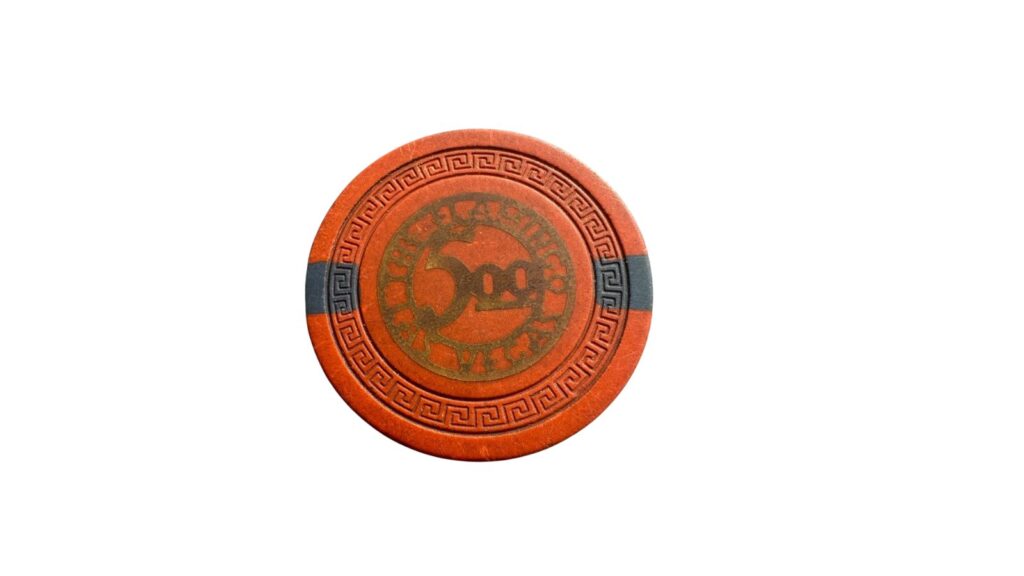
Bugsy Siegel opened the Flamingo Hotel in December 1946 with mob financing and was murdered seven months later. The chips that existed during those seven months, while Siegel was still running the casino, are identifiable by their construction: orange clay with a metal wafer inlay embedded in the center, no graphics beyond the hotel name and denomination, and a specific weight and texture that predates the plastic and ceramic chip eras by decades. Every subsequent era of the Flamingo produced different chips.
A first-era Flamingo $5 chip from 1946 to 1947 in solid condition, without a hole punch, brings $1,500 to $3,000 or more depending on the specific buyer and market conditions. The no-hole-punch requirement is critical: casinos routinely drilled holes in retired chips to retire them, and most surviving Bugsy-era chips were punched. A clean, intact example commands a serious premium over one with a punch through it. Many collectors consider a punched Bugsy chip still worth owning for the provenance alone, at a fraction of the intact price.
This is aspirational for most people rather than a realistic estate sale find. But these chips have appeared in family belongings over the years, brought home by gamblers who visited the Flamingo in Siegel’s brief window and kept a $5 chip as a souvenir without any idea what they were holding. If you have what appears to be an extremely old, plain orange clay chip with a metal inlay and the Flamingo name, get it professionally examined before assuming it’s a later reproduction.
Sands Hotel first-issue $5 chip with the hourglass design
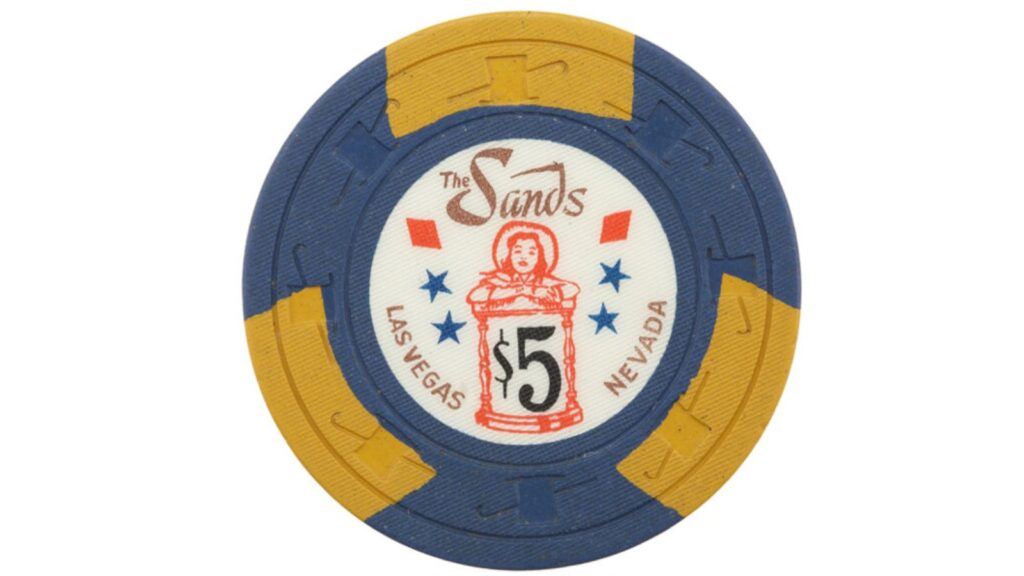
The most valuable chip from a casino most people recognize is not a one-of-a-kind curiosity but it is not a casual garage sale find either. The Sands Hotel’s first-issue $5 chip from the early 1950s features the hourglass design that appeared in the casino’s early advertising, manufactured by TR King on a small crown mold. Very few of these chips survived in undamaged condition, and the ones that did have become benchmark pieces in the hobby.
Clean first-issue Sands $5 chips in solid condition have sold for $25,000 or more, a level that places them firmly in serious investment territory rather than casual collecting. Three things are required to reach that value: the correct first-issue hourglass design made by TR King, the chip in undamaged or only slightly used condition, and a buyer who wants exactly that piece. Most people who find a $5 Sands chip in an estate sale have a later-issue chip worth $45 to $100.
The distinction between issue numbers is everything here, and determining whether what you have is a genuine TR King first issue requires comparing it against reference photographs and ideally having it assessed by an experienced collector. The CC>CC has specialists who identify Sands chips regularly and can save you from missing a significant find or from mistaking a common chip for something it isn’t. If the chip looks like it might be from the early 1950s and has the hourglass design, treat it as potentially significant until you know for certain.











