
A family of four following the USDA’s own moderate grocery budget is laying out around $1,350 a month before a single birthday cake or backyard cookout gets added to the cart. July piles on top of that: grilling season, Fourth of July plans, and weeks of kids eating lunch at home instead of at school.
I started tracking exactly where my own grocery money went a few summers ago, mostly out of spite after one trip to restock the fridge ran past $220. What I found wasn’t a single secret store. It was four or five ordinary habits stacked on top of each other that, together, started cutting real chunks out of the total.
Cutting a grocery bill in half from one tip alone is mostly marketing. Cutting it in half by combining where you shop, when you shop, and what you do with the apps already sitting on your phone is a lot more realistic.
Table of contents
- Aldi and Lidl beat the traditional supermarkets on basics
- Warehouse clubs pay for themselves on the right items
- Ethnic grocers undercut the chains on produce, spices and meat
- Misfits Market turns cosmetically flawed produce into a real discount
- July is the cheapest month of the year to buy produce
- Stack your cashback apps and loyalty programs on top
- What stacking these tactics actually saves
Aldi and Lidl beat the traditional supermarkets on basics
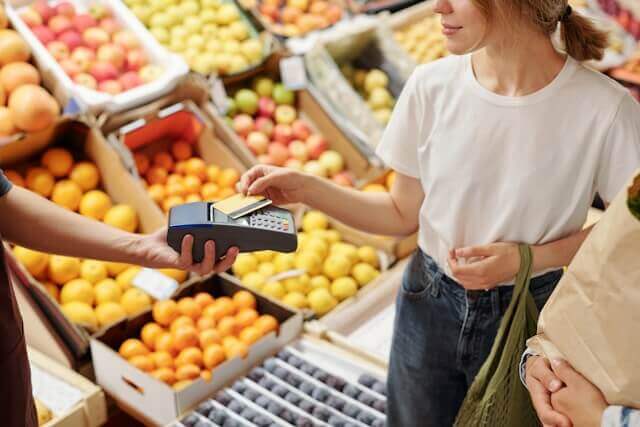
Aldi prices run 20 to 40 percent below the average grocery store, with Lidl landing about 15 to 20 percent below on identical items, based on price checks across major metro areas. Both chains carry mostly private label products instead of national brands, which is most of how they keep prices down.
Add it up nationally and the gap is enormous. Aldi shoppers collectively save $8.3 billion a year combined, measured against a typical family of four’s grocery list. Lidl is making its own play for loyalty dollars this July: the chain is retiring its old myLidl app and launching Lidl Plus on July 1, with member pricing, point rewards, and personalized coupons that didn’t exist under the old system.
The catch with both chains is that the savings show up almost entirely on private label staples: milk, eggs, canned goods, frozen vegetables, basic proteins. National brand cereal, name brand snacks, and specialty items still cost close to retail or aren’t stocked at all. The trip that pays off is the one built around a list of plain staples, not a full replacement of your usual cart.
Warehouse clubs pay for themselves on the right items

Membership at the big three warehouse clubs got pricier this year. Costco’s base Gold Star membership runs $65 a year, and Sam’s Club raised its own basic membership to $60 in May, with BJ’s charging the same $60, and all three clubs’ premium tiers landing between $120 and $130.
None of that fee is worth paying unless the bulk format actually matches how a household eats. A family that goes through a case of chicken thighs, a flat of canned tomatoes, and a 25-pound bag of rice in a normal month comes out ahead fast. A single person or a couple who can’t use a 5-pound bag of spinach before it turns ends up paying for spoilage instead of savings.
The categories that consistently beat grocery store prices at the clubs are meat, eggs, paper products, and gas, where most locations sell well below the street price. Produce and dairy are more of a mixed bag depending on how fast a household burns through large format packaging, so it’s worth pricing specific items against a regular grocery store before assuming the warehouse price automatically wins.
Ethnic grocers undercut the chains on produce, spices and meat

Hispanic supermercados, Asian markets, Indian grocers, and Middle Eastern shops routinely beat conventional chains on fresh produce, meat and spices, mostly because they buy and sell in the volumes their communities actually use instead of stocking for a national average shopper.
Spices sold loose or in simple bags instead of a name brand jar in the supermarket’s “international” aisle are often a fraction of the price for the identical ingredient. Rice, dried beans, and cooking oils show up in bulk formats that chain stores rarely carry at all. Produce that a mainstream grocer would reject for size or shape, but is perfectly fine to eat, gets sold here instead of thrown out.
The easiest way to use this without wasting money on unfamiliar ingredients that sit untouched is to start with one category. Buy spices, rice, or produce at the market closest to home and keep the rest of the list at the regular grocery store until the new routine feels normal.
Misfits Market turns cosmetically flawed produce into a real discount

Misfits Market and Imperfect Foods merged their operations, and the combined service now advertises savings of up to 40 percent compared to grocery store prices on produce that’s cosmetically imperfect but otherwise fine to eat: oversized zucchini, lopsided peaches, the kind of produce a regular store won’t put on a shelf. There’s no membership fee, and boxes can be skipped or canceled at any time.
The savings are real on the produce itself, but delivery fees and order minimums can eat into the discount on a small order, so this works best as a supplement to a regular shopping trip rather than a full replacement for one. It’s most worth it for households that already eat a lot of fresh produce and would otherwise pay full price for organic options at a regular store.
For someone who barely touches the produce aisle to begin with, the savings here won’t move the needle much. For a family trying to eat more fruits and vegetables on a tighter budget, it’s one of the more painless changes on this list.
July is the cheapest month of the year to buy produce

July sits right in the middle of peak season for corn, tomatoes, watermelon, peaches, summer squash and most berries. Peak season means more supply hitting stores at once, which pushes the price per pound down across every store, not just the discount ones.
Independence Day adds another layer on top of that. The Fourth of July is the second-biggest retail sales weekend of the year after Thanksgiving, and grocery chains lean hard into meat and produce promotions to match it. Steaks, hot dogs, sausages, corn, and watermelon all get marked down in the same week the produce itself is naturally cheapest.
Buying extra corn, berries, and tomatoes during this window and freezing or canning what won’t get eaten in a few days stretches the savings well past the holiday itself. Meal planning around whatever the weekly ad is pushing, instead of a fixed list decided a week in advance, is usually the difference between paying peak price and paying the sale price.
Stack your cashback apps and loyalty programs on top
Cashback apps won’t replace a grocery budget, but they add up over a year. Ibotta users earn $218 a year on average just from scanning receipts or linking a store loyalty card, with no requirement to shop anywhere new.
Rakuten works differently, paying out a percentage back on purchases made through its browser extension or app, which matters more for online grocery orders than in-store trips. Heavy online shoppers can realistically clear a few hundred dollars a year once sign-up bonuses and occasional double cashback periods get factored in. Store specific apps from chains like Kroger, Safeway, or Aldi load digital coupons directly onto a phone number or loyalty card, with nothing to clip or print.
None of these apps work unless they’re opened before checkout, not after. The habit that actually saves money is checking the app for ten minutes while building a shopping list, not scanning a receipt afterward and hoping for the best. It’s also worth resisting offers for products that wouldn’t have gone in the cart otherwise. Cashback on something never needed is still money spent.
What stacking these tactics actually saves

Start with the USDA’s own number for a typical family of four: around $1,350 a month on the moderate-cost food plan. Move the bulk of basic staples, milk, eggs, bread, canned goods, frozen vegetables, to Aldi or Lidl, where pricing surveys put those categories 20 to 40 percent cheaper, and that alone can shave $150 to $250 off a typical month.
Add a monthly warehouse club run for meat, eggs, and paper goods, where the bulk price beats the grocery store by a wide enough margin to absorb the membership fee within the first two or three trips. Shift produce purchases to whatever’s at peak season this month, supplemented by a Misfits Market box or a stop at the local ethnic market for spices and staples, and that category alone can come close to half its usual cost in July specifically, when supply is at its highest. Layer cashback apps on top, and that’s another $15 to $30 a month back without changing a single purchase.
Add it up, and a household that commits to all of it, not just one tip, is realistically looking at a 30 to 45 percent reduction on the full monthly bill, with produce and meat specifically getting close to half off in July’s peak window. Getting the entire bill all the way to exactly half depends on how far a household is willing to go beyond this list: cutting food waste, eating less meat, or skipping the convenience foods that drove the bill up in the first place. The tactics above get most of the way there without anyone needing to give up dinner.











