
Somewhere in a basement bin at your local thrift store is a rock in a box. A literal rock, sitting in a nest of straw, complete with its own birth certificate and care instructions. Somebody's grandmother paid four dollars for it in 1975, laughed about it for a few months, then put it in a drawer for fifty years. That's the thing about the 70s. Half of what people bought as a joke or a fad turned out to be worth keeping, and now it's sitting in attics and yard sale boxes waiting for someone who knows what they're looking at.
This was the decade of the mood swing collectible economy: pet rocks, bionic men, Star Wars figures nobody expected to matter, and kitchenware so common it's still turning up in every third estate sale in the country. Most of it is worth a modest amount. Some of it, if the details line up right, is worth a genuine windfall.
Here are 18 things that were everywhere in the 1970s and are worth a second look before they go in the donation pile.
1. Original Pet Rock, 1975

If you've ever found a smooth gray stone packaged in a little cardboard carrier with air holes punched in the side, don't laugh it off. That's Gary Dahl's 1975 marketing stunt, the Pet Rock, and it's one of the most recognizable novelty items of the decade. It came with a tongue-in-cheek training manual and a bed of straw, packaged to look exactly like a pet carrier.
Most surviving examples are common. Complete sets with the original box, straw, and training booklet in good condition typically bring $20 to $40, occasionally more if the box graphics are crisp and unfaded. Loose rocks without packaging are worth next to nothing, since the joke was always the presentation and not the rock itself.
Reproductions exist, including a modern relaunch from a toy company that bought the rights a few years back, so check for the original Rock Bottom Productions markings and a genuinely aged box before assuming you have the real thing. It's a low dollar item, but a fun and easy one to spot.
2. Farrah Fawcett red swimsuit poster, 1976

This one is instantly recognizable even to people who've never seen a full episode of the show that made her famous. The 1976 poster of Farrah Fawcett in a red one-piece swimsuit went on to sell more than twelve million copies, making it the best selling poster of all time. If your parents or grandparents had a dorm room or a garage wall in the late 70s, there's a real chance one of these hung there.
Genuine 1976 originals in clean, uncreased condition with strong color typically bring $40 to $90, with pristine, never-folded examples pushing higher. Reproductions are extremely common, since the image has been reprinted officially and unofficially for decades, so check for the 1976 copyright line and the catalog number printed on the sheet itself.
Condition drives the value here more than almost anything else on this list. Creasing, fading, tape residue, and pinholes all knock the price down fast, since this was a wall poster and most surviving copies show it.
3. Avon Cape Cod ruby glass collection

Somewhere in nearly every grandmother's china cabinet from the late 1970s through the 1990s sat a piece or two of deep red pressed glass from Avon's Cape Cod collection. It wasn't sold as cosmetics. Avon introduced it in 1975 as a home décor and giftware line, and representatives sold everything from goblets to candlesticks to full dinner sets through their catalogs for the next two decades.
Individual pieces are genuinely common and modest in value. Standard goblets, plates, and small bowls typically bring $10 to $35 each in clean condition with no chips. The real money is in volume and rarity. A large pedestal cake plate or a complete matched dinner set with original boxes can push well past that, and full collections assembled piece by piece over years are worth pricing as a set rather than selling off individually.
Check for chips along the rims and hobnail edges, since this was everyday glass in a lot of households and it got used. The ruby color should be even and rich, not faded or cloudy, which usually signals sun damage or years in a dishwasher.
4. Original Lava Lite lava lamp

The lava lamp goes back to a British inventor in the early 1960s, but it became a full blown American bedroom fixture in the 1970s once Lava Lite Corporation started mass producing them out of Chicago. A metal base, a glass globe, and slow moving colored wax suspended in liquid, it's one of the most recognizable pieces of 70s decor there is.
Working examples from the 1970s in good condition, with the original base and no cracks in the globe, typically bring $40 to $100, with rarer colorways and larger sizes bringing more. A lamp that no longer flows properly is worth considerably less even if it looks fine sitting still, so plug it in and let it warm up before pricing it.
Check the base for the manufacturer's stamp and look closely at the wax and liquid for clarity. Cloudy liquid, separated wax, or a cracked globe all reduce value significantly, and these lamps were built to run for hours at a time, so most surviving examples show some wear.
5. 1976 Bicentennial quarter, 40 percent silver

Every quarter minted in 1975 and 1976 carries the double date 1776 to 1976 and a colonial drummer on the reverse, part of the Mint's celebration of the country's 200th birthday. Most of these are ordinary clad quarters worth face value. The ones worth checking twice are the special 40 percent silver versions struck at the San Francisco mint for collector sets, which have a duller edge and a warmer gray tone than a regular quarter.
A typical silver Bicentennial quarter in average uncirculated or proof condition brings roughly $9 to $15, mostly reflecting its silver content plus a small collector premium. Certified examples in exceptional, near flawless condition can bring hundreds of dollars, and a small handful of documented doubled die and off metal error coins have brought four and five figure prices, though those are genuine needle in a haystack finds.
Look for the letter S below the date for San Francisco mint coins, and check the edge for a visible copper stripe. A copper stripe means clad. No stripe and a grayer color usually means silver.
6. View-Master with reels, 1970s

Every kid in the 1970s seemed to own one of these plastic stereoscopic viewers, usually the colorful Model G, along with a shoebox of circular reels covering everything from national parks to cartoon characters. You held it up to the light, clicked the lever, and the flat picture snapped into 3D.
Most basic viewers and generic reel packets are common and inexpensive, typically bringing $10 to $30 for a working viewer with a handful of reels in decent shape. The real value shows up in complete boxed gift sets tied to popular television and movie licenses, which can bring well over $100 depending on the character and the condition of the box.
Check that the lenses aren't scratched or hazy and that the lever advances smoothly, since a viewer that doesn't work is worth very little regardless of how nice it looks. Reels with red or magenta discoloration have degraded film and are worth less than reels with clean, saturated color.
7. Holly Hobbie rag doll, Knickerbocker

Holly Hobbie started as an artist's greeting card design before Knickerbocker Toy Company licensed the character for a line of rag dolls in 1975. The quiet little girl in the oversized bonnet and patchwork dress became one of the defining soft toys of the decade, sold in several sizes alongside her friends and her brother.
Loose, played-with dolls in decent shape with intact stitching and only minor fading typically bring $20 to $40, while dolls still in their original packaging or in exceptional, unplayed condition can reach $60 to $100 or more depending on size. The larger versions and complete doll and playset combinations bring the most.
Check the fabric for stains, sun fading, and loose stitching at the seams, since these were cloth dolls made for kids to actually play with. A missing hair bow or a mended dress arm is common and only lightly affects value, but a torn or heavily faded face print brings the price down significantly.
8. McDonald's 1977 Collector Series glass

Before Happy Meal toys took over as McDonald's main promotional giveaway, the chain sold a set of drinking glasses through its restaurants featuring characters like Ronald McDonald, Grimace, the Hamburglar, and Big Mac. The 1977 Collector Series is the one to look for, distinguished from later reissues by its slightly heavier glass and specific character artwork.
Individual glasses in good condition, free of chips and with the paint still bright, typically bring $10 to $25 each, and a complete matched set of six can bring $50 to $80. Earlier prototype and test market glasses, made in smaller numbers before the main series launched, are considerably scarcer and have brought several hundred dollars apiece.
Wash these by hand rather than in a dishwasher if you plan to keep or sell them, since the painted designs fade and flake with repeated hot water and detergent exposure. Check for chips on the rim and base, which are common on glassware this age and cut into the price fast.
9. Kenner Six Million Dollar Man Steve Austin figure, 1975

Lee Majors made bionic strength a household concept, and Kenner turned Steve Austin into one of the best selling action figures of the decade. The 1975 original came with a rolled up rubber skin sleeve on his arm that you could peel back to reveal bionic circuitry underneath, along with a red jogging suit and a removable engine block he could lift.
Loose figures with the skin sleeve intact and most of the original outfit typically bring $75 to $100, while examples still in the original box can bring $240 to $320 or more. Later variants with the bionic grip feature or the rarer biosonic arm bring considerably more than the standard 1975 release.
The skin sleeve is the piece most likely to be missing or damaged, since kids peeled it constantly, and its condition affects value more than almost anything else on the figure. Check that the telescoping eye still works and that the back button still triggers the bionic sound effect.
10. Ideal Evel Knievel Stunt Cycle, 1970s

Evel Knievel was one of the biggest names in American pop culture through the mid 1970s, and Ideal Toy Company's wind up Stunt Cycle became the toy every kid on the block wanted for Christmas. You clicked the small figure onto the motorcycle, wound the energizer, and released him to launch off whatever ramp you'd built out of couch cushions.
Played with, working examples with the original box typically bring $50 to $250 depending on completeness and how clean the graphics are. Unopened examples in a near mint box are the real prize here, with documented sales well over $1,000.
Reproduction boxes have shown up on the secondary market, so check the printing quality and color saturation against reference photos before paying a premium for anything claiming to be sealed. Missing energizer pull cords and cracked plastic on the figure's helmet are common issues that bring the price down on played with examples.
11. Pyrex Spring Blossom Green mixing bowl set

Nicknamed Crazy Daisy by collectors, this green flowered pattern on white glass ran from 1972 through the late 70s and was one of the most common Pyrex patterns of the decade. It showed up as nesting mixing bowls, casserole dishes, and serving pieces in kitchens across the country, which means there's a real chance a piece of it is sitting in a cabinet somewhere near you right now.
A complete, unchipped three or four piece nesting bowl set in good condition typically brings $50 to $90, with individual bowls selling for less on their own. The largest bowl in the set and complete casserole dishes with their original lids tend to bring the most.
Check the bottom for the Pyrex Corning mark and examine the pattern closely for scratching from years of stirring and scraping, which dulls the paint and reduces value. Reproduction patterns inspired by this exact design have been sold in recent years, so compare any suspiciously bright example against reference photos of the original.
12. Atari 2600 console, complete in box

Atari's home console launched in September 1977 and eventually sold more than 30 million units, making it the console most likely to turn up at an estate sale packed in a wood grain box in someone's basement. The earliest units, nicknamed the Heavy Sixer for their weightier build and six front switches, are the ones worth the most.
A complete Heavy Sixer in its original box, with controllers and cables, in good working condition typically brings $350 or more, while the later, more common four switch models sold loose and untested bring closer to $30 to $55. Games sold separately, and a handful of rare cartridges from small or defunct publishers can be worth far more than the console itself.
Test the console before assuming it works, since decades of storage can degrade internal connections. A complete set with the original box, manual, and both joystick and paddle controllers is worth significantly more than a bare console, so keep everything together if you find it as a lot.
13. Mego KISS dolls, 1978

Mego made action figure versions of just about everyone in the late 70s, but the 1978 KISS set, Gene Simmons, Paul Stanley, Ace Frehley, and Peter Criss in full stage makeup, remains one of the most sought after music licensed toys of the decade. Each figure stood about 12 inches tall with cloth outfits and molded makeup faces.
A complete loose set of all four figures in decent played with condition, with most of the original clothing and accessories intact, typically brings $150 to $350. Sets that remain sealed in their original boxes, never removed, are the true grail here and have brought well over $1,500 for a complete matched set.
Check the knee and elbow joints carefully, since these tend to loosen or crack with age, and look at the face paint for rubbing or fading from friction inside old toy boxes. Missing armbands and boots are common and worth replacing if you plan to sell, since a complete outfit brings meaningfully more than a bare figure.
14. Vintage Levi's 501 Big E jeans

Levi's changed the capitalization on its red tab logo from a big E to a lowercase e in 1971, which gives collectors an easy way to date a pair of 501s at a glance. Jeans made before that switch, especially ones with the visible red line selvedge running down the outer seam, are the ones worth pulling off the rack at a thrift store.
Big E 501s from the late 1960s and early 1970s in wearable condition typically bring $50 to $250 depending on size, fading, and how much repair work they need, with unusual sizes and pristine examples pushing well past that. Pairs with heavy custom fading or noteworthy wear patterns can be worth more to some buyers than pristine ones, since the denim resale market prizes character as much as condition.
Check the back of the button fly buttons for a stamped E, and look for the red selvedge line inside the cuff, which confirms shuttle loom denim from before 1984. Rips at the crotch and knee are the most common dealbreakers, since repairs there are visible and reduce resale value.
15. Sony Walkman TPS-L2, 1979
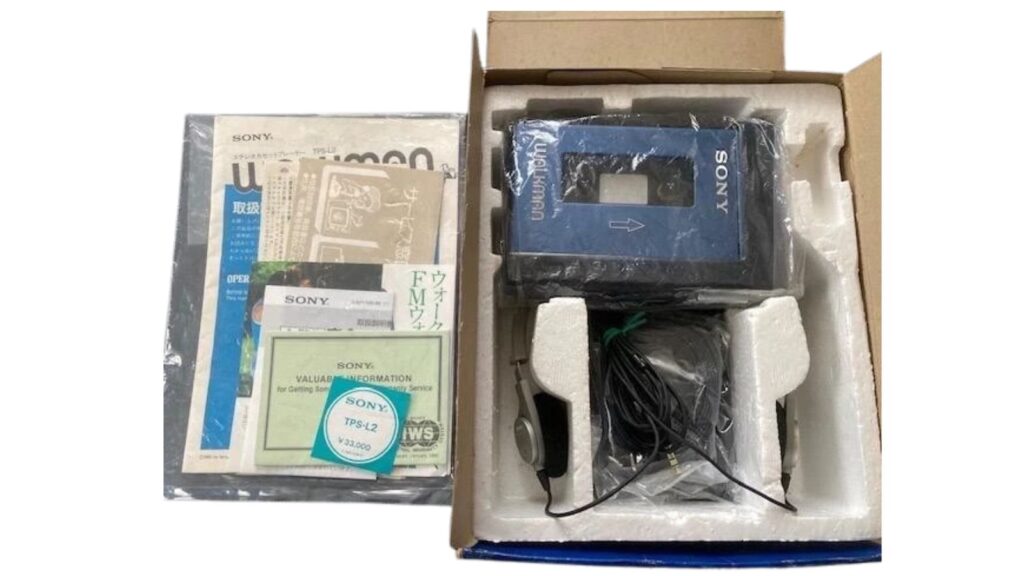
Sony's first Walkman went on sale in Japan in the summer of 1979 and reached American shelves the following year, and it's genuinely the device that changed how people listened to music. The blue and silver TPS-L2, distinguished from later models by its metal case and dual headphone jacks meant for sharing, is the one collectors specifically hunt for.
Tested, working examples in good cosmetic condition typically bring $560 to $950, and fully restored or mint examples with the original box and accessories have brought close to $2,850. A non-working unit is worth considerably less, since most buyers want a Walkman they can actually use.
The internal belts in these units degrade with age and are the most common reason one stops working, so factor a service cost into any purchase price if functionality isn't already confirmed. Look specifically for the TPS-L2 model number stamped on the back, since later Walkman models look similar but carry far less value.
16. Kenner Star Wars Jawa, vinyl cape variant, 1978

The standard Jawa figure from Kenner's original Star Wars line is genuinely common. Millions of kids owned one, wrapped in a soft brown cloth cape, and loose examples today bring a modest $40 to $60. This entry exists for one specific, very early production variant, and it's worth knowing about because the difference is almost invisible at a glance.
A small early batch of Jawas shipped with a cape made of vinyl instead of cloth, before Kenner switched materials because the vinyl looked cheap and degraded quickly. That handful of vinyl cape figures is now one of the most valuable pieces in the entire vintage Star Wars market, with loose examples bringing $2,500 to $3,000 and carded, unpunched examples reaching well into five figures.
Reproduction vinyl capes exist and have fooled experienced collectors, so any example claiming to be original should be verified against known reference photos before you get excited. For the overwhelming majority of people who find a Jawa in a toy box, it will be the common cloth version, and that's still a fun, honestly modest find rather than a windfall.
17. Schwinn Sting-Ray Krate bicycle, 1968 to 1973

don_juan1961 via eBay
Schwinn's Krate line took the already popular Sting-Ray and dressed it up like a miniature chopper motorcycle, complete with a banana seat, a stick shift style gear lever, and a fat slick rear tire. The Orange Krate, Apple Krate, Lemon Peeler, and Pea Picker were the original four colorways, and Schwinn only made them for about five years before discontinuing the line.
Original, unrestored examples in solid, largely complete condition typically bring $800 to $2,000, and exceptional, low mileage originals with correct paint and decals have brought close to $3,000. Reproduction and remanufactured Krates have been sold since the 1990s and are worth a small fraction of an original, so serial numbers and frame details matter enormously here.
Check the seat, grips, and tires for correct period parts, since replaced components reduce value even when they're reasonably close matches. A bike that's been repainted, even carefully, is worth considerably less to serious collectors than one with original, honestly worn paint.
18. Vintage 1970s rock concert t-shirt

Single stitch tour shirts from the 1970s, sold at the show or through mail order for major touring acts, are some of the most quietly valuable textiles from the decade. Most were worn hard, washed constantly, and eventually thrown out, which is exactly why the surviving examples matter to collectors now.
A genuine, single stitch tour shirt in decent, honestly worn condition typically brings $150 to $750 depending on the band, the tour, and how legible the print still is. Early, rare tour runs from major acts have brought well into four figures at the extreme end, though those results are genuine outliers rather than what most shirts bring.
Reproductions and modern licensed reprints are extremely common, so check the tag for a period appropriate brand and look for the flatter, softer screen print typical of the era rather than the thick, glossy ink used on modern reprints. A shirt that's been through decades of washing should show it, in fading and thinning fabric, not look suspiciously crisp.
Most of what turns up from this decade is worth a modest amount, and that's fine. The occasional exception, tucked in a box in someone's attic, is exactly why it's worth looking twice before anything goes to the curb.











