
Your mom’s old Pyrex is still in the cabinet. The cassette deck has been sitting in the garage since you swapped it out for a Discman sometime around 1991. The doll with the cloth body and the funny signature on its bottom got passed down from a cousin and nobody ever threw it out. None of these things looked like money at the time. They looked like clutter.
The 1980s produced an enormous amount of stuff, and most of it is still worth what it always was: not much. But a specific slice of it, the electronics that defined a format, the toys that were made in smaller numbers than anyone realized, the watches and bags that became status symbols, has turned into real money on the collector market. This isn’t only about toys, and it isn’t only about grails either. It’s about the ordinary version of an extraordinary thing: the receiver still in dad’s basement, the doll still wearing its original dress, the boombox that used to blast out of someone’s bedroom window.
Condition decides almost everything here. A working example with its original parts can be worth ten times a beat-up one missing half its pieces. Read the condition notes before you get your hopes up.
Table of contents
- Cabbage Patch Kids, the Xavier Roberts “Little People” originals
- Sony Walkman TPS-L2
- Vintage Pyrex in the Lucky in Love pattern
- Garbage Pail Kids, original 1985 Series 1
- Casio G-Shock DW-5000C
- Transformers G1 Optimus Prime, 1984
- JVC RC-M90 boombox
- Vintage concert tour t-shirts
- Apple Macintosh 128K
- Vintage Louis Vuitton Speedy bag
- Kenner Star Wars Yak Face, 1985
- Marantz 2270 receiver
- Vintage Swatch watches from the artist series
- Nintendo Entertainment System, the original Deluxe Set
- Air Jordan 1, original 1985 release
- Vintage Pac-Man arcade cabinet
- Rolex Datejust, reference 16013
Cabbage Patch Kids, the Xavier Roberts “Little People” originals

Before Coleco turned Cabbage Patch Kids into the riot-inducing toy of 1983, an art student named Xavier Roberts was hand-stitching soft-bodied dolls in a converted clinic in Cleveland, Georgia, and selling them as one-of-a-kind “Little People.” Every Coleco doll that followed has a vinyl head and a stamped signature. These earlier ones have soft sculpted heads, a hand-signed bottom, and a birth certificate from “Babyland General” if you’re lucky.
That distinction matters enormously to value. A late-1970s hand-signed Little People doll in good condition without its original adoption papers has brought $668 to $950, and the rare examples with full documentation, an excellent vintage finish, and a clear hand signature have climbed past $3,000. The mass-produced Coleco dolls everyone actually remembers are worth far less, usually $25 to $50 unless they’re an unusually rare mold or still factory sealed.
Check the head first. Soft and cloth means pre-Coleco. Vinyl means it’s the toy you remember from Christmas morning, and it’s worth a fraction as much. Either way, a signature that’s stamped rather than hand-signed in marker pulls the price down, and a doll with rerooted hair or replaced clothing loses real value with serious collectors.
Sony Walkman TPS-L2
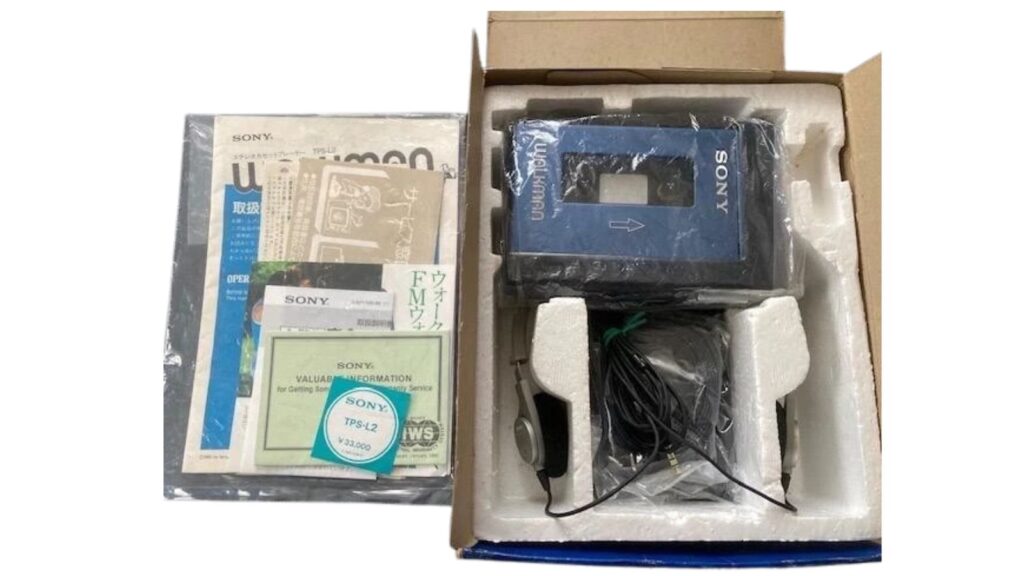
It came out in 1979, but the TPS-L2 was still the device half the country had clipped to a waistband well into the 80s, and it’s the one collectors actually want. Metal case, dual headphone jacks, a “hotline” button that let two people talk without taking their headphones off. It looked nothing like the plastic Walkmans that came later, and that’s exactly the appeal.
Working examples with light wear typically bring $560 to $950, and a genuinely mint one with its original box, headphones, and case has reached close to $2,850. The gap between those numbers comes down to function. A non-working Walkman with a frozen mechanism or a snapped belt is worth a fraction of a working one, since most buyers actually want to use it, not just display it.
Don’t try to force a stuck cassette door or play a tape through a machine that hasn’t run in decades without checking the belts first. Cracked foam on the original headphones is common and doesn’t hurt the value much. A missing “Walkman” badge or replaced screws is a bigger problem, since those details get checked closely by serious buyers.
Vintage Pyrex in the Lucky in Love pattern

Most Pyrex from your grandmother’s kitchen is worth lunch money. The Lucky in Love pattern is the exception that built a thousand garage-sale legends. Released briefly in 1959 with hearts, shamrocks, and green foliage on white glass, it was barely distributed before Corning discontinued it, and almost nobody recognized what they had at the time.
A clean Lucky in Love mixing bowl or casserole with no chips or fading has brought close to $6,000 in top condition, and even moderately worn examples regularly clear $500 to $2,000. The pattern stayed in circulation in plenty of 1980s kitchens even though it predates the decade, since Pyrex from the 50s and 60s often outlived several owners before anyone thought to retire it.
Flip it over first. All-caps “PYREX” stamped into the glass with “Made in USA” means it’s the real thing. Lowercase “pyrex” is the modern overseas version made after 1998 and worth almost nothing to collectors. Watch for crazing, the fine spiderweb of cracks that comes from years in a hot oven, and reproduction decals applied on top of the glass rather than fired into it, which feel raised to the touch instead of smooth.
Garbage Pail Kids, original 1985 Series 1

Topps printed these gross-out trading cards as a direct jab at Cabbage Patch Kids, and the joke worked well enough to get them sued. The first series, with its die-cut stickers of kids meeting cartoonishly grim fates, is the one collectors actually chase, partly because the cards were notoriously off-center from the start and clean examples are genuinely hard to find.
A sealed original wax pack from that first run brings around $300 or more ungraded, and professionally graded gem-mint examples have sold for well over $1,600. Individual key cards push the numbers much higher: a glossy-back Adam Bomb or Nasty Nick in top grade has climbed into the tens of thousands, since the back of the card determines a rarer print run that most people never notice.
Check the back before you check the front. Glossy backs are scarcer and worth roughly double the matte version. Centering matters too, since off-center printing was common in this set, and a card with even a sliver of the next card bleeding into the border won’t grade well no matter how clean it looks otherwise.
Casio G-Shock DW-5000C

Casio engineer Kikuo Ibe reportedly built the first G-Shock after watching his father’s watch shatter on the floor, and spent two years and over 200 prototypes trying to make one that couldn’t break. The 1983 DW-5000C that resulted started the entire G-Shock line, and the originals are now scattered through attics with no idea what they’re sitting on.
Resin degradation is the whole story with this watch. A DW-5000C with a replaced band still brings $500 to $1,000, one with mostly original resin in good shape brings $2,000 to $5,000, and a genuine dead-stock example with intact packaging has reached $10,000 to $20,000 or more. The plastic case and band crumble with age, so a truly untouched original is rare for reasons that have nothing to do with how many were made.
Check the caseback for “DW-5000C” and module 240. Later remakes from the 2000s use different module numbers and a screw-back that looks similar but isn’t original. Fresh-looking resin on a watch claiming to be from 1983 is a red flag, since real 40-year-old resin should show some age.
Transformers G1 Optimus Prime, 1984

wheeljackslab via eBay
The original Optimus Prime toy transformed from a chrome-detailed Freightliner cab into a robot with an opening trailer that doubled as a repair bay, and it remains the figure every other Transformers toy gets measured against. Hasbro made plenty of them, but loose, complete, undamaged examples thinned out fast once kids actually started playing with the thing.
Loose and complete figures with all their original accessories, the rifle, the fists, Roller, and the hose assembly, commonly sell in the hundreds, while examples complete in their original box land around $600 to $1,200, and sealed, never-opened boxes have pushed past $1,600 with strong box grading.
Missing parts hurt this figure more than most. A loose Optimus without his rifle or trailer accessories drops well below the typical range. Watch for reissue tells too: 2000s and later versions have shortened smokestacks for safety reasons and tampo-printed Autobot symbols instead of stickers on the shoulders. A box with tape that looks suspiciously fresh on otherwise aged cardboard usually means a reproduction wrapper.
JVC RC-M90 boombox
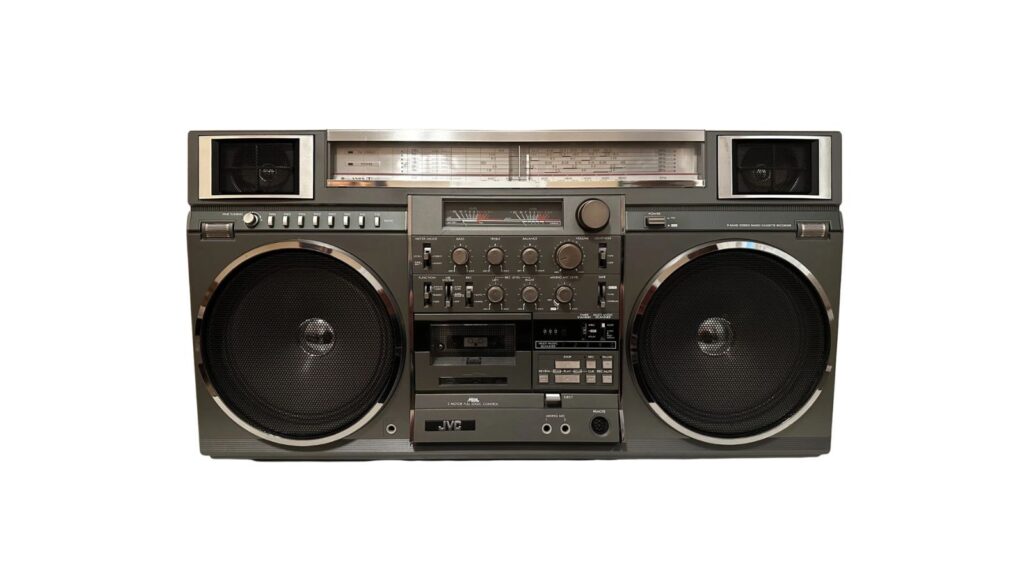
Within boombox collecting circles, the RC-M90 is treated less like a stereo and more like a relic. JVC built it in 1981 as the flagship of its lineup, with a built-in subwoofer amplifier, a dual cassette deck, and four speakers in a cabinet the size of a small suitcase. It showed up on the cover of LL Cool J’s “Radio” album, and that alone has helped cement its reputation.
Working examples in good condition regularly bring over $3,000 today, and the model is widely described in collecting circles as bringing four figures even for a decent unit. The combination of nostalgia, hip-hop history, and genuinely impressive build quality has kept demand well ahead of supply for years.
Originality drives the price more than almost anything. The cardboard box, the remote control, and the original demonstration tape are all scarce, and a complete set with those pieces commands a real premium. A unit that needs belt replacement or tape deck cleaning is normal for something this age and doesn’t hurt value much as long as the cosmetic condition is strong and nothing has been swapped for non-original parts.
Vintage concert tour t-shirts

Tour merchandise from the 80s was sold out of cardboard boxes in arena parking lots, worn into rags, and mostly thrown away once the print cracked. The shirts that survived in wearable condition, especially from punk and metal acts with smaller print runs, have become a genuinely active corner of the vintage clothing market.
A shirt from a well-known 80s metal tour in good condition has recently brought $280 to $540, and original Clash or Sex Pistols tour shirts from the punk scene have climbed to $1,000 to $2,000 in strong condition. Mainstream arena-rock shirts from huge-selling acts tend to bring less, since so many were printed, while smaller club-tour runs from cult bands often bring more.
Check the tag and the stitching. Single-stitch hems were standard until the mid-1990s, and a double-stitched hem on a shirt claiming to be from 1985 is a sign it’s a later reprint. Dry rot, the brittle disintegration that comes from decades in a humid box, is the other thing to watch for, since a shirt that tears like wet paper when tugged gently has no resale value left in it.
Apple Macintosh 128K
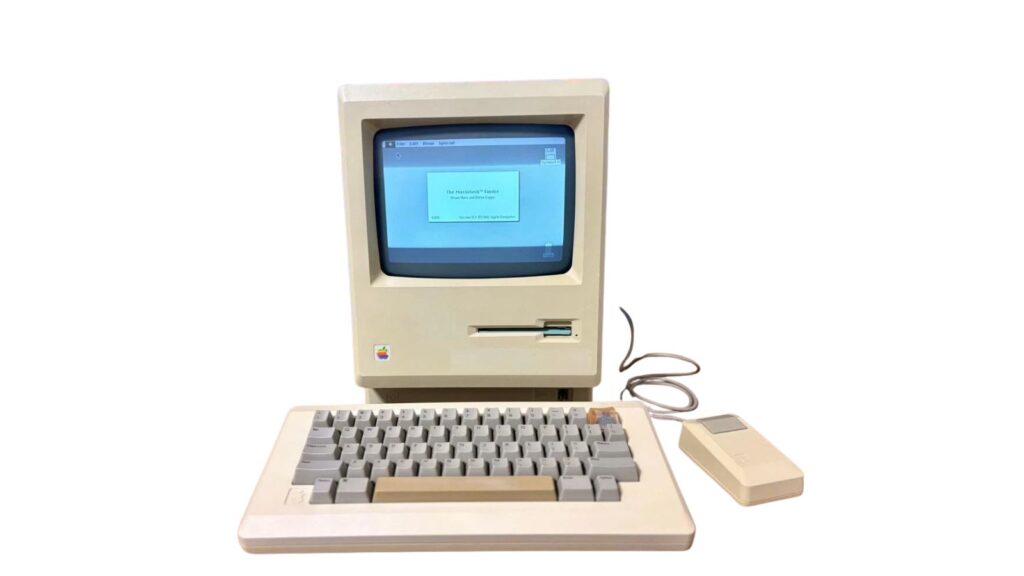
Released in January 1984 with a Super Bowl ad that framed it as a rebellion against IBM, the original Macintosh was the first computer most people had ever seen with a graphical interface and a mouse. Fewer than 10,000 are believed to survive today, and far fewer than that still power on.
A working 128K in good cosmetic condition typically brings $1,500 or more, and complete examples with the original box, manuals, software disks, and the molded travel case have reached $2,000 and climbing on the collector market. The travel case alone adds real money to an otherwise plain machine, since most were discarded once owners stopped lugging the computer between home and office.
Don’t expect a unit that’s been upgraded internally to bring top dollar. Machines later converted to 512K or Mac Plus specifications, which many owners did at the time just to make the computer more usable, are worth less to collectors than an untouched original, even though the upgrade made sense in 1986. The internal floppy drive grease can solidify after decades of storage, so a unit that won’t read a disk isn’t necessarily broken beyond repair.
Vintage Louis Vuitton Speedy bag
The Speedy started as a scaled-down version of Louis Vuitton’s Keepall travel bag, and Audrey Hepburn’s habit of carrying one in the 1960s turned it into a permanent fixture of the brand’s lineup. By the 1980s, the monogram canvas version was the bag every status-conscious traveler wanted, and a meaningful number of them are still circulating through closets and estate sales.
A Speedy 30 in monogram canvas typically sells for around $980 on the resale market, with prices ranging from roughly $240 for heavily worn examples up to several thousand for pristine vintage pieces with original locks and keys. Leather trim that’s darkened to a rich honey patina is considered desirable rather than a flaw, while cracked or peeling vachetta leather drags the price down.
Authentication is the real issue with this bag, since it’s one of the most counterfeited items in the world. Genuine stitching on the handle tabs shows five even stitches per side, and the canvas pattern should align symmetrically at every seam. A date code stamped inside, a combination of letters and numbers, helps confirm both authenticity and roughly when it was made.
Kenner Star Wars Yak Face, 1985

By 1985, kids had moved on to Transformers and G.I. Joe, and Kenner’s final wave of Star Wars figures, nicknamed the “Last 17,” barely made it to American shelves before the line was discontinued. Yak Face never reached U.S. retail at all. It sold only in Canada and parts of Europe, which is exactly why American collectors have spent decades hunting it down.
A mint Yak Face on its original card with the collector’s coin included has brought close to $3,000, with the European tri-logo card version, which didn’t include the coin, typically bringing closer to $1,000. Even the coin alone, separated from the figure, has sold for several hundred dollars on its own.
Loose, complete figures without the card bring far less than a carded example, often only a fraction of the price, since the rarity premium is tied closely to the packaging and coin rather than the figure itself. Reproduction figures and aftermarket coins circulate heavily in this corner of the hobby, so unfamiliar sellers and figures without any card history deserve real scrutiny before money changes hands.
Marantz 2270 receiver

The 2270 hit the top of Marantz’s lineup in the early 1970s and stayed in heavy household rotation well into the 80s, the kind of receiver that outlived several turntables and a couple of cassette decks plugged into it. Seventy watts per channel, a glowing blue dial, and a flywheel tuning knob that Marantz called the “Gyro-Touch” made it instantly recognizable, and it still holds its own against plenty of modern gear once serviced.
Properly serviced examples regularly average around $1,350 on the resale market, and units with the original optional walnut wood case in good shape bring more on top of that. A unit that hasn’t been recapped, meaning its internal capacitors haven’t been replaced, is a near-certain repair job after this many decades, even if it currently powers on.
Ask whether a receiver has been recapped before buying one untested. Capacitors degrade with age regardless of how careful the previous owner was, and a unit that “works fine” but hasn’t been serviced in 40 years is running on borrowed time. The wood case alone, sold separately, generally brings only $250 to $300, so the real value sits in a matched, working set.
Vintage Swatch watches from the artist series

Swatch launched in 1983 with a deliberately disposable pitch: cheap plastic watches you’d buy several of and swap like accessories. The irony is that the cheapest-feeling watches of the decade turned into one of its more interesting collector categories, especially the limited runs designed by working artists rather than Swatch’s in-house team.
A Keith Haring “Serpent” design has recently brought around $525, and the broader Haring artist-series lineup typically sells for $425 to $5,400, averaging closer to $1,600 for a working example with strong color. Other limited designs, like the Andrew Logan “Jelly Fish” or the “Veggie Line” novelty shapes, bring smaller but still real premiums, usually a few hundred dollars for a complete set.
A working movement matters more here than almost any other category on this list, since Swatch watches were never built to last and most surviving examples have stopped running. A non-functioning watch in a desirable design is still worth something for parts or display, but a fraction of what a ticking one brings, so don’t assume a dead battery is the only problem before you write it off.
Nintendo Entertainment System, the original Deluxe Set

The Deluxe Set was the version most American families actually bought in 1985 and 1986, the one bundled with R.O.B. the robotic accessory, a Zapper light gun, two controllers, and a cartridge combining Super Mario Bros. and Duck Hunt. Nintendo deliberately avoided calling it a video game console after the industry’s early-80s crash, marketing it instead as an “entertainment system.”
A complete set with R.O.B., the Zapper, both controllers, and the original box in good condition typically brings $1,500 to $2,500, and pristine examples with the original Styrofoam packing intact have climbed well past $15,000. A genuinely sealed, never-opened set is an entirely different category, since one example in near-mint packaging has sold for $120,000.
R.O.B.’s tiny accessory parts, the gyros, the discs, and the platform attachments, are the things missing most often, and a set without them sells for noticeably less even with everything else present. The console itself isn’t rare on its own, so the real value sits in the completeness of the bundle rather than the system.
Air Jordan 1, original 1985 release

Michael Jordan’s rookie shoe was reportedly fined by the NBA for violating uniform color rules, and the resulting controversy turned a basketball shoe into a cultural object almost overnight. Genuine 1985 pairs, not the retro reissues that have come out every few years since, are what serious sneaker collectors actually chase.
Original 1985 pairs in any colorway command $3,000 to $50,000 or more depending almost entirely on condition, with deadstock, never-worn examples sitting at the top of that range and worn pairs typically dropping 30 to 50 percent from there. The Chicago, Bred, and Royal colorways tend to bring the strongest numbers, while less iconic original colorways still bring solid money for a 40-year-old sneaker.
Sole separation and yellowing are common even on shoes that were never worn, simply from decades of storage, and don’t automatically disqualify a pair from serious money. Authentication is the real hurdle here given how heavily this exact shoe has been counterfeited, so a professional grading and authentication service is worth the fee before any high-value sale.
Vintage Pac-Man arcade cabinet

Pac-Man landed in 1980 and became the most recognizable arcade game ever made, the kind of cabinet that sat in pizza parlors, laundromats, and family rec rooms for years after the initial craze faded. A genuine original cabinet, not a multi-game replica built to look like one, still turns up in basements and storage units more often than most people expect.
A fully original, working upright or cocktail cabinet typically brings $500 to $2,000 depending on cosmetic condition and whether the monitor has burn-in. Ms. Pac-Man cabinets, which use a randomized ghost pattern rather than Pac-Man’s fixed routes, tend to bring somewhat more in the same condition.
A non-working monitor or a board that’s been swapped for a multi-game conversion knocks the value down sharply, since collectors specifically want the original circuit board and the side art that came with it. Faded or repainted side art isn’t a dealbreaker on its own, but original factory-stenciled artwork in good shape commands a real premium over a repaint, however well it’s done.
Rolex Datejust, reference 16013

This was the two-tone Rolex of the 1980s, the watch a parent or grandparent might have worn to work for twenty years before it ended up in a drawer. Produced through most of the decade with a fluted gold bezel, a Jubilee bracelet, and the quickset date function that let the wearer adjust the calendar without spinning the hands around the clock face, it’s one of the most common vintage Rolex references in circulation, which keeps prices more accessible than people expect from the brand.
Pre-owned examples typically range from $2,945 to $8,748, averaging close to $5,998 depending on dial color and bracelet condition. Diamond-set dials and rarer color combinations push toward the top of that range, while a worn bracelet or a replaced dial pulls a watch toward the bottom.
Service history matters enormously here. A 40-plus-year-old movement that’s never been serviced is a real risk even if it currently keeps time, and a watch with the original box, papers, and purchase receipt brings noticeably more than one with none of that history. Authentication through a qualified watchmaker is worth the cost before any serious money changes hands, given how frequently this exact reference gets counterfeited.











