
Going back to school for four years is a hard sell when you need a better paycheck now. The problem is that many short career programs lead to crowded jobs that barely pay more than retail.
Some of the better options are hidden in equipment rooms, utility cabinets, testing labs, crawl spaces, hospitals, and repair shops. The work is often repetitive, tightly regulated, and easy to overlook. That smaller applicant pool can help support better pay.
You may not earn the full rate on your first day. Several of these jobs start with paid field training, supervised hours, or an entry-level certification. The initial training, however, can be completed in less than a year.
Table of contents
- Fire alarm service technician
- Traffic signal technician
- Semiconductor equipment technician
- Home energy auditor
- Residential home inspector
- Locksmith
- Sleep technologist
- Certified orthopedic casting technician
- Occupational health and safety technician
- Wind turbine service technician
- Crane and tower operator
- Motorboat mechanic
- Refrigeration rack technician
Fire alarm service technician
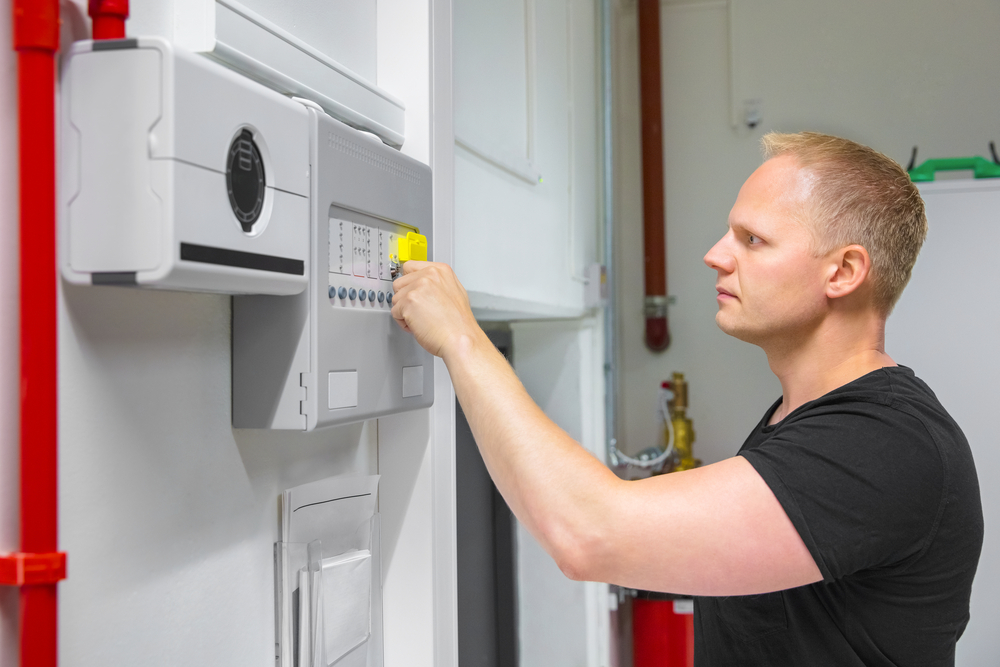
Fire alarm service technicians test, maintain, and repair the systems that detect smoke and warn people to leave a building. You may inspect control panels, replace faulty detectors, test backup batteries, trace damaged wires, and confirm that horns and flashing lights activate correctly. Average pay is about $35 per hour.
You can learn basic electrical theory and alarm-system installation through a certificate program lasting several months. One widely used entry-level alarm technician course takes about 22 hours, although you will need additional hands-on practice before working alone. Many employers hire helpers and provide paid training while they prepare for industry exams.
Much of the job is scheduled testing and paperwork. You walk through buildings, activate one device after another, record the result, and place systems back in service. Offices, hospitals, warehouses, apartment buildings, schools, and factories need regular inspections. Even connected alarm panels cannot replace someone who climbs a ladder, opens a detector, finds damaged wiring, and signs off that the system works.
Traffic signal technician

Traffic signal technicians maintain the lights, pedestrian buttons, cameras, wiring, and control cabinets found at intersections. They also repair flashing beacons and other roadside warning equipment. National salary estimates put average pay at about $34 per hour.
A short electrical, electronics, or traffic-control program can help you qualify for a municipal or contractor trainee position. Certificate workshops cover cabinet components, signal operation, safety, and routine maintenance. Higher-level credentials require field experience, but you can enter the occupation and receive paid training before earning them.
A normal day may involve opening roadside cabinets, checking voltage, replacing relays, cleaning cooling fans, testing pedestrian buttons, and reviewing maintenance records. The work is usually more methodical than exciting, except when a failed light creates a traffic backup. Roads continue to need signals even as controllers become more advanced. Remote systems can report a fault, but they cannot replace a damaged cable, straighten a signal head after a crash, or safely troubleshoot live equipment beside moving traffic.
Semiconductor equipment technician

Semiconductor equipment technicians maintain the machines used to manufacture computer chips. They inspect vacuum systems, pumps, sensors, robotic handlers, gas lines, and other equipment inside highly controlled cleanrooms. Average pay is about $34 per hour.
Several community colleges offer semiconductor certificates that take two semesters or less. Some fast-track programs prepare beginners for entry-level cleanroom work in only a few weeks, followed by detailed employer training. Longer programs provide more practice with electronics, pneumatics, safety procedures, and precision manufacturing.
The job can involve hours of inspecting fittings, recording pressure readings, replacing filters, cleaning components, and waiting for test cycles to finish. You must follow exact procedures because a speck of dust or a small equipment error can ruin an expensive batch of chips. Manufacturing plants need technicians on-site around the clock to keep production lines running. The machines are highly automated, but their pumps clog, seals leak, sensors fail, and moving parts wear out.
Home energy auditor

Home energy auditors inspect buildings to find air leaks, poor insulation, unsafe combustion equipment, and other problems that waste energy. They may use blower doors, infrared cameras, moisture meters, and combustion testing equipment. Average pay is about $35 per hour.
Building-science and energy-auditing courses can be completed in several weeks or months. Some certification classes include about 32 hours of online study followed by classroom, field, and exam time. Higher credentials may require experience, so beginners often start as junior auditors, weatherization assessors, or assistants.
The work is a checklist lover’s dream. You measure rooms, inspect insulation, photograph equipment labels, test air pressure, enter readings, and prepare a report showing where improvements are needed. Utility contractors, weatherization programs, insulation companies, energy consultants, and home-performance businesses hire auditors. Software can organize the numbers, but a person still has to crawl into the attic, notice a disconnected vent, recognize unsafe equipment, and explain the findings to the property owner.
Residential home inspector

Home inspectors examine houses before they are sold, purchased, or repaired. They look at roofs, foundations, wiring, plumbing, heating systems, drainage, insulation, and visible structural problems. Average earnings are about $29 per hour.
Training requirements vary, but prelicensing courses and supervised inspection requirements can usually be completed within several months. Programs teach residential construction, electrical safety, plumbing, roofing, report writing, and professional standards. You may also need an exam, insurance, and field practice before taking your own clients.
A large part of the job is slowly moving through the same inspection routine. You test outlets, run faucets, open electrical panels, photograph stains, check attic ventilation, and document every visible concern. Housing activity can rise and fall, so income may be less predictable for self-employed inspectors. Still, buyers, lenders, insurers, landlords, and renovation companies continue to need physical inspections. Photos and automated reports cannot tell whether a floor feels unusually soft or a repair was used to hide a recurring leak.
Locksmith

Locksmiths install, repair, rekey, and open locks used in houses, businesses, vehicles, safes, cabinets, and access-control systems. The job may involve cutting keys, changing lock cylinders, adjusting doors, and troubleshooting electronic keypads. Average pay is about $27 per hour.
A locksmith certificate can often be completed in three to nine months. Another route is to work as a shop assistant or apprentice while learning key identification, lock disassembly, safe handling, and local licensing rules. Commercial security and electronic access systems may require additional manufacturer training.
Much of the work is small, exact, and repetitive. You may spend an hour removing pins, matching key depths, cleaning a sticky cylinder, or adjusting a door that no longer closes properly. Property managers, schools, hospitals, security contractors, government buildings, and roadside service companies need locksmiths. New electronic systems have not removed the need for the trade. They have added batteries, wiring, card readers, and mechanical backup locks that also fail and need physical service.
Sleep technologist

Sleep technologists monitor patients during overnight studies used to diagnose sleep apnea, unusual movements, breathing problems, and other disorders. They attach sensors to the patient’s scalp, face, chest, and legs, then watch the readings from a control room. Average pay is about $31 per hour.
Some polysomnography certificate programs can be completed in as few as nine months. Training includes anatomy, sleep stages, respiratory equipment, electrode placement, patient care, and clinical practice. Before enrolling, check that the program admits beginners and provides a path to the clinical hours required for professional certification.
The job involves long stretches of sitting in a dark room while watching several screens. You also replace loose wires, help patients use breathing masks, respond to unusual readings, and clean equipment after the study. Hospitals, sleep centers, neurology practices, and respiratory clinics hire these workers. Automated scoring can sort parts of a recording, but patients still need someone present when a sensor falls off, oxygen drops, or a breathing mask needs adjustment.
Certified orthopedic casting technician

Orthopedic casting technicians apply and remove casts, braces, splints, and other supports for injured bones and joints. They prepare materials, position patients, operate cast saws, and teach people how to care for a cast. Certified technicians earn an average of about $26 per hour.
Certificate programs commonly take six to 11 months and cover anatomy, patient safety, casting materials, wound precautions, and splinting methods. Some hospitals train medical assistants or patient-care workers for the role. Certification can improve your options, although employers may require supervised casting experience first.
The work is hands-on but highly repetitive. You measure limbs, cut padding, dip casting material, smooth rough edges, clean tools, and restock the same supplies throughout the day. Orthopedic offices, urgent-care centers, sports medicine practices, emergency departments, and hospitals need these technicians. Casting materials continue to improve, but injured patients still need a person who can protect swollen tissue, hold a limb in the correct position, and notice signs that a cast is too tight.
Occupational health and safety technician

Occupational health and safety technicians inspect workplaces for conditions that could injure workers. They may measure noise, test air quality, check protective equipment, review safety records, and help investigate accidents. Median pay is about $28.10 per hour.
You can prepare through a short occupational safety certificate covering workplace rules, hazard recognition, emergency procedures, and basic industrial hygiene. Employers also hire trainees with a high school diploma and provide several months of instruction. Specialized duties may require short courses in areas such as hazardous materials, confined spaces, or respiratory protection.
Expect plenty of checklists, photographs, sample labels, inspection forms, and follow-up emails. Technicians work for manufacturers, construction companies, hospitals, utilities, warehouses, consulting firms, and public agencies. Employment is projected to grow faster than the wider economy as employers face more complex safety requirements. Sensors can measure noise or fumes, but a technician must decide where to place them, observe how people actually work, and spot hazards that were not listed on the original inspection plan.
Wind turbine service technician

Wind turbine technicians inspect and maintain the machinery inside large wind turbines. They tighten bolts, test electrical systems, replace filters, repair hydraulic parts, and climb towers to inspect equipment. Median pay is about $30.09 per hour.
Wind-energy certificate programs commonly take six to 11 months. Training covers electrical systems, mechanical repair, hydraulics, climbing safety, first aid, and rescue procedures. Employers add training for their own turbine models before allowing a new technician to work independently.
The view may be impressive, but the daily tasks are mostly maintenance logs, torque checks, fluid changes, cleaning, and repeated inspections. You need to be comfortable with heights, tight spaces, travel, and changing weather. Employment is projected to grow far faster than most occupations as more turbines are installed. Monitoring equipment can send performance readings to a control room, but technicians must still climb the tower, open the machinery, find the damaged part, and complete the repair.
Crane and tower operator

Crane operators move steel, concrete, machinery, shipping containers, and other heavy materials. They follow hand signals or radio instructions while controlling equipment that may weigh hundreds of tons. Median pay is about $31.10 per hour.
Crane schools and employer trainee programs can prepare you for an operator certification exam within several weeks or months. You learn load charts, inspection procedures, hand signals, rigging basics, setup, and safe operating limits. Employers generally require additional supervised seat time before you handle difficult lifts.
A lot of the job is waiting. You inspect the crane, review the lift plan, sit in the cab, move the load a few feet, and wait while another crew secures it. Construction companies, ports, manufacturers, utilities, and equipment-rental firms use crane operators. Growth is expected to remain steady as infrastructure and building projects continue. Cameras and load sensors help, but the operator still has to judge wind, ground conditions, clearances, crew movements, and the way a load begins to swing.
Motorboat mechanic

aranprime via Unsplash
Motorboat mechanics repair engines, electrical systems, steering equipment, fuel lines, cooling systems, and other parts used in recreational and commercial boats. Median pay is about $26.42 per hour.
Marine service certificates are available in programs lasting six to 11 months. You learn gasoline and diesel engines, electrical testing, corrosion control, fuel systems, winterization, and basic fiberglass repair. Manufacturers and dealerships may provide additional training for their engine brands.
Much of the job involves ordinary service work, including oil changes, battery testing, filter replacement, cleaning fuel systems, and preparing boats for storage. Other days are spent chasing an electrical problem through cramped compartments. Boat dealers, marinas, repair yards, rental companies, and government fleets hire these mechanics. Employment for small-engine mechanics is expected to grow about as fast as the wider economy, with regular openings from turnover. Diagnostic tools can identify a fault code, but a mechanic still has to reach the failed part and repair equipment exposed to water, salt, heat, and vibration.
Refrigeration rack technician

Refrigeration rack technicians maintain the large cooling systems used in supermarkets, warehouses, food plants, and cold-storage facilities. They repair compressors, valves, fans, control boards, sensors, piping, and refrigerant leaks. Average pay is about $29 per hour.
You can enter through a six-to-11-month HVACR certificate and a refrigerant-handling exam. Some accelerated programs take only a few weeks, although a longer course gives you more practice with electricity, pressure readings, brazing, airflow, and refrigeration cycles. Employers continue the training on their particular equipment.
The work includes plenty of gauges, temperature logs, leak checks, dirty condenser coils, and late-night service calls. When a supermarket cooling system fails, thousands of dollars in food can spoil quickly. Grocery chains, food processors, distribution centers, hospitals, restaurants, and refrigeration contractors all need trained technicians. Employment in heating and refrigeration service is projected to grow faster than average. Control systems can warn that temperatures are rising, but they cannot find a pinhole leak or replace a failed compressor.











